Get Full Government Meeting Transcripts, Videos, & Alerts Forever!
Get email alerts on the City Budget 2026 topic
No spam. Unsubscribe anytime.
Overland Park manager outlines $500 million 2026 proposed budget, highlights public‑safety hires and stormwater projects
Summary
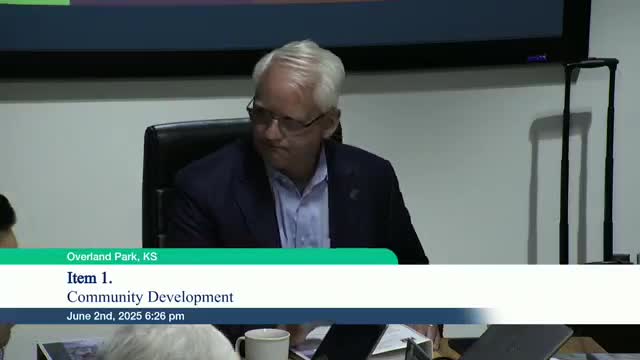
Overland Park City Manager Laurie Curtis Luther presented a high‑level overview of the proposed 2026 budget at the Committee of the Whole meeting on Monday, June 2, 2025, saying the all‑funds total is just under $500 million — a 6.6% increase over 2025.
Overland Park City Manager Laurie Curtis Luther presented a high‑level overview of the proposed 2026 budget at the Committee of the Whole meeting on Monday, June 2, 2025, saying the all‑funds total is just under $500 million — a 6.6% increase over 2025. She told the council the budget assumes an unchanged mill rate and reflects assessed‑value growth provided by Johnson County.
Luther said the proposal is built to “maintain a high level of service while supporting a growing population,” and noted the city has added about 10,000 residents since February. She described the presentation as an overview and said detailed line‑item review will occur in committee meetings in June and July.
The budget highlights
The proposal increases total personnel costs by about $8.9 million (roughly a 6.4% increase in personnel costs for the general fund) and lists a net addition of 9.68 full‑time equivalent positions for 2026. Luther identified several of the larger personnel changes: six full‑time positions to staff Fire Station 45, a deputy police chief position, an additional prosecutor, two public works positions, a deputy facilities manager, and a property‑tax rebate program staffer. She also said one new police position — a case manager to be funded by alcohol and opioid settlement funds — would be created for a partnership with Johnson County Mental Health to support people with substance‑use disorders.
On Station 45 specifically, Luther said the city preordered the largest piece of equipment in 2023 and expects delivery by late 2026 or early 2027, and therefore aims to have staff in place by the end of 2026. “So we need to have staff on board and ready to go, by the end of 2026, no later than the end of 2026,” she said.
Public safety recruiting and operations
Luther told the council that earlier hiring initiatives, including bringing in a new police chief and increasing competitiveness of pay, have reduced police vacancies: “Less than six months ago … we were down 40 vacancies in the police department. We are now, as of today, only down 15.” The budget also includes a civilian chief‑of‑staff position for the police department, requested by the chief to support department‑level strategy and operations.
Infrastructure, stormwater and sidewalks
All‑funds spending for 2026 includes a notable increase in stormwater activity. Luther said the stormwater utility shows the largest percentage change in the proposed budget — roughly a $5 million increase in projects compared with 2025 — and that the total 2026 all‑funds number reflects that work. The primary operating funds total about $397.3 million in Luther’s presentation.
The budget creates two dedicated maintenance worker positions for an enhanced sidewalk program. Luther said those hires are intended to provide “boots on the ground” repairs rather than solely supervising outside contracts, and that staff will measure success and recommend next steps after implementation.
Use of restricted and one‑time funds
Luther explained how the city treats temporarily restricted revenue differently from recurring revenue. She noted the city will apply some opioid settlement and special alcohol funds to staffing where appropriate and described a cautionary approach to ongoing expenses. “We try not to use those…temporary revenues on operating expense,” she said, though she added that because opioid settlement distributions are expected over decades, some staffing funded from those dollars is included.
World Cup planning and contingencies
The city is budgeting conservatively for anticipated World Cup‑related revenues and will hold contingency funds to cover overtime and other potential expenses. Luther said the mayor (and city manager under her delegated authority) will approve draws from that contingency after monitoring actual expenses; she also noted a $25,000 human‑services request that will be reviewed.
Property tax, assessed value and rebate outreach
The budget assumes a 4.2% increase in assessed valuation for 2026 and keeps the mill rate unchanged; the final certified valuation will be distributed by Johnson County in mid‑June and the budget must be certified to the county by Oct. 1. Luther emphasized that residential taxpayers contribute a smaller share of total city revenue than many residents assume, and said roughly 68% of the city’s revenue comes from non‑property‑tax sources such as sales taxes, fees and grants.
Luther also described the city’s property‑tax rebate outreach. The program’s base capacity was increased 10% for 2026; Luther said two news releases and digital outreach have already generated wide viewership and other earned media — “more than 400,000 people watching” and an estimated ad value near $15,000.
Budget process and next steps
Luther asked council members to review the detailed budget materials in the committee binders and online at opkansas.org. She said the council will review department detail in goal‑area committees in June and July, return to the Committee of the Whole on July 7, and target final approval Sept. 8 so the budget can be certified to Johnson County before the Oct. 1 deadline.
Council questions and concerns
Councilmembers asked clarifying questions during the presentation. Councilmember Jim (first name only in transcript) asked about the apparent discrepancy between a 9.68 net FTE increase and the narrative’s itemized additions; staff pointed to a memo table that includes negative FTE adjustments and conversions of part‑time roles to full‑time. Councilmember Jeff (first name only in transcript) criticized the city’s increasing fund balance and urged discipline on personnel spending, saying he would “love to see a budget that reduces the mill levy back to what it was in 2021.” Luther and other councilmembers noted the city’s large commercial tax base and that mill‑rate decisions interact with broader revenue and capital priorities.
Evidence and supporting materials
Luther said the full budget book and supporting detail are in the binders provided to council and available online; she reiterated that more granular questions are typically handled in committee or in follow‑up with staff.
The Committee of the Whole adjourned to begin the regular council meeting at 7:30 p.m.