Get Full Government Meeting Transcripts, Videos, & Alerts Forever!
Get email alerts on the Education Finance topic
No spam. Unsubscribe anytime.
Forsyth County commissioners debate response after Winston‑Salem Forsyth County Schools request $32 million one‑time loan
Summary
County commissioners discussed a letter from Winston‑Salem Forsyth County Schools outlining a multi‑million dollar shortfall, potential repayment paths and program cuts; no county loan or appropriation was approved, but commissioners directed increased financial oversight and discussed possible limited tax options.
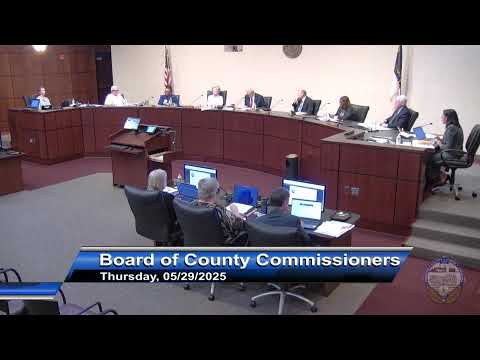
Chairman Martin convened a special Forsyth County Board of Commissioners budget meeting to review a letter received from Winston‑Salem Forsyth County Schools that describes a multi‑million dollar cash shortfall and asks the county for a one‑time loan. The school district proposed a $32 million one‑time loan after identifying roughly $10 million the district could make available from its child nutrition enterprise fund, and reported an outstanding local vendor debt and state overdrafts that contribute to its deficit.
Why it matters: the district’s cash issues could affect payroll, vendor payments and classroom staffing in the current fiscal year and prompted county officials to consider options that protect the county’s fund balance while helping the school system maintain operations.
Commissioners and staff summarized the district’s letter and the district’s own financial review. According to the materials discussed, the district’s child nutrition fund has a fund balance of about $12,000,000 that provides a cash bridge while federal reimbursements arrive; the district estimates it could use about $10,000,000 of that balance to offset a stated $42,000,000 problem down to $32,000,000, which it characterized as the basis for its one‑time loan request to the county. The district also reported roughly $18,000,000 in overdrafts owed to the state and approximately $24,000,000 in local overspending that had created vendor obligations; of that local amount, the district estimated it owes the county about $5,000,000 for services including school resource officers, matching nurse positions, gasoline purchases at county pumps and a nominal maintenance‑garage lease.
County staff said the county has provided its monthly allocations for the fiscal year and advanced funds for May and June payroll to ensure educators were paid. Staff warned the district had used restricted and nongeneral funds in ways that require accounting corrections; a county finance official said the district’s consultant audit work is still in progress and the amounts may change as the district completes its audit.
Commissioners discussed options rather than taking immediate formal action. Proposals and comments included: stronger monthly monitoring and reporting from the school district tying funding sources to eligible expenses; not using county fund balance as a first option because of bond‑rating and financial‑stability concerns; and potential limited tax‑rate options in 2026 (examples cited during the meeting: a quarter cent increase would cost about $7.50 a year on a $300,000 house; a penny and a half would cost about $45 a year on the same house). Several commissioners cautioned that school board decisions about cuts had not been approved and that the state’s role is central because the district also reported amounts owed to the state.
Commissioners pressed for documents: multiple commissioners requested line‑by‑line budgets, contracts, vendor invoices and other records from the district and encouraged county staff and the district to share any monthly financial report the district adopts. Vice Chair Wisenhunt and County Manager Chantelle Robinson said they planned to meet with representatives of the State Board of Education when state officials visit Winston‑Salem later that week.
No formal county appropriation, loan approval or repayment agreement was made at the meeting. Commissioners did not vote on the district’s loan request; instead they discussed monitoring, next steps and timing. The board decided to cancel a scheduled follow‑up budget session for the following Monday because no new school information was expected before that date.
Looking ahead: county officials said they will continue information‑gathering and will seek greater financial transparency from the district; the state’s involvement will factor into possible solutions. Commissioners repeatedly emphasized protecting the county’s fund balance and noted that any tax decisions for 2026 would be made separately under the county’s budget process.
Ending: county staff will continue to coordinate with the district and state officials; commissioners asked for monthly financial reports and supporting documentation from the district before considering fiscal assistance.