Get Full Government Meeting Transcripts, Videos, & Alerts Forever!
Get email alerts on the Housing Development topic
No spam. Unsubscribe anytime.
Redevelopment authority approves consent for South Holyoke Homes transfer as developer outlines Phase 1 completion and Phase 2 partnership plan
Summary
The Holyoke Redevelopment Authority voted to consent to a developer assignment for Phase 2 of the South Holyoke Homes project and heard updates that Phase 1 is near completion; the developer described an ownership structure that would speed state funding if the HRA joined as a partner with limited liability.
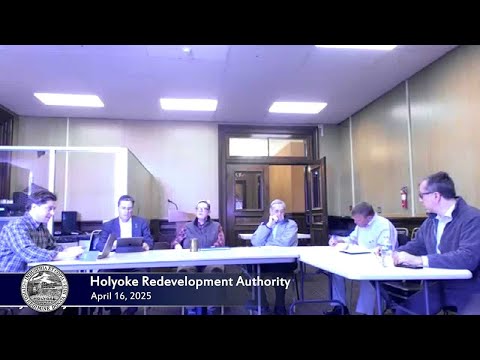
The Holyoke Redevelopment Authority on April 16 approved HRA consent to an assignment tied to Phase 2 of the South Holyoke Homes project and received an update showing Phase 1 construction largely complete and a Phase 2 ownership proposal intended to accelerate state financing.
The consent vote covered an assignment to a new entity for Phase 2 (described in meeting materials as a subsidiary sometimes referred to as Housing Innovation Partnerships). The board approved the consent by roll call after staff recommended the change as consistent with the master development agreement and counsel indicated it was standard practice. The motion passed on a roll call with all members voting yes: Stephanie Ward; Tiffany Espinosa; Thomas Creed; Carl Leaker; Patrick Bodrey; and Daphne Borg.
Board members and staff also heard a detailed construction and leasing update for Phase 1. The developer reported construction roughly 90% complete, permanent power and water expected in mid-May, a community building nearing certificate of occupancy once permanent power is on, and a lease-up process beginning immediately. The developer said a resident lottery was scheduled the next day and that about 200 people had submitted full applications for roughly 88 units; the team said some winners may ultimately not qualify, and additional applicants could be added as leasing continues. The developer estimated the first residents could move in around August with the goal of full occupancy in the fall.
On Phase 2, the developer described a proposed ownership arrangement in which the HRA would be a formal partner in the ownership entity. According to the presentation, the arrangement would not shift liability to the HRA: the developer said the principal financial responsibility and guarantees would remain with the private sponsor and investor. The developer cited precedent in Holyoke for a similar structure and said municipal participation can allow applications for a broader suite of state resources (including quicker access to EOHLC — the Executive Office of Housing and Livable Communities) and could accelerate funding timelines by years. The developer described financing that would be typical for the project: 4% low-income housing tax credits, federal and state historic tax credits, and subordinate loans commonly included with an EOHLC award.
Solicitor’s office staff requested a deeper, document-level discussion. Jamie Antolesky of the solicitor’s office asked for follow-up materials and proposed a separate call or email exchange to review specifics of the financing and the HRA’s role. The board discussed designating a single HRA member to join follow-up conversations so that the HRA can have a point of contact without forming a quorum.
No new financial commitments by HRA were made at the meeting; staff and counsel emphasized that the model presented would provide the HRA with limited financial participation and would not transfer project liability to the HRA. Board members asked for more detail on what “financial participation” would mean in practice and requested written follow-up on monetary and tax implications.
The HRA’s consent to the developer assignment and the technical updates on Phase 1 are part of an ongoing multi-meeting review; staff said additional documents and a recommended authorization for any formal HRA participation would be brought back after solicitor review.