Get Full Government Meeting Transcripts, Videos, & Alerts Forever!
Get email alerts on the Water Supply And Conservation topic
No spam. Unsubscribe anytime.
San Antonio officials outline drought risks, pipe-repair and conservation plans
Summary
City water managers told the San Antonio Committee on Utilities that the region is in its sixth year of drought, outlined programs to detect and repair leaks, and described conservation and supply projects intended to secure water through 2075.
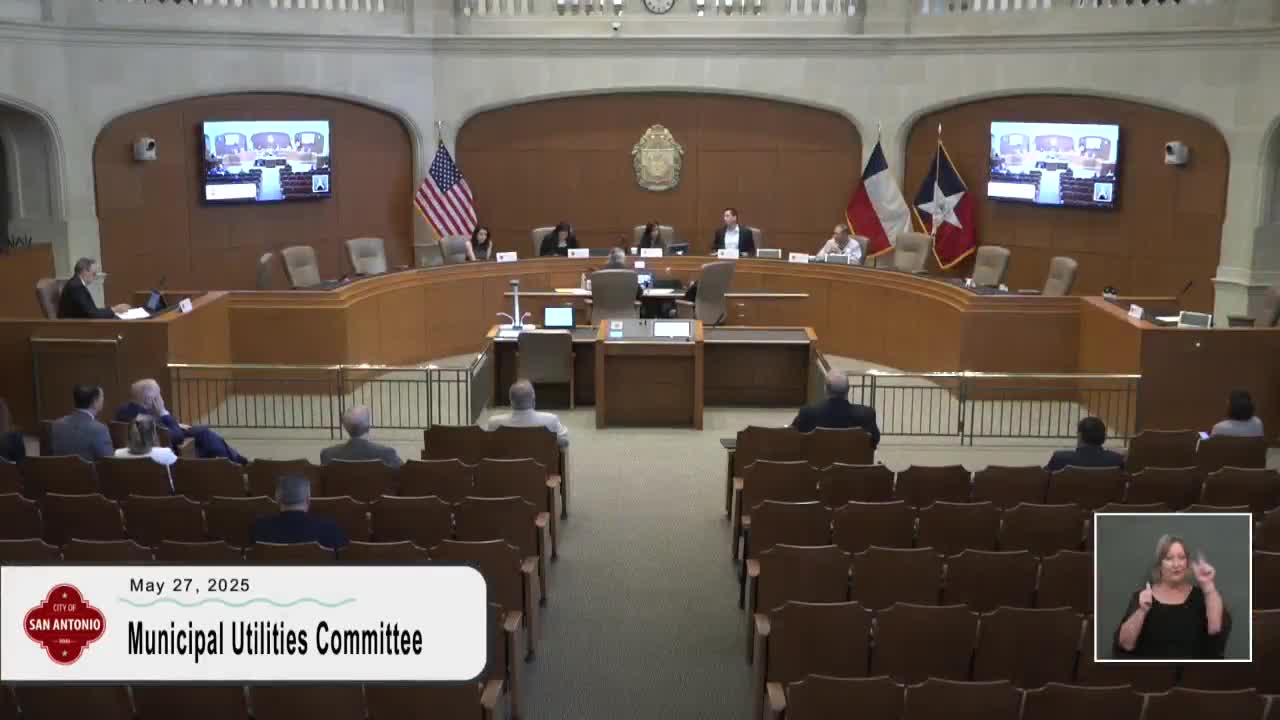
San Antonio water managers told the City’s Committee on Utilities on May 27 that the city is in its sixth year of drought and outlined a suite of both near-term and long-range measures intended to protect supplies and reduce system leakage.
The presentation, led by Steven Ziber, a manager in the Water Resources Department, combined current drought data, supply diversification plans and operational initiatives. Ziber said the Edwards Aquifer and other local indicators are at unusually low levels and that the utility is pursuing both infrastructure repair and demand-side programs to respond.
Ziber said the region is experiencing “el sexto año de sequía” and warned that current reservoir and aquifer readings mirror historically severe conditions. He described both supply projects — including aquifer storage and recovery (ASR) facilities and regional projects the utility expects to bring online in phases — and demand-management efforts such as expanded leak detection, irrigation rules enforcement and customer outreach programs.
Why it matters: committee members pressed staff for details because aging pipes and persistent leaks directly affect residents’ bills, public works scheduling and the city’s ability to deliver water during prolonged dry conditions. The committee flagged coordination across city departments, outreach to small businesses and the implications for regional customers as priorities.
Key facts and figures presented
- Drought and aquifer status: Ziber said San Antonio is located in one of the state’s driest zones and that local aquifer levels are comparable to historically severe drought years reported since the 1950s. (Transcript: Steven Ziber)
- Distribution system size: staff cited the scale of the system as a challenge to repairs, mentioning “14,000 millas de tubería” in one part of the presentation and later using a larger figure; the transcript contains both numbers. (See clarifying_details.)
- Leak- and loss-reduction goal: staff said the utility aims to reduce distribution-system water loss by 50% by 2035 and that initial investments and operational changes have yielded early savings. Ziber said the utility has “ahorrado 1000000 de galones desde 2023” under the current program. (Transcript: Steven Ziber)
- Capital funding: Ziber said there is funding set aside for leak reduction and pipeline work, citing “75000000 de dólares para 2030” to support repair and replacement activity. (Transcript: Steven Ziber)
- Conservation enforcement and results: staff described a staged enforcement program (the utility said it is currently in “etapa 3”), customer education classes for first-time irrigation violators, and incentives. The presentation noted a 54% drop in recorded violations between 2023 and 2024 and said repeat violations have declined about 80% after counseling or required classes. (Transcript: Water resources presentation)
Programs and customer-facing measures
- Connect Hsegundo (as named in the transcript): staff said the program and new meter communications have helped customers detect leaks early by sending alerts when sustained flow is detected. Ziber described a team that fields customer calls and addresses issues before high bills occur. (Transcript: Water resources presentation)
- Incentives and rebates: staff described rebates to remove irrigation systems or to change landscaping, a 20% coupon for some irrigation controllers for customers of the utility program, and an outreach rebate of roughly $250 for homeowners associations that delay planting until fall. For customers who remove automatic irrigation, staff said rebates may be available to replace high-water-use landscapes. (Transcript: Water resources presentation)
- Commercial outreach: staff said they have regular contact with large commercial water users, irrigation managers and facility managers and that commercial properties that use large volumes must report usage; enforcement and outreach were described as ongoing. Staff noted gaps in contact information for many small businesses, limiting proactive customer outreach. (Transcript: Water resources Q&A)
Supply projects and storage
- ASR and regional projects: Ziber said an aquifer storage facility opened in 2024 and reported storage volumes “134000 pies acre, 34000 pies acre de agua” as recited in the presentation; the transcript wording on these numbers is imprecise. Staff said these storage and regional projects help protect Edwards Aquifer pumping rights during drought and will be part of a diversified portfolio planned through 2075. (Transcript: Steven Ziber)
Operational coordination and street impacts
- Repair logistics: council members and staff discussed the need to coordinate repairs with the city’s public-works repaving schedule to reduce repeated street cuts. A new director was described as recently promoted to oversee leak detection and cross-department coordination. (Transcript: Council Q&A)
- Technology and detection: staff said the utility has invested in new leak-detection tools and artificial-intelligence methods to prioritize high-risk mains. Ziber said the utility has reactivated and expanded a leak-detection program in the last two years. (Transcript: Water resources presentation)
Questions from council members
Councilmember Way asked for earlier distribution of presentation materials to allow better preparation for committee meetings; staff agreed to provide materials earlier in the future. Multiple council members asked about comparisons with other cities, incentives for homeowners (pressure regulators and irrigation controls), the effects of turf replacement vs. synthetic turf, and coordination with the city’s sustainability and resilience offices. Staff said they participate in local climate and resilience planning and would continue to coordinate. (Transcript: Q&A)
Formal action
The committee approved the minutes of the April 22 meeting at the start of the session. No other formal votes on policies or ordinances occurred during the hearing. (Transcript: meeting opening)
Ending
Committee members thanked staff for the update and pressed for continued interdepartmental coordination, additional outreach to small businesses and continued investment in leak detection and pipe replacement. The committee adjourned at 11:16 a.m.