Get Full Government Meeting Transcripts, Videos, & Alerts Forever!
Get email alerts on the Public Safety Traffic Calming topic
No spam. Unsubscribe anytime.
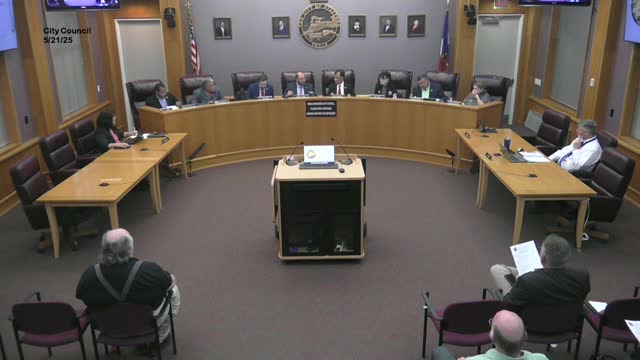
Stafford council directs staff to study speed-remediation tools for neighborhood streets
Summary
Council voted unanimously to have staff research speed-remediation devices, traffic-study costs and options for several residential streets and report back for the budget cycle.
The Stafford City Council voted unanimously May 21 to direct city staff to research speed-remediation tools — including speed humps, rumble strips and illuminated speed signs — and to report estimated equipment and traffic-study costs for inclusion in the next budget cycle.
Councilman Bostick said the request was prompted by repeated complaints from residents about speeding on neighborhood streets and the city’s lack of calibrated traffic-count equipment. "We're gearing up for the budget cycle... I'd like to know the cost of installing each of these units," Bostick said, asking staff to identify device options and expected per-unit prices.
The discussion centered on several residential corridors identified by speakers and council members, including James Street and other local streets where residents said pedestrians and children use the roadways. Resident Greg Holzapel, who said he lives on Naples Lane, told the council that potholes and the possibility of damage to private and city vehicles were concerns but urged the council to consider alternatives to speed humps. "While the speed humps could affect the speed, they can also damage vehicles," Holzapel said.
Staff member Mr. Young told the council he would check the status of the city’s traffic-count equipment and report whether it is operational or needs replacement. Members of council and staff reminded the meeting that, under the Texas Transportation Code, the prima facie speed in residential areas is 30 mph and that a posted lower limit or permanent roadway obstruction typically requires an engineering study. A staff presentation noted that cities commonly hire independent traffic engineers for formal speed-limit studies and that those consultants usually bring their own calibrated equipment.
Public commenters urged a range of responses. Cliff Cowperthwaite said fixed speed bumps can create a nuisance if most drivers obey the limit and only a few speed; another resident, Farsal Duran, asked for increased enforcement in the short term. Council members emphasized they wanted options presented, not an immediate installation plan. The motion, made by Councilman Bostick and seconded by an unidentified council member, passed 7–0.
Staff were directed to: inventory and report on the city’s traffic-count equipment; provide cost estimates for different speed-remediation devices (rumble strips, illuminated signs, radar-feedback signs, and speed humps); estimate the cost and likely timeline to hire a traffic engineer for any required engineering studies; and present the information in time for the upcoming budget discussions.
Council members said they expect staff to return with a timeline and cost estimates before finalizing next year’s capital and operating budgets.