
Assembly hearing exposes split over Department of Taxation fiscal estimate for remote tobacco-seller license
Get AI-powered insights, summaries, and transcripts
Subscribe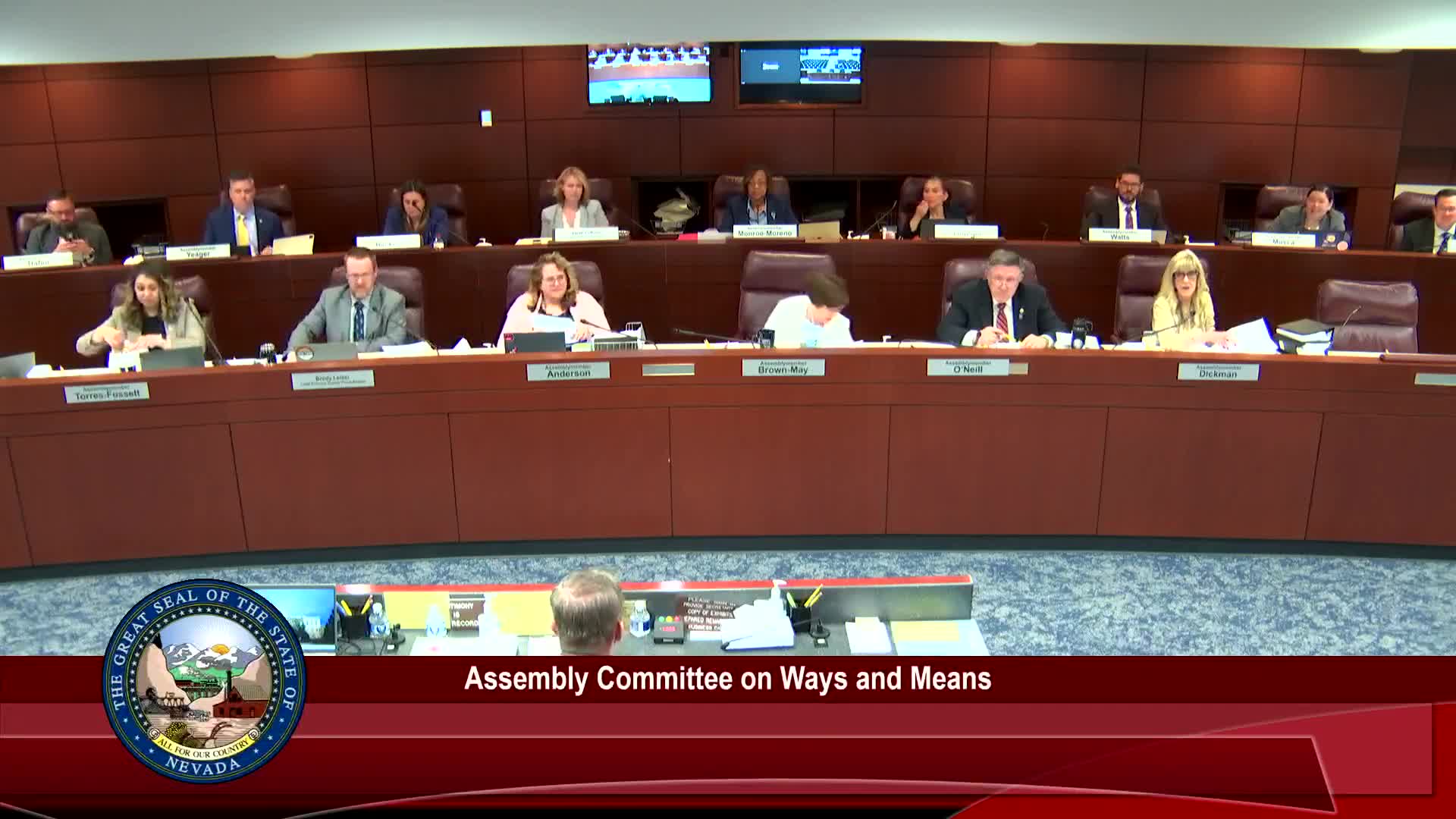
Summary
Assemblymember Brian Hibbetts introduced AB471 to create a remote retail license for out-of-state cigar and pipe-tobacco sellers; Taxation provided a fiscal estimate while industry counsel proposed a smaller one-time allocation to upgrade systems.
Assemblymember Brian Hibbetts (Assembly District 13) opened the hearing on Assembly Bill 471, a bill to create a remote retail license for out-of-state sellers of cigars and pipe tobacco and to make explicit the sellers’ authority and obligations to collect the state’s other-tobacco-products (OTP) tax.
"Currently, state law is a little bit gray and ambiguous on whether or not out-of-state retail sellers of cigars and pipe tobacco should be paying the other tobacco product tax," Hibbetts said. "This bill fixes that by creating a remote retail license for that purpose."
Why it matters: State analysts told the committee that the measure would capture revenue currently not being collected from remote sellers; the bill’s sponsor and industry representatives said it would equalize taxes between in-state brick-and-mortar sellers and larger out-of-state online retailers. The Department of Taxation, however, presented a fiscal estimate that includes programming costs and additional staff to administer the new license.
Taxation’s estimate and industry response Department of Taxation analysts presented a fiscal note identifying a one-time information-technology programming cost and the need for additional personnel. Adrienne Roberts Larson, deputy director for Administrative Services at the Department of Taxation, testified that the department’s fiscal estimate for the first fiscal year is $347,669 and $390,261 in FY27; future bienniums were left as a longer-term estimate.
"Based on the testimony that there would be 15 to 30 licensees, the department could possibly reduce the number of positions that we are requesting," Roberts Larson said, but added that a need for positions would remain "as we are required, for the remote sellers. They'll require investigation and compliance. This is a new tax for the department to administer and to oversee."
Department IT deputy director Joe Bernardi told the committee that the programming tasks—estimated at 269 hours each for two IT staff classifications—would not change materially with the number of licensees. "That doesn't change if there's 15 to 30 sellers or if there's 300 sellers," Bernardi said.
Sponsor and industry representatives urged a narrower fiscal approach. Hibbetts told the committee his conversations with industry representatives indicate the program would likely include "somewhere between 9 and 15 licensees" in year one, not the 50–300 range the department used in modeling. He proposed a one-time appropriation of $14,000 for the department to upgrade systems and opposed increasing the license fee to the $1,300 level suggested by Taxation’s analysis.
Beth Alleva, outside counsel for the Cigar Association of America and the Premium Cigar Coalition, said the coalition has seven members and that the legislative model adopted in other states is aimed at simplicity. "The Department of Revenue has been an incredible partner as we've drafted this legislation," Alleva said. "Our goal here is always simplicity. We're not doing anything else to statute. It's simply to bring give everyone the tools to make sure that these companies have everything they need to be able to comply and collect and remit those tax to the department." She estimated gross revenue capture in Nevada in the low six-figure to low seven-figure range annually, depending on state tax structure and market size.
Members' questions and next steps Members pressed Taxation for details: reducing the requested four positions to two (one auditor and one compliance investigator) would be possible if the department concludes the amended language reduces workload. Roberts Larson said that trimming positions to two would be an option under the current reprint and presented amendment language.
Assemblymember Torres Fawcett asked about projected revenue; Roberts Larson said the department could not determine a reliable revenue estimate at the time the fiscal note was prepared.
No public callers took a position during the hearing and no committee action was taken at the hearing itself. The committee requested an updated reprint that incorporates the negotiated cleanup language discussed with the department and industry representatives; members said they want to see a revised fiscal estimate that reflects those changes before further committee action.
Ending: The committee closed the hearing after taking testimony; staff were asked to produce an updated bill reprint and the department indicated it could reduce personnel requests if the amended language narrowed administrative workload.