Get Full Government Meeting Transcripts, Videos, & Alerts Forever!
Get email alerts on the Fire And Emergency Services topic
No spam. Unsubscribe anytime.
Tualatin Valley Fire & Rescue briefs Yamhill County on wildfire deployments, EMS pilots and station rebuilds
Summary
Tualatin Valley Fire & Rescue told Yamhill County commissioners on May 22 that 2024 wildfire deployments strained statewide resources, most local calls are medical, and the district is piloting nurse‑linked EMS units while moving forward on station rebuilds funded by a 2021 bond and a voter‑approved local option levy.
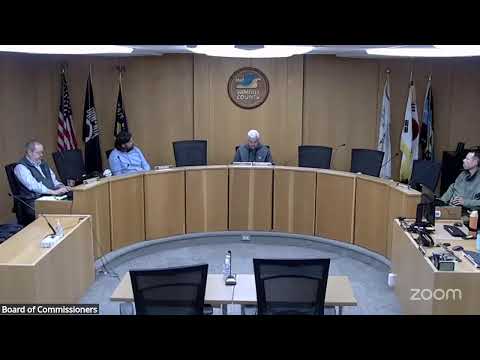
Tualatin Valley Fire & Rescue officials told the Yamhill County Board of Commissioners on May 22 that 2024’s wildfire season and mutual‑aid deployments increased strain on statewide firefighting resources, and the district is testing several emergency‑medical initiatives while advancing planned station rebuilds.
The presentation was given by Brian Smith, division chief of government public affairs for Tualatin Valley Fire & Rescue, and Stefan Myers, public affairs manager for the district. Smith said the district’s local option levy, approved by voters last May, will fund 36 additional firefighter positions over five years and is intended to sustain operations for about 10 years.
Why it matters: TVF&R serves Newberg and surrounding rural areas in Yamhill County; commissioners and the public heard how the district is balancing wildfire response, rising medical call volume and long‑term capital needs.
Myers opened with a statewide context, saying he had more incident management deployments in 2024 than in prior years and that roughly 1,900,000 acres burned across Oregon last year. He said 88 task forces were mustered statewide and that agencies called on neighboring states for support as local resources were depleted.
“Within Tualatin Valley Fire & Rescue, we have 31 individuals that are a part of our wildland team,” Myers said, adding those personnel deploy throughout the state and that a Yamhill County task force participated in out‑of‑state assistance. He said the district balances deployments with maintaining an effective firefighting force at home.
Smith and Myers said about seven out of 10 calls the district responds to in the Newberg/Yamhill County area are medical in nature, making EMS the bulk of daily work. To address rising EMS demand, TVF&R described three innovations:
- An advanced practice community paramedic (APCP) program that targets frequent 911 users with in‑home follow up to reduce repeat emergency calls. Smith said the APCP program has been in place for about a year.
- An advanced resource medic (ARM) pilot, started in January and funded by a grant from the Oregon Health Authority, that pairs an APCP and an advanced paramedic with a contract nurse practitioner (through DispatchHealth) for certified care facilities. Smith said the team can order certain diagnostics, prescribe medications and perform procedures on site that previously required ED transport. The district described the ARM as a two‑year pilot that will be evaluated for sustainability.
- A nurse‑navigation model (operated by American Medical Response in Washington and Clackamas counties) in which low‑acuity callers are connected at dispatch with a nurse who can triage by phone. Myers described this as another potential model for reducing heavy asset use.
Funding and staffing: Smith said the local option levy that voters approved last May is a replacement levy set to take effect in July; he said taxpayers will see the new levy rate on November tax statements and that levy revenues should support hiring the 36 firefighters over five years. The ARM pilot is grant‑funded by the Oregon Health Authority; Smith said the district contracted with DispatchHealth for nurse practitioner services under that grant.
Recruitment and volunteers: Myers described workforce challenges driven by a wave of retirements and slower paramedic/EMT training pipelines during COVID. He said recruitment efforts include social‑media outreach, Portland Metro Fire Camp (targeted recruitment for young women), career days, partnerships with high schools and community colleges, and expanded development programs to accelerate promotions. TVF&R also maintains volunteer roles for scene support, community events and apparatus preservation, though Myers said volunteers are not used as replacement frontline firefighters.
Capital projects: The presenters reviewed bond‑funded station projects. Smith said the district plans to tear down and replace Station 35 (a project expected to be completed by late 2026) and to rebuild Downtown Newberg’s Station 20 after securing city approvals; crews will operate from temporary locations nearby during construction. Smith said the training center near Sherwood also requires replacement. For the rural Newberg Station 22, Myers said the district is close to finalizing a land purchase at or near Highway 240 and North Valley Road and anticipates posting a sign on the property when secured.
Regional assets and mutual aid: Myers said some specialty teams TVF&R supports (for example hazardous‑materials teams) are regional assets that respond beyond district borders. He said the district both sends personnel to assist other states and receives support when local resources are taxed.
Questions from the board touched on program timelines, funding sustainability for the ARM pilot and local recruitment prospects. Smith reiterated the ARM pilot is a two‑year grant project and that the district will use collected data to seek continuing funding if results merit it.
The presentation closed with TVF&R offering to return with further updates on station siting and program evaluations.