Get Full Government Meeting Transcripts, Videos, & Alerts Forever!
Get email alerts on the Legislation Calfresh And Student Policy topic
No spam. Unsubscribe anytime.
Chancellor’s office backs bills to expand CalFresh access, tracks dozens of higher‑education proposals
Summary
Government relations staff told the board they are tracking roughly 80–85 tier‑one bills this session (down from 105–106), highlighted support for AB 593 and SB 761 to expand CalFresh access for students, and signaled ongoing negotiations around bills that could impose new local costs on districts.
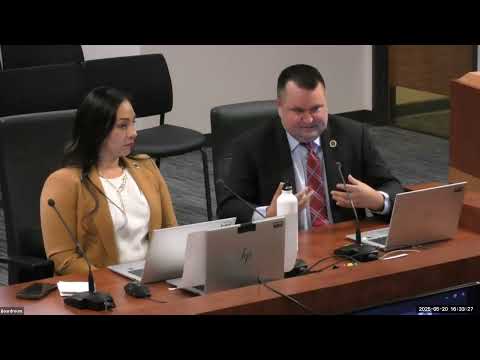
Deputy and government relations staff briefed the Board of Governors on state legislation affecting community colleges, saying about 80–85 tier‑one bills remain under close review and many are held in suspense ahead of a key legislative deadline.
Government relations staff highlighted two bills they are supporting on CalFresh (California’s SNAP program): AB 593 by Assemblymember Wicks and SB 761 by Senator Ashby. Staff described SB 761 as “historic,” explaining it would treat campus‑based programs of study at public higher education institutions as local educational programs that increase employability, which would simplify students’ eligibility for CalFresh work‑requirement exemptions and expand student eligibility.
“We are supporting … AB 593 by Assemblymember Wicks, and SB 761 by Senator Ashby,” the government relations briefing said, adding that SB 761 could open CalFresh eligibility for more than 220,000 community college students, an estimated $513,000,000 in food benefits to the state if fully realized.
Staff also discussed other bills on their watch list. They noted that the board sponsors a set of measures (including a fee‑policy bill and a legislative reporting sponsor bill), and that one legislative priority—SB 3083/363 (sponsor language referenced during the presentation)—had strong support and was unlikely to face major hurdles. The office said it was actively negotiating amendments on several bills to avoid unfunded mandates and to reduce district workload, noting that the package of bills in suspense could impose on the order of $170,000,000 of ongoing local costs (with roughly $20,000,000 to the chancellor’s office).
Board members asked about specific bills that had received public questions. Staff discussed AB 695, which the board briefed as a proposal that would exempt certain students from nonresident tuition if they re‑enroll in online programs after deportation; staff said they had not yet taken a position because of operational concerns (how to verify deportation status and possible legal complexities). They also noted AB 21 (2017) as prior statute that required institutions to take steps to preserve access for students who were detained or deported and said the new bill would require additional rulemaking to verify status.
Public commenters and representatives from faculty and student organizations echoed the office’s concern about unfunded mandates and the need to align policy goals with fiscal resources. The Campaign for College Opportunity highlighted AB 934 (degree‑audit/retroactive awarding) as a student‑centered bill the advocacy community supports while acknowledging implementation complexity and phased approaches.
Ending note: staff said they are actively negotiating amendments with authors’ offices and would bring proposed positions back to the board as items firm up; many of the bills remain in suspense pending the legislative committee deadlines later in the week.