Get Full Government Meeting Transcripts, Videos, & Alerts Forever!
Get email alerts on the Transportation Infrastructure topic
No spam. Unsubscribe anytime.
Austin council approves $104 million commitment for I‑35 'cap and stitch' roadway foundations, seeks private and state funding for decks
Summary
After weeks of public debate, the Austin City Council agreed to fund roadway foundations needed to enable future caps and surface 'stitches' across I‑35, approved an advance‑funding appropriation of up to $63 million and directed staff to continue seeking philanthropic and other non‑general‑fund sources for decking and park amenities.
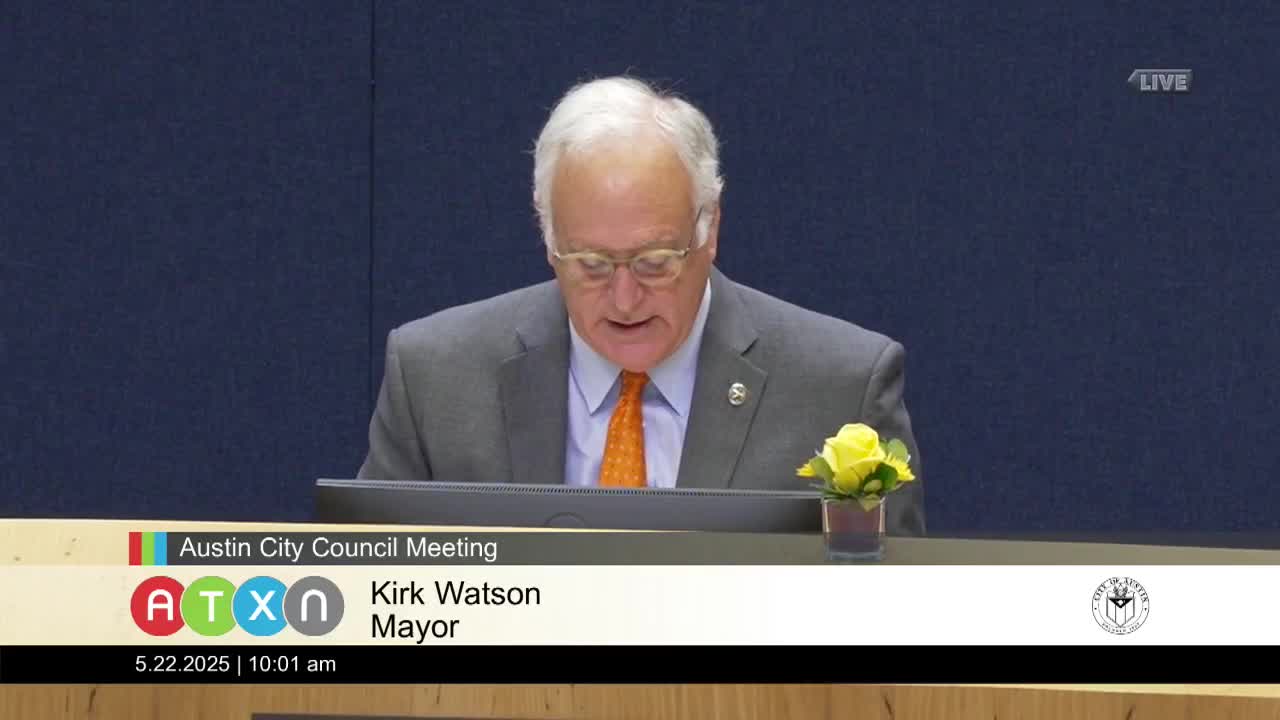
The Austin City Council voted May 22 to commit funding for structural roadway elements that would allow future construction of caps and smaller “stitches” over parts of Interstate 35, approving a set of narrower projects and a funding plan the council said would reduce city cash exposure while leaving room for private and state contributions.
The council approved a resolution to authorize up to $104 million in commitments to preserve the structural elements (sometimes described as “foundations” or “roadway elements”) needed for caps and stitches across several blocks downtown and at northern crossings. The actual budget appropriation the council authorized for the city to set aside immediately was $63 million; staff said the remainder would be pursued through identified loans and other funding mechanisms.
Why it matters: City leaders and neighborhood advocates framed the decision around two competing priorities: (1) reconnecting neighborhoods that I‑35 has separated for decades and building emergency green space and pedestrian connections, and (2) protecting the city’s limited debt capacity and preserving funding for parks, housing and other urgent needs. The compromise that passed funds the “roadway elements” now — so the city can accept a State Infrastructure Bank loan and certificates of obligation if needed — while looking to philanthropy, event revenue, naming rights and other outside sources to pay for the full decks or park amenities later.
What the council approved - Item 42: Councilmember Paige Ellis moved the staff recommendation as a base motion and then considered amendments. A compromise amendment offered by Councilmember José “Chito” Cadre prevailed. The final motion commits the city to fund roadway elements to integrate caps/stitches at Cesar Chavez to Fourth Street, Fourth to Seventh Street (as additional roadway elements), and Eleventh to Twelfth streets, and to preserve the opportunity for two 300‑foot stitches near the Red Line Parkway. The council approved the final motion 8–2 with one abstention (Councilmembers Lane and Duchin opposed; Councilmember Siegel abstained). The motion directed staff to negotiate an advance funding agreement with TxDOT and to pursue other funding partners. - Item 43: Council adopted an ordinance to appropriate funds and authorize the city manager to execute an advance funding agreement with TxDOT for the city’s commitment. Staff replaced earlier larger dollar figures in the proposed ordinance with a $63 million appropriation to be available for the advance funding agreement; staff said $41 million was available already in the capital budget and the $63 million would cover the balance of the city’s immediate commitment if needed. The ordinance instructs staff to keep looking for outside funding and to return to council with refinements.
Council direction and process notes - Council asked staff to return with implementation steps and to keep the community and philanthropy engaged as potential funders. The city manager was directed to prepare financing options and to present those options to the city’s bond advisory and intergovernmental partners for consideration before the city commits additional general obligation or debt capacity. - The council also voted to postpone decisions that would fund decking amenities until the city has better clarity on funding and partnerships; several council members said they wanted to avoid locking the city into long‑term operations and maintenance obligations it could not afford.
Public input and controversy - Dozens of residents and local advocates spoke during multiple meetings and the May 22 session. Supporters — neighborhood advocates, climate and urbanists groups and some business leaders — argued caps would reconnect east and west, lower surface temperatures, create parkland and spur economic activity near transit. Opponents warned the caps would be extremely expensive, divert money from urgent needs such as affordable housing, and could worsen water and maintenance burdens in Austin’s drought‑prone future. - Several speakers asked the council to require stronger guarantees that philanthropic and non‑city sources would actually pay for decks and amenities before the city assumed significant risk.
What’s next - Staff will negotiate an advance funding agreement with TxDOT and return to council with a refined financing plan, including any philanthropic commitments or alternative funding streams identified. Councilmembers asked staff to continue pursuing private donors, naming rights, event revenues and other dedicated sources that would reduce the city’s direct debt exposure.
Ending note: The council’s vote preserves the technical underpinnings needed to build caps later while directing city and regional partners to harden external funding plans before the city accepts much larger construction or operating obligations. The move leaves open the possibility of different outcomes later — from no decking to limited stitches or to fully built caps — depending on future funding results.