Get Full Government Meeting Transcripts, Videos, & Alerts Forever!
Get email alerts on the Civic Engagement topic
No spam. Unsubscribe anytime.
Council debates structure for youth council; options include parks program or formal commission
Summary
Councilmembers and staff discussed whether a planned Lynnwood youth council should launch as a parks program or be established as a formal advisory commission. Concerns included Open Public Meetings Act implications, parental consent for minors, staffing and long-term sustainability.
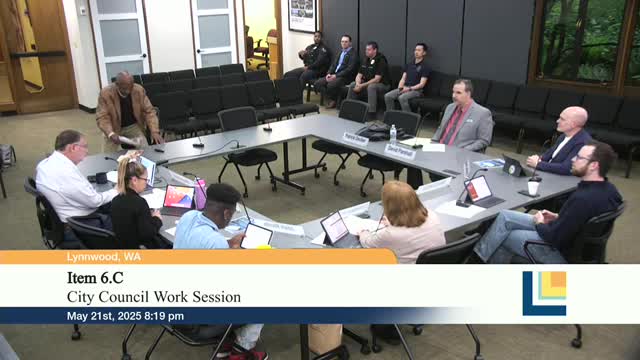
Lynnwood — City Council members spent substantial time May 21 discussing how to organize a planned youth council after a months-long task-group process produced a draft ordinance and a recommended framework.
The central question: should the youth body start as a parks-run program (informal, staff-led) or be formed as a formal board or commission under city code (advisory to council but subject to Open Public Meetings Act and public-record rules)? Council members and staff identified tradeoffs on transparency, youth safety and sustainability.
Why it matters: A formal commission gives youth a designated advisory role and a direct channel to council but triggers OPMA (public meetings) and public-records requirements that some council members said could discourage participation by vulnerable youth. A program housed in the Parks, Recreation and Cultural Arts department would avoid some OPMA/PRA exposure and allow a phased, staff-supported start, but would not automatically carry the advisory status of a commission.
What the task group proposed and youth preferences Stakeholder meetings, which included multiple youth participants, produced a proposed framework the task group circulated to council: eligibility for members would be residence or school attendance within the Edmonds School District boundary; ages 15 to 20; two-year terms with a one-year senior option; and two meetings per month (more as needed). The youth stakeholders the task group convened reportedly favored a formal advisory role.
Legal and operational concerns raised - Open Public Meetings Act (OPMA) and public-records act (PRA): City staff and the city attorney advised that a commission triggers OPMA and PRA; council asked the clerk to survey peer cities for lessons on how they protect youth privacy and run youth commissions. - Parental consent and minors: For participants under age 18, the council discussed application form fields and the need to minimize sensitive data collection; staff committed to review application language with the city clerk and city attorney. - Staffing and sustainability: Councilmembers said a long-term location within city operations (parks or another department) and funding are needed so the youth council can outlast council turnover.
Process questions and next steps Several council members asked for clearer choice points and a staff-led work session that lays out options, risks and sample ordinance language in standard format used by other commissions. The council agreed to gather additional information from the parks department, the city clerk and the city attorney and to schedule follow-up work-session time where youth stakeholders and Director Faber (Parks, Recreation and Cultural Arts) can participate.
A procedural action During the meeting council approved a motion to extend the meeting to finish the agenda; the motion passed by voice vote (ayes recorded).
Ending note Council members asked the task group to prepare a revised package that includes: example ordinance language formatted to match other city commissions, an application form vetted for minor-safety concerns, and legal review notes on OPMA/PRA implications. They also requested that youth stakeholders be invited to a subsequent work session so council members may hear directly from young people about their preferred structure.