Get Full Government Meeting Transcripts, Videos, & Alerts Forever!
Get email alerts on the Public Safety topic
No spam. Unsubscribe anytime.
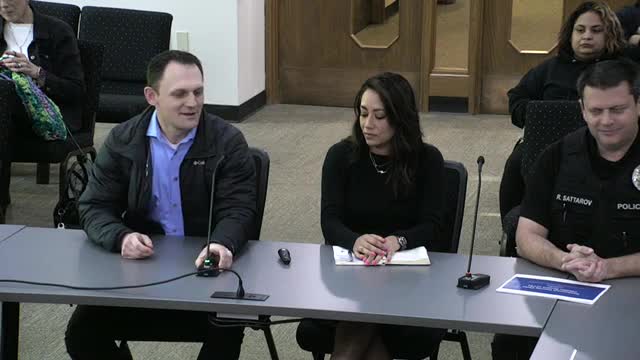
Lynnwood police present rise in juvenile violent crime, urge community and schools to partner
Summary
Lynnwood Police officials told the City Council on May 21 that juvenile involvement in gang-related violent crime has risen in recent years and asked for stronger community, school and family partnerships, including consideration of school resource officers and data sharing with neighboring jurisdictions.
Lynnwood — Lynnwood Police Department officials briefed the City Council on May 21 about an upward trend in violent juvenile crime across south Snohomish County, saying the cases now more frequently include assaults, robberies and homicides and that many involve people ages roughly 13 to 20.
The presentation, led by Detective Russ Satteroff and Commander Justin Gann with crime-analyst support from Olivia Kieran, used Snohomish County Child Fatality Review data and local case counts to show increases in gang-related incidents and juvenile violent-crime reports since 2022. "There are no happy numbers here," Satteroff told the council, adding that many of the incidents the department tracks involve weapons and long-term harm to victims and families.
The briefing emphasized several findings the department said are relevant to council and community planning: a high share of gang-related cases involve juveniles (the presentation cited 63 percent countywide in the slides used), juveniles in these cases are often in the mid-teens, and a large share of youths reported online threats. Satteroff said the department excluded lower-level offenses such as petty shoplifting from the slides and focused on felony-level assaults, robberies, drive-by shootings and homicides.
Why it matters: Council members said the numbers help explain what they are seeing in schools and neighborhoods and shape local policy choices, from youth services to whether the city should advocate for a return of school resource officers (SROs) in nearby school districts.
Key supporting details - Scope and sources: Police said slides combined 2025 Snohomish County Child Fatality Review findings with Lynnwood-specific case counts compiled by the department; Kieran and Satteroff prepared the local figures. - Types of incidents tracked: Detective Satteroff said the department focused presentation slides on felony assault (often involving a weapon), robbery and homicide, not minor schoolyard fights or petty thefts. - Age range: Presenters described juvenile involvement generally between about 13 and 20 years old, with many cases centering on mid-teen ages. - School contacts and SROs: slides compared data from periods with and without SROs and flagged large percentage increases at some Lynnwood schools after SRO programs ended; Meadowdale schools were highlighted as an example with steep rises in school-related case reports and calls for service. - Social media and threats: presenters said interviews used by Department of Children, Youth & Families (DCYF) indicated many families reported online threats; police noted such threats may be in private messages and are not monitored by police unless they create a public threat.
Council questions and police responses Council members asked whether the department had analyzed causes for the sharp year-to-year jump shown from 2023 to 2024. Commander Gann and Detective Satteroff pointed to a combination of factors they believe contributed, including legislative changes affecting how officers can engage juveniles, social-media driven behaviors (they cited trends such as how-to theft challenges that circulated online), and broader community influences; the presenters said the department does not capture school dropout or economic indicators in their records and would rely on school districts and other agencies for that data. When asked about regional comparators, the presenters said the patterns in south Snohomish County — covering Lynnwood, Everett and Marysville — are broadly consistent.
Police said they can provide more granular school-by-school and calls-for-service figures on request and encouraged council members to request data from the Snohomish County sheriff for schools outside Lynnwood city jurisdiction.
Community partnerships and interventions Police described the department's regular work with families, schools and a Domestic Violence (DV) coordinator who follows up on families. They said one common path begins with family concerns, school referrals and repeated, trust-building conversations with youth and parents; these are followed by referrals to social services or collaborative interventions when necessary. The department recommended a "whole community" approach and emphasized that parental involvement and reporting often help investigators develop leads, particularly in juvenile-involved shootings.
On gun violence, Detective Satteroff said juveniles frequently have access to stolen firearms and that prosecutors may deprioritize lesser charges when offices are overloaded, limiting deterrence for juvenile offenders. He said there is no single enforcement-only solution and called for cross-sector work.
Quotes from the meeting "There are no winners, and there is fatalities, and there is injuries and long term implications," Detective Russ Satteroff said during the presentation.
"If the parents are involved or the guardians, that does help us because then we can at least get a feel for the child," Commander Justin Gann said when council members asked about family involvement.
What the council directed or discussed next Council members pressed for additional, school-specific data and asked the department to prepare school-related call and case metrics that could be shared with affected school districts and the public. Multiple council members also suggested the data could strengthen future advocacy for SROs or other school-based supports; the department said it would provide tailored data on request.
Ending note Council members thanked officers for the briefing and asked staff for follow-up reports with school-level breakdowns and easier-to-share visuals for community meetings. The department said it would supply additional figures and explained that data covering schools outside Lynnwood would need to come from county law enforcement partners.