Get Full Government Meeting Transcripts, Videos, & Alerts Forever!
Get email alerts on the Curb Cuts topic
No spam. Unsubscribe anytime.
Cambridge committee weighs delegating curb-cut approvals; abutter notice, renter status and on-site posting debated
Summary
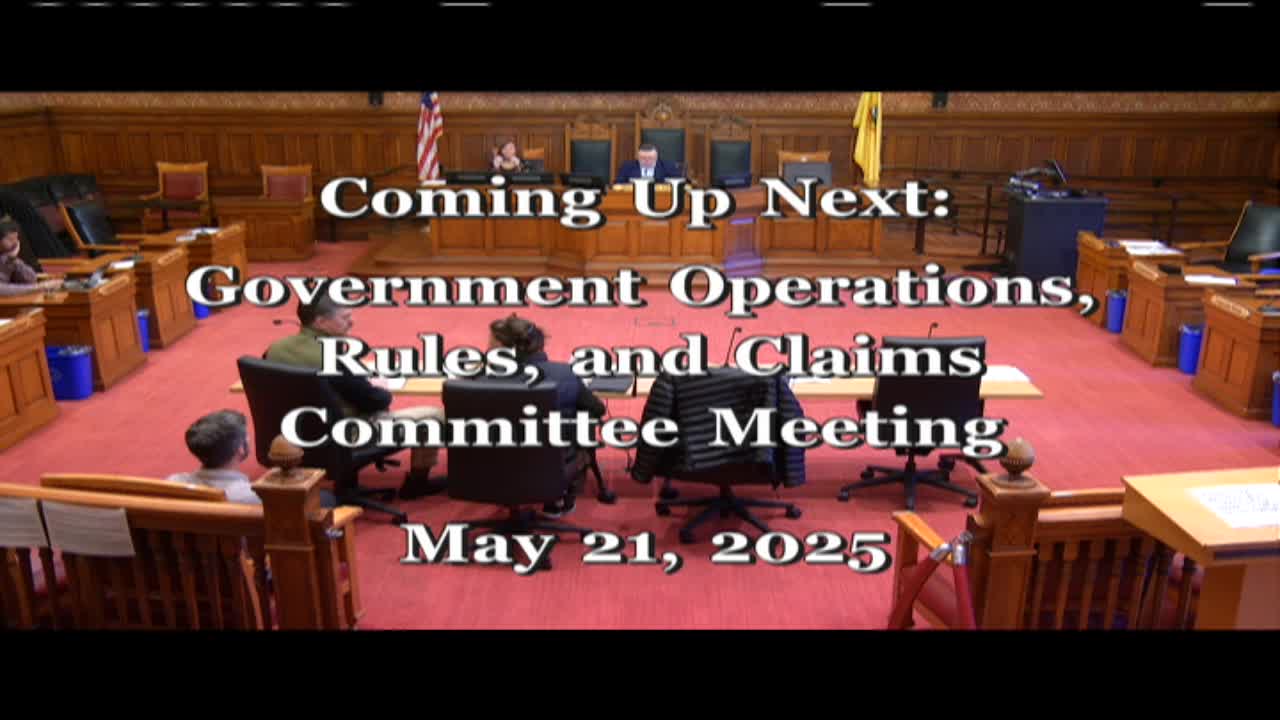
Cambridge’s Government Operations Rules & Claims Committee spent its meeting reviewing whether authority to approve or deny private curb cuts should be delegated from the City Council to city departments, how ‘‘abutters’’ should be defined, and what notification steps should be required.
Cambridge’s Government Operations Rules & Claims Committee spent its meeting reviewing whether authority to approve or deny private curb cuts should be delegated from the City Council to city departments, how ‘‘abutters’’ should be defined, and what notification steps should be required.
City transportation and public-works staff told the committee that curb-cut regulations exist to “avoid the creation of nuisances, hazards, and unreasonable impediments to traffic,” and outlined a range of options including a fully delegated staff process, a hybrid model, and revisions to how abutters and neighborhood organizations are notified. Brooke McKenna, commissioner of the Department of Transportation, summarized the staff position: “If the answer to that is yes, we would need to really follow clear and objective criteria.”
The issue matters to neighbors because a curb cut converts public curb space into private use, a point several councilors and members of the public emphasized. “A curb cut grants a private property owner the ability to privatize existing publicly owned and publicly accessed curb space,” said Patrick McKee during public comment. Resident Regis Shields said the council should revisit a recent approval at 177 Hancock Street after claiming developer-submitted materials omitted at least six disapproval votes: “The city council approved a curb cut at 177 Hancock Street next door to my building, in March. And this approval was made with incomplete information, because we have a completely nonoperating neighborhood association.”
Why the change is proposed
Staff described the current application flow: a property owner submits a plot plan and abutter approval/denial forms; Inspectional Services Department (ISD) checks zoning, the Department of Transportation reviews traffic and safety impacts, the Department of Public Works reviews design, and historical preservation staff review impacts to protected properties. If a proposal meets technical criteria, staff sign-offs go to the city clerk and then to the City Council for final consideration. Staff identified recurring pain points: unclear neighborhood-association boundaries, out-of-date contact information, applicants being responsible for collecting abutter responses, and a significant amount of Council time spent on individual curb-cut reviews.
How a delegated or hybrid process would work
Staff presented two core alternatives: a fully delegated process in which staff would approve applications that pass objective, pass/fail criteria (with a mandatory abutter-notification requirement and a defined threshold of abutter approval), and a hybrid process where staff approve uncontested applications but those that fail an abutter-approval threshold would be forwarded to Council.
Staff emphasized that any delegation would require “very clear and objective” criteria, and cautioned that abutter notification is the trickiest operational piece because ownership records are the most readily available public source of addresses. Commissioner Kathy Watkins (Public Works) and McKenna both flagged the practical difficulty of defining and reliably notifying abutters, especially in multiunit buildings.
What committee members and the public said
Councilors expressed a range of views: some said the City Council should retain responsibility because curb cuts transfer public assets to private use; others favored delegation to reduce routine agenda items and keep the Council focused on policy. Councilor Sabrina Wheeler said a fully delegated model would align Cambridge with nearby cities: “The city councils in Somerville and Boston don’t approve individual curb cuts. This would put us in line with our neighbors in that regard.” Councilor Zusi and Vice Mayor McGovern voiced support for a standards-based, objective process that staff can apply.
Multiple councilors and commenters proposed concrete changes to the notification process. Suggestions included: - Requiring on-site posting for proposed curb cuts, similar to BZA or planning-board postings; staff and several councilors noted that a visible sign at the locus quickly alerts nearby residents. - Routing abutter responses to the city (Inspectional Services) rather than returning them to applicants, after a public commenter alleged developer-collected responses were not forwarded. - Expanding the notion of “abutter” beyond deed owners to include renters or all residents within a defined radius (proposals discussed included 300–500 feet), with staff cautioned that multiunit buildings pose counting and logistics challenges. - Requiring applicants to pay the cost of city mailings if the city will send notices to every household in the defined area.
Staff-provided data and operational clarifications
Inspectional Services Department staff told the committee that curb-cut applications have been relatively consistent in recent years: 20 in 2019; 13 in 2020; 18 in 2021; 20 in 2022; 16 in 2023; 18 in 2024; and about 9 so far in 2025. Staff also clarified that zoning criteria (setbacks, curb-cut widths, distances from intersections and visibility requirements) are the technical standards ISD and other departments routinely apply, and that zoning issues that do not meet standards are referred to the Board of Zoning Appeal (BZA).
Points of agreement and next steps
Committee members coalesced around several procedural ideas: retaining clear, objective pass/fail technical criteria for staff review; eliminating the neighborhood-association step from the standard workflow; posting notice at the curb-cut site; and routing abutter responses to the city rather than through the applicant. Several councilors asked staff to return with draft ordinance language and examples (including how Somerville and Boston handle curb cuts), specific proposals for an expanded but manageable abutter definition, options for a percentage threshold for abutter approval if a delegated model is used, and sample reporting or appeal mechanisms (for example, an annual report summarizing delegated approvals and any controversial cases).
The committee did not adopt a final policy at this meeting. It ended with a procedural vote to adjourn. On a motion by Councilor Zusi to adjourn, the roll call recorded Vice Mayor McGovern, Councilor Sabrina Wheeler and Councilor Zusi voting in the affirmative, with Councilor Zine and Councilor Toner absent.