Lifetime Citizen Portal Access — AI Briefings, Alerts & Unlimited Follows
UN commemoration of International Tea Day spotlights tea’s role in livelihoods and the SDGs
Loading...
Summary
Diplomats and FAO officials gathered at United Nations Headquarters in New York to mark International Tea Day and highlight tea production’s contributions to rural livelihoods, women’s employment and several Sustainable Development Goals, while calling for science, technology and fairer markets to bolster smallholders.
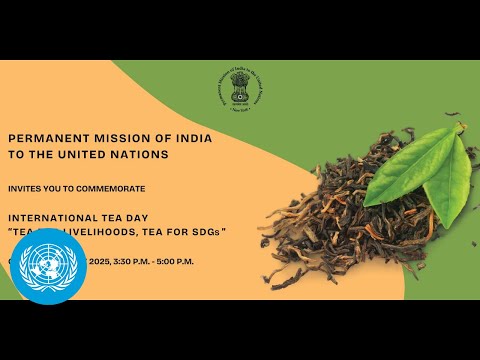
Delegates and diplomats gathered at United Nations Headquarters in New York for a commemoration of International Tea Day under the theme “Tea for Livelihoods, Tea for SDGs,” where speakers emphasized tea production’s contributions to employment, women’s empowerment and climate-resilient agriculture.
The event, hosted by the Permanent Mission of India, drew representatives from major tea-producing countries and the Food and Agriculture Organization. Speakers framed tea as both a cultural product and an economic sector that supports millions of livelihoods, and they urged international cooperation on research, pricing and sustainable practices to protect smallholders and workers.
Ambassador Parvadhaneni Harish, Permanent Representative of India to the United Nations, said the General Assembly resolution that declared May 21 International Tea Day underlines tea’s role in “combating hunger and poverty, sustaining rural livelihoods, and fostering inclusive economic growth.” He noted India’s experience in linking tea cultivation to job creation and research and said the sector “directly employs over 1,500,000 workers” and “supports over 10,000,000 livelihoods.” He also highlighted the Toklai Tea Research Institute’s Toklai Good Agricultural Practices standard launched in 2022 as India’s effort to build climate-resilient production.
Angelica Hekome, director of the Food and Agriculture Organization liaison office in New York, said smallholders account for “over 60% of global tea production” and stressed the need for investment in science, digital tools and research to improve resilience and market access for small producers. “To build a sustainable and thriving tea sector, it is essential to embrace science and innovation, invest in digital technologies, and prioritize research,” she said.
Several country representatives described national efforts and the sector’s social impact. Ambassador Hoang Giang Dang of Vietnam noted Vietnam’s place among the world’s top tea exporters and gave figures cited in his remarks—about 121,000 tons in annual production and roughly $211,000,000 in export earnings—while urging greater cooperation on sustainable production. Kenya’s representative, Erastus Ekitela Locale, said the Kenyan tea industry provides income to smallholders and “supports over 5,000,000 people, both directly and indirectly,” and described linkages between tea, agroforestry and national tree-planting initiatives.
Sri Lanka’s chargé d’affaires, Vitanage Chatura Jeeva Ke Perera, spoke about Ceylon tea’s long history, the importance of hand-plucking to quality and efforts to obtain ethical and organic certifications that aim to improve workers’ conditions and environmental outcomes. Indonesia’s Charge d’Affaires Irrawati Mamesa emphasized tea’s role in rural livelihoods and tourism across the archipelago. Liu Likun, counselor at the Permanent Mission of China, framed tea as a bridge between people and nature and said China is working with partners to use tea value chains for poverty alleviation and green development.
Speakers identified common challenges: climate change disrupting growing conditions, volatile and low farm-gate prices, and the need for better access to credit, technology and extension services for smallholders. Several presenters recommended employing tools such as climate forecasting, drone-based crop management and blockchain-enabled traceability to improve supply-chain resilience and fair pricing. The FAO Intergovernmental Group on Tea was referenced as an existing forum for technical cooperation among tea-producing countries.
The commemoration concluded with an invitation to a curated tea tasting at the Vienna Café and a group photograph. Organizers framed the day as both a celebration of tea’s cultural role and a prompt for multilateral cooperation to protect the livelihoods the crop supports.