Get Full Government Meeting Transcripts, Videos, & Alerts Forever!
Get email alerts on the Children And Family Services topic
No spam. Unsubscribe anytime.
Portland councilors press for answers after Portland Children's Levy awards prompt protests from Black-led groups
Summary
Portland councilors asked staff for more data and possible remand after public testimony accused the Portland Children's Levy allocation committee of favoring large, white-led organizations in a funding round that community groups say needed to prioritize Black-led and culturally specific providers.
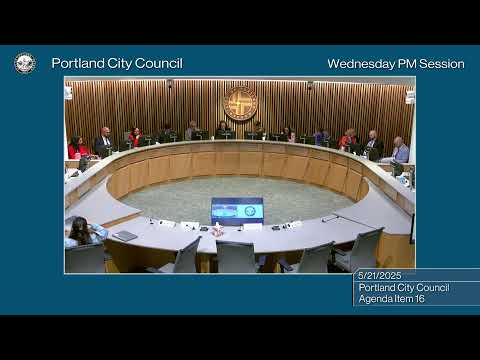
Portland councilors questioned Portland Children's Levy (PCL) staff and allocation committee members on May 21 after public testimony accused the committee of sending most hunger-relief and youth-services dollars to large, white-led organizations instead of smaller, culturally specific or Black-led groups. Councilors said they want more detail before finalizing funding so they can judge whether recommendations followed the levy's stated equity priorities.
The levy director and allocation staff told council the funding round was unusually competitive: the amount available for large grants is projected to fall about 21 percent (from roughly $27.2 million to a projected $21.56 million per year over the next three-year cycle) as PCL spends down a fund balance and property-tax revenue declines. At the same time the levy saw a 45 percent increase in applications (68 applications, many from organizations that had not previously received PCL funding). PCL staff said community priorities and the new community council process were used to weigh applications where scores were close.
Many public testifiers said scoring and portfolio-selection produced results that undercut the levy's equity goals: higher-scoring or longer-established Black-led applicants were not recommended while large regional institutions received large awards. Testimony named specific examples, including the Portland-area Equitable Giving Circle and community organizations that focus on Black and immigrant youth. Speakers asked the council either to remand some program-area decisions back to the allocation committee for reconsideration or to provide clearer, public documentation showing how scores and priorities were applied.
Council discussion focused on process and timelines. Council president (presiding) and PCL staff described the options: under ordinance and prior practice, council could remand decisions by funding category back to the allocation committee for reconsideration; remanding would delay grant distribution and could require the allocation committee to reconvene quickly. Staff said the committee could reconvene but timing would depend on members' availability and on the specific instructions council gave. Council legal staff said remand by category is an available tool but that, as the remanding body, council cannot substitute its own grant decisions for those of the allocation committee.
Councilors flagged three recurring concerns raised in public testimony: (1) whether reviewer scoring and the community-council overlay were applied consistently across program areas; (2) whether performance problems at a small number of currently funded providers justified the committee's choice not to continue them; and (3) whether the community-council priority to favor new or smaller organizations was applied in a manner that unintentionally favored some large routine grantees. PCL staff answered that many decisions were driven by documented performance history, by community-council priorities (for example to prioritize small or new grantees in certain program areas), and by a substantial decline in available funds.
Several councilors requested more data before a second reading vote: a breakdown of scoring vs. the community-council overlay, the content of 'anonymous portfolios' used in some selection steps, clarification of performance reviews that led the allocation committee to decline some renewal requests, and a timeline for whether the allocation committee could reconvene in time to keep agency contracts on schedule for July 1 program starts. Council president and PCL staff committed to provide additional written information to council offices and to the public before the June 4 council meeting.
What happened next: This item was a first reading of PCL's large-grant recommendations; no final grant vote occurred May 21. Councilors can either approve the recommendations as filed at second reading or move to remand specific program areas to the allocation committee for reconsideration. PCL staff said the allocation committee is willing to reconvene if the council requests a remand and staff will return to council with timing implications.
Why it matters: The Portland Children's Levy (PCL) is the city's primary dedicated local investment dedicated to young children and families. The levy's award decisions determine which organizations deliver mentoring, after-school, child abuse prevention, foster-care support and hunger-relief services across the city. Community groups told council they see a pattern that large, white-led organizations won a large share of the equity-targeted pots and warned continuing that pattern would harm smaller, culturally specific providers that mainly serve Black, immigrant and refugee families. Councilors said they will weigh the committee's evidence before a final vote so the decisions align with the levy's equity commitments and with practical deadlines for July 1 program starts.
Spokespeople and organizations heard in the hearing: Portland Children's Levy director Erica Bridgeman Boonioli; PCL allocation committee chair (name on file with PCL); PCL staffer Lisa Pellegrino; speakers who requested reconsideration or a remand included Dr. Carmen Thompson (community member), Michael Franklin (advocate), AJ McCrary (Equitable Giving Circle), Erick Knox (Hala & Hala School), Sahan McKelvey (Self Enhancement Inc.), Beth Burns (PAIR), Heather Martin (Cares Northwest), and many others who represented culturally specific organizations and community coalitions.
What council asked staff to provide next: (1) a table linking each recommended grant to scores, reviewer notes and any performance concerns the allocation committee cited, (2) an explanation of the anonymous-portfolio method and whether organizations appeared in multiple portfolios, (3) a schedule (and legal guidance) showing how quickly the allocation committee could reconvene to reconsider one or more program-area decisions if council votes to remand, and (4) a written explanation of how community-council priorities (favoring small/new organizations or priority populations) were applied across program areas.
Short-term follow-up: Council requested the extra materials for all council offices and asked staff to post supplemental detail online before the council's June 4 meeting so members — and the public — can judge whether a remand is warranted.