Get Full Government Meeting Transcripts, Videos, & Alerts Forever!
Get email alerts on the Health Equity Crdp topic
No spam. Unsubscribe anytime.
Lawmakers, grantees warn May Revision cut to California Reducing Disparities Project will end contracts midstream
Summary
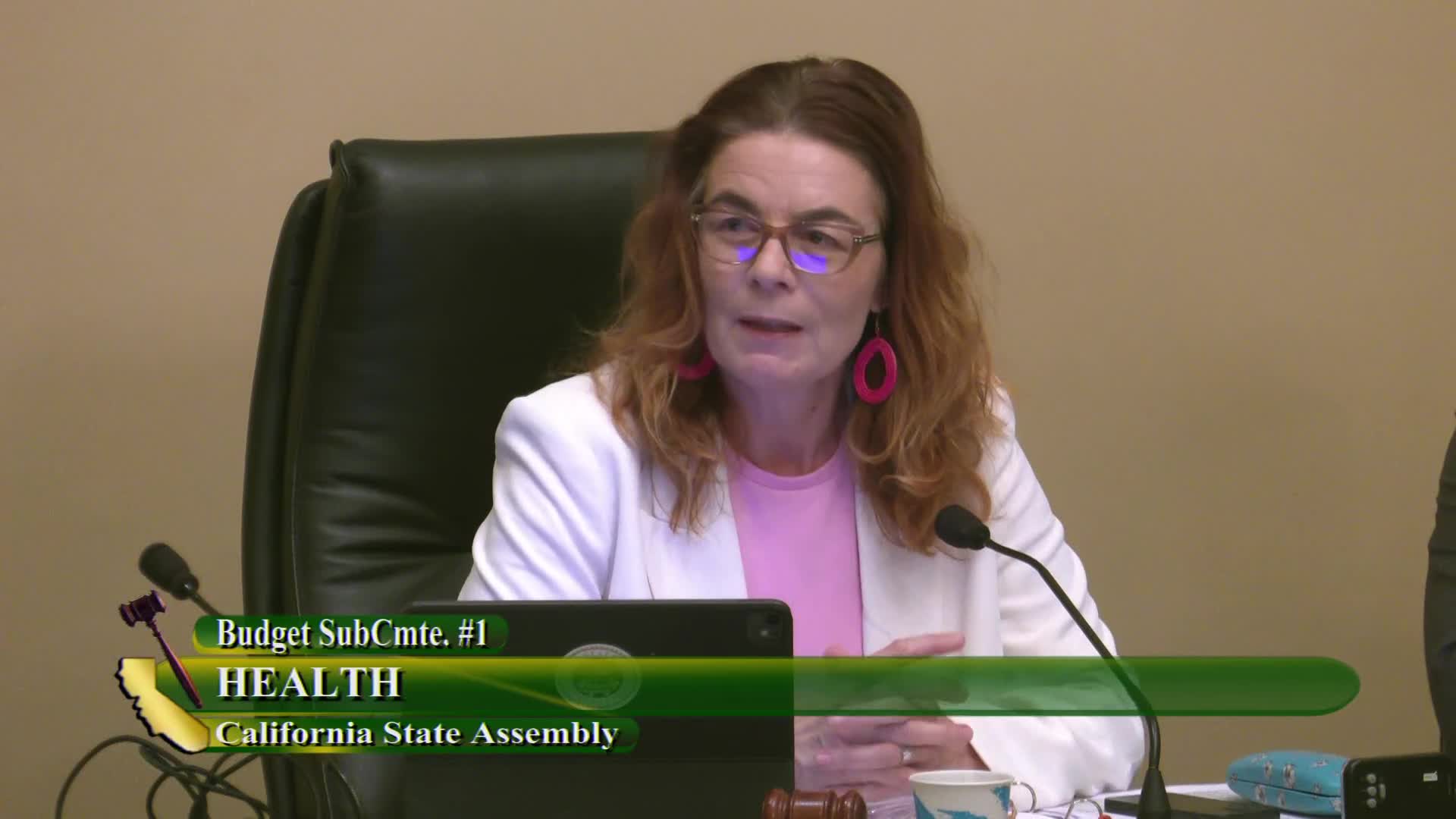
Assembly Budget Subcommittee No. 1 on Health heard pleas from Assemblymembers, public health officials and dozens of community providers on May 23 to restore about $15.8 million in funding for the California Reducing Disparities Project after the Governor's May Revision proposed reverting the money as a budget solution.
Assembly Budget Subcommittee No. 1 on Health members and dozens of community providers urged state finance and health officials on May 23 to reverse a proposed $15.8 million reversion to the California Reducing Disparities Project, warning the reduction would end active contracts and disrupt services to historically underserved communities.
The subcommittee heard testimony that CRDP supports community-defined, culturally responsive prevention and early intervention programs for African American, Latinx, Asian, Pacific Islander, Native American and LGBTQ+ communities. “These are mid-contract grantees delivering critical health programming,” Assemblymember Zuber said during his opening remarks, noting the May Revision’s summary did not clearly disclose the proposed cut.
The Department of Public Health acknowledged the reversion in its May Revision overview. Brandon Nunes, CDPH chief deputy director for operations, told the committee the CRDP reversion was among a set of one-time funds that the administration identified as available to help close a projected $12 billion state budget shortfall. Nunes said about 33 grants and nine contracts (roughly 40 awards) were affected and that the contracts were scheduled to extend through June 2026.
CRDP grantees and evaluators told the panel the programs show measurable benefits and that an abrupt reversion would interrupt implementation and evaluation. “We have evaluated this program. We have one more year to complete. There’s thousands of people in the middle of getting care,” said Elia de la Cristo Leduci, a senior researcher with Loyola Marymount University’s statewide evaluation team, who said the evaluation shows a benefit-cost ratio of up to $5 returned for every dollar invested.
Multiple local providers described services that would end or be scaled back if funding is reverted. Safe Passages CEO Josefina Alvarado Mena said the Oakland-based program serves hundreds of youth and would have 26 active participants left in the middle of ongoing services if the funding stops. Representatives from Muslim American Society Social Service Foundation, Asian American Recovery Services and several rural, tribal and Black-led providers made similar appeals.
Assemblymembers on the dais expressed frustration with the budget trade-off and asked CDPH and the Department of Finance for more detail on why CRDP was selected. Chair Addis pressed the Department of Finance to explain alternatives and stressed the small size of the reversion relative to the overall shortfall. Will Owens of the Legislative Analyst’s Office said the administration must provide more backup documentation on the Behavioral Health Services Fund (formerly the Mental Health Services Fund) and its available balance before the legislature can complete a fiscal assessment.
CDPH and other witnesses said some of the impacted funding items were one-time appropriations that would have expired in 2026 and that reverting them now was a tool to reduce current-year general fund exposure. Christine Chador, who cited CDPH’s CRDP evaluation, told the subcommittee the programs have been effective at delivering mental health services to underserved communities.
Public commenters filled the hearing room. Many identified their organization, the CRDP-funded program they operate or the communities they serve, and urged the subcommittee to “reject the proposed $15.8 million cut.” Dozens of speakers said the programs are saving lives and building trust with communities that otherwise avoid care.
The chair closed the item urging the administration to return with alternatives and more detailed impact analyses. “I did a tiny bit of math,” the chair said, “and we’re talking about 0.13% of the budget shortfall. Consider whether there are other less painful options.” The committee then proceeded to other agenda items.
Ending: The committee did not take a vote on CRDP funding during this hearing. Members asked CDPH and the Department of Finance to report back with detailed fiscal backup, estimated service and job impacts if the reversion proceeds, and options that would avoid interrupting services mid-contract.