
Residents say weekslong water outage left trailer-park tenants facing 30-day eviction
Get AI-powered insights, summaries, and transcripts
Subscribe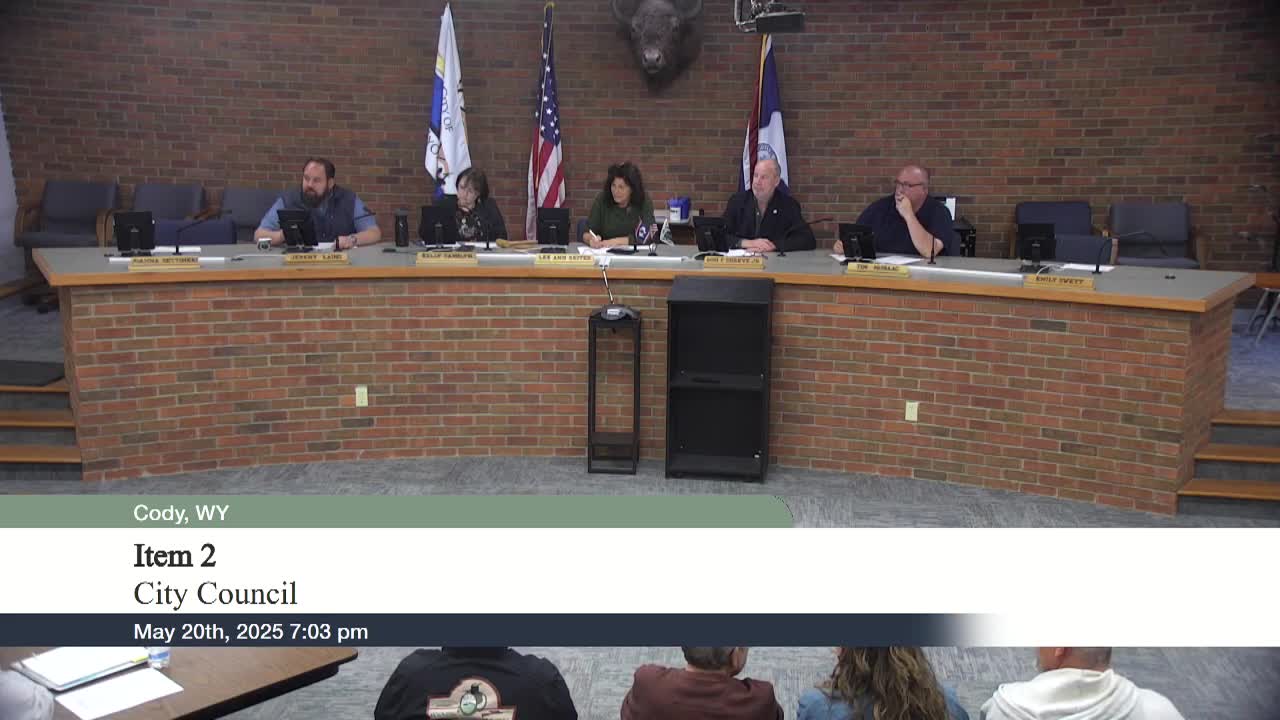
Summary
Residents of a Cody trailer park told the City Council they have been without potable water for about six weeks and were served 30-day notices to move their trailers; property owners and city staff said the site’s water infrastructure has failed and the city cited code requiring basic living conditions.
Residents of a Cody mobile home court told the City Council on a night of public comment that a roughly six-week loss of drinking water has left several households unable to clean, cook or maintain basic hygiene and that this week they were served 30-day notices to remove their trailers from the property.
At the podium, Nicole Eck said she and nine other trailers on the lot have faced service interruptions “for almost six weeks” and that “today we were all issued with 30 days to move our trailers.” Eck said she and other tenants are renters who cannot readily move their units and that the notice leaves them uncertain where they will go.
The comment followed corroboration from long-term residents and from the property owner. Carol Cole Wellong, who said she has lived at the park 11 years, said she has been hauling water and washing clothes early in the day to cope with the outage. “I have a full day before I even get to work,” she told the council, adding that parks elsewhere will not accept older mobile homes and that moving a 1977 trailer is not realistic for many tenants.
Adrian Arsmendi, who said he owns one of the trailers at the park, asked the council to help and said he was prepared to assist tenants financially if that would keep them housed while repairs are arranged. “I want my tenants to have water,” Arsmendi said.
Dave Daniels, who identified himself as the owner of the trailer court, told the council the site’s well and distribution infrastructure are failing. “The well is failing. We put a new well down, put a new pressure pump on it and it does not work,” Daniels said. He said sewer and water lines under the trailers are “completely gone” and that he was told by city staff he would be fined if people remain living there without water. Daniels said he has tried to contact other responsible parties and asked to meet with council members after the meeting to discuss options for giving tenants more time while repairs or a temporary water solution are arranged.
Mayor (name not stated) acknowledged the city’s limited legal authority over private property but told attendees, “we will do what we can within our means to help.” Council member MacIsaac also asked Eck and Daniels to exchange contact information: “I’d ask you to text me after this meeting. I’d like to talk to you later,” MacIsaac said.
City staff and the council noted legal and code limits cited during the discussion. Daniels said he had been told by a city staff member, Sean Collier, that city code requires basic living conditions and that property owners can be fined if tenants occupy units without water. Residents said they had contacted legal aid and been told moving trailers and resolving zoning or permit issues will take longer than 30 days.
What happened next: Council members and staff agreed to speak with the property owner and tenants after the meeting. Several council members invited the parties to remain for follow-up conversation immediately after adjournment.
Why it matters: Tenants described acute housing and health risks from prolonged lack of water and short timelines for vacating; the situation involves private-property responsibilities, city code enforcement, and practical barriers to relocating older mobile homes.
Additional context: Speakers said nine trailers are on the lot, seven are currently occupied, and some tenants— including at least one pregnant household member—had to find alternate housing while others remain without a water supply. Residents said the eviction notices give tenants 30 days to move; the outage had persisted “about six weeks.” The city referenced code requirements for habitability; residents said they had sought legal-aid guidance and that permits, zoning and physical relocation constraints will likely extend any realistic timeline for moving trailers.