
Council approves local license for cannabidiol and THC‑infused beverages; city attorney cites century‑old statute
Get AI-powered insights, summaries, and transcripts
Subscribe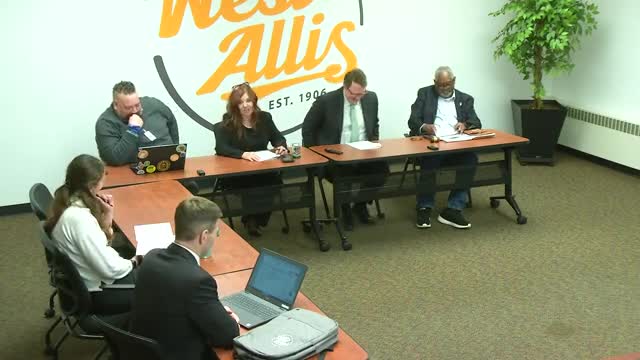
Summary
After an extended public safety committee discussion, the council approved an ordinance to create a local retail license to regulate cannabidiol and THC‑infused non‑alcoholic beverages, with enforcement by police and labeling and age restrictions modeled on alcohol rules.
The West Allis Common Council on May 20 approved an ordinance to create a local license regulating retail sales of cannabidiol and THC‑infused non‑alcoholic beverages.
During the public safety committee discussion council members, city attorneys and the police chief debated the legal basis and enforcement. City attorney (transcript: Attorney Decker) told the committee that the city can create a local license under an older state provision dating to Prohibition that authorizes municipal licensure of sales of certain non‑intoxicating beverages. "In order for the city to create a local license for a business, there needs to be a state statute authorizing," Attorney Decker said, and he explained that a 1921 law historically authorized licensing of non‑intoxicating beverages and that the statute can be applied to modern cannabidiol/THC drinks provided the city frames regulations to protect public health, safety and welfare.
Discussion among council members focused on enforcement, underage sales and product labeling. City staff noted that many products are already labeled with concentration information; the draft ordinance would require licensees to card customers and prohibit sales to under‑21 patrons in line with alcohol licensing practice, and it would impose a local retail license requirement enforced by police. Chief Mitchell said enforcement would be similar to current tavern checks: "It would be easy enough for us to do. We do tavern checks throughout the entire city now on a random basis. And when the police officers go in, they're checking for proper licensing. This would just be one more license for them to check for," he said. The chief also noted complexities for driving enforcement because state testing cannot currently distinguish precise THC quantities in blood and presence of THC can create legal issues for impaired driving enforcement.
Attorney Decker and other staff said the city could regulate labeling, sales to minors and require licensees to demonstrate age‑verification practices; actual product potency testing would be handled outside routine licensure and would pose separate challenges.
The committee moved the ordinance forward and the full council approved it by voice vote. The ordinance's text will establish application and licensing requirements and authorize police enforcement for unlicensed retail sales and sales to minors.