
Lake Forest says traffic signal synchronization cut travel time, cost commuters $2.6 million per year in savings
Get AI-powered insights, summaries, and transcripts
Subscribe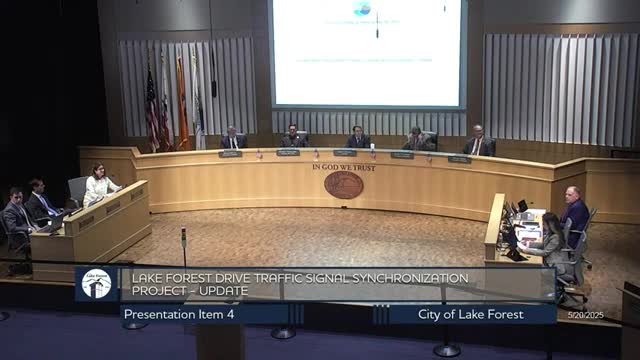
Summary
City traffic manager reported a completed signal synchronization project along El Toro corridor that the city says reduced stops and travel times, improved detection and is projected to save commuters about $2.6 million annually versus a $275,000 Lake Forest share of the project cost.
Lake Forest — The city presented final results on the Lake Forest traffic signal synchronization project on May 20, saying the corridor upgrades reduced travel times, cut the number of stops and are expected to produce sizable annual savings for commuters.
Traffic Manager Tran Tran told the City Council the project upgraded timing and infrastructure from State Route 133 in Irvine to Portola Parkway, partnering with Caltrans and the cities of Irvine and Laguna Hills. Tran said the work included new video detection systems and upgraded communications from copper to fiber to support real‑time monitoring.
“Reductions in travel times range from 9 to 19%,” Tran said, and he reported reductions in stops and in delays while increasing travel speeds by “10 to 24%.” He said the improvements benefit “over 54,000 drivers each day” and that OCTA’s formula for travel‑time, vehicle maintenance and emissions savings produces an estimated annual benefit of approximately $2,600,000. Tran said the total project cost across partners was about $1,600,000 and that the City of Lake Forest’s share was roughly $275,000, producing a benefit‑cost ratio the city calculated as about 5:1 over three years.
Council members asked how residents should report timing problems. Council Member Cervantes asked for the resident reporting mechanism; Tran pointed to the city’s “Contact Us/Ask Lake Forest” website and app and said reports trigger staff review of logs and real‑time video feeds. Tran also explained the mix of detection systems: upgraded fiber communications, video detection and remaining in‑road sensors.
Council members asked for detail on the $2.6 million savings figure; Tran said it is a cumulative OCTA calculation that includes travel‑time savings, reduced vehicle maintenance and lower fuel emissions.
Why it matters: The project affects a major arterial route used by tens of thousands of daily drivers; improvements in travel time and reliability can affect commute costs, emissions and traffic flow throughout the corridor.
What’s next: Tran said timing plans will be further enhanced over time and staff will monitor resident reports through the city’s portal. No formal council action was required for the presentation.