Get Full Government Meeting Transcripts, Videos, & Alerts Forever!
Get email alerts on the Special Education topic
No spam. Unsubscribe anytime.
Salem School Committee hears special education update; DESE finds district “meets requirements”
Summary
Jen DuSettley, the district’s executive director of special education, reported to the Salem School Committee that about 1,100 students have IEPs and that the Massachusetts Department of Elementary and Secondary Education found the district “meets requirements.”
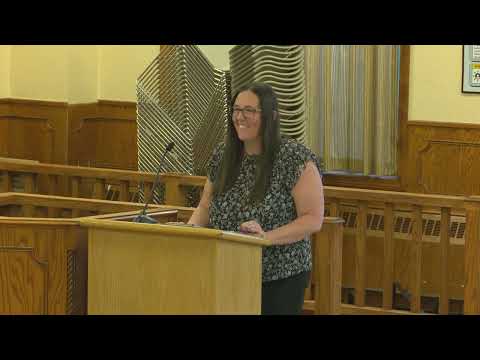
Salem — The Salem School Committee on May 19 received a wide‑ranging update on special education from Jen DuSettley, the district’s executive director of special education, who said the district now serves about 1,100 students with Individualized Education Programs (IEPs).
DuSettley told the committee that roughly 72 percent of students with IEPs receive the majority of their education in inclusion or partial inclusion settings, about 7 percent attend out‑of‑district placements and roughly 20 percent are served in substantially separate settings. “We have about 1,100 students with an IEP this year,” she said.
The update included the district’s most recent federal IDEA determination from the Massachusetts Department of Elementary and Secondary Education (DESE). DuSettley said Salem was one of only three districts in the Mass Urban Districts group to receive a “meets requirements” determination. “We were one of only three of those districts that met requirements,” she said, attributing the result to district providers and staff.
Why it matters: The DESE determination aggregates compliance, outcomes and reporting measures used to evaluate special education services; a “meets requirements” finding signals the state’s review did not identify systemic noncompliance requiring corrective action.
Key data and initiatives described by DuSettley: - Identification and placement: about 16–17 percent of students are identified under the autism category, with a statewide trend toward increased autism diagnoses; the largest single category remains specific learning disability at about 22 percent. - Instructional placement: roughly 72 percent in inclusion/partial inclusion; about 7 percent out of district; about 20 percent in substantially separate settings. - Student outcomes: DESE highlighted fourth‑grade math performance for students with disabilities as a strength; eighth‑grade math and one‑year post‑school outcomes were cited as areas for growth. DuSettley said the district is attempting to improve post‑school outcome reporting by contacting families at senior IEP meetings and following up during the summer. - Workforce and pipeline: the district piloted an “aspiring educators” pathway for special education licenses; 11 staff participated, with two already licensed and two completing modules toward licensure. - Professional development and partnerships: the district continued a Landmark Scholars partnership for teacher study in reading and inclusion instruction, launched asynchronous special education modules for staff, expanded unified sports and increased bilingual evaluation capacity through a vendor called Lilypad (evaluations available in 39 languages).
Committee discussion focused on inclusion and outcomes. Member Cruz urged continued outreach and culturally responsive engagement with Latino families, calling for more diverse parent participation in special education advisory efforts. Superintendent Dr. Zreich and committee members emphasized the district’s intent to increase inclusion opportunities and teacher coaching while acknowledging resource and training constraints.
The presentation closed with DuSettley outlining next‑year priorities including formalizing the aspiring educator pipeline, expanding inclusion supports and updating curriculum and discrete trial instructional materials for students with more significant needs.
The committee did not take a vote on these items but thanked DuSettley and staff for the report and recommended continued focus on family engagement and inclusive instruction.