Get Full Government Meeting Transcripts, Videos, & Alerts Forever!
Get email alerts on the Education Technology topic
No spam. Unsubscribe anytime.
Alexandria schools present draft AI guidance, emphasize teacher training and guardrails
Summary
A cross‑functional district task force presented draft guidance on responsible artificial intelligence use in classrooms, with staff training already delivered and a plan to finalize guidance by the end of the school year. Trustees questioned grade‑level introductions, privacy and legal risks.
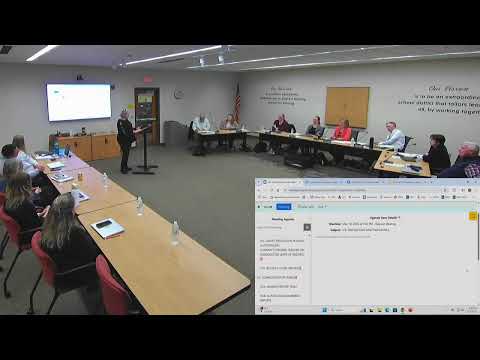
The Alexandria Public School District on Tuesday presented a draft guidance document on the responsible use of artificial intelligence in instruction and operations, following a year of work by a cross‑functional AI task force that included teachers, administrators and student representatives.
Kevin Brezina, who led the district’s AI task force, told the board the group met several times from October through February and later solicited staff feedback. “AI won’t replace humans. It's not gonna replace humans. That's not what we're looking to do. But humans using AI may replace humans not using AI,” Brezina said while describing the committee’s approach to guidance and staff support.
Jan Fonazo, a business education teacher at Alexandria Area High School who served on the task force, described classroom opportunities and concerns. She said AI can help with personalization, administrative efficiency, differentiated lesson planning and faster feedback. Fonazo gave an example in which she used an AI tool with guardrails to provide immediate, formative feedback on student writing without rewriting students’ text, which she said improved presentation quality.
At the same time, Fonazo and other task force members flagged several challenges: academic integrity, student privacy, legal uncertainty, potential mental‑health impacts and educator proficiency with the tools. The presentation listed several tools staff are experimenting with, including Google Gemini, Microsoft Copilot, ChatGPT and MagicSchool (education versions), and highlighted the importance of guardrails, attribution and ethical use.
The task force proposed continuous review of the guidance and broader stakeholder engagement; staff training was reported as already delivered to district employees on March 31, and district staff have access to one year of supplementary online training. The district’s goal is to finalize the guidance by the end of the school year so teachers can begin next year with common expectations.
Board members asked about when students should be introduced to generative AI. Task force members said early‑childhood and primary grades will not be heavy users; guidance is focused first on staff and older elementary grades through high school. Several trustees urged caution about introducing AI too early and recommended more outreach to parents; others called for ongoing policy work to address legal and privacy questions.
District leaders said they will continue teacher development, engage parent groups and monitor licensing/costs; Brezina said current widely used tools are available under existing district agreements and that the district will report back if additional licensing costs arise. The presentation closed with a call for continued dialogue and a reminder that guidance will be updated as tools and risks evolve.
Why it matters: Students already use AI tools outside school, and educators are seeking to balance instructional opportunities with concerns about academic integrity, privacy and equity. The district’s guidance and training aim to give teachers guardrails and consistent expectations as student use grows.