Get Full Government Meeting Transcripts, Videos, & Alerts Forever!
Get email alerts on the Alcohol Permitting topic
No spam. Unsubscribe anytime.
Council reviews draft changes to alcohol permitting, seeks clarifications on change-of-use and park rules
Summary
City legal and parks staff presented proposed changes to the city’s alcohol permitting rules on May 6, asking councilors to clarify whether temporary event permits should trigger building‑code change‑of‑use reviews and to reconcile park rules that currently differ from charitable-event permits.
City legal and staff presented proposed changes to the city’s alcohol permitting code at the May 6 City Council meeting, asking councilors to clarify whether temporary event permits should trigger building code change‑of‑use reviews and to align park event rules with charitable-event permits.
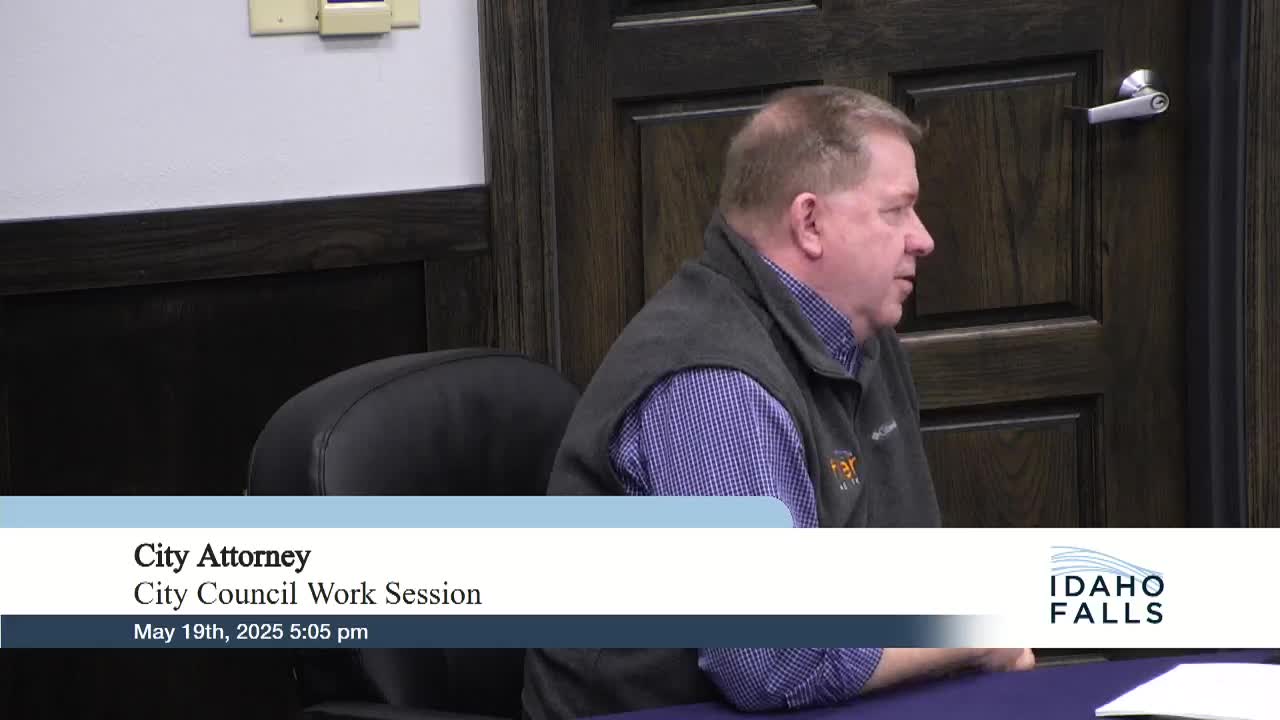
City attorney (name not given in the presentation) opened the discussion by reminding the council that the state legislature authorizes cities to regulate the sale, dispensing and consumption of alcohol and that Idaho’s state code uses separate chapters for on‑premises liquor, beer and wine. The draft ordinance staff presented would:
- Clarify that a permanent license to dispense alcohol (a business authorization) may trigger a change‑of‑use analysis and related building-code requirements, but that temporary permits for limited special events should not automatically be deemed a change in use; - Rename the local "liquor catering permit" to "alcohol catering permit" so the permit name matches state code and clearly covers beer, wine and distilled spirits when an authorized licensee is dispensing; and - Remove a local requirement that special-event permits on public property obtain a variance if they are within 300 feet of a school or house of worship (the state requires that variance only for permanent licenses, staff said), while retaining that distance requirement for permanent business licenses as required by state law.
Parks and event rules
Staff also proposed reconciling inconsistencies between the city’s charitable-event permit rules and the rules that apply to permitted events on city parks. That would remove a 1,250-square-foot limit (the “alive after 5” rule for a particular plaza) for charitable events on public property and replace it with the city’s standard special-event review (a site plan, security and trash plans, and other requirements). Staff suggested language limiting a Riverwalk stage consumption area so it would not encroach on public sidewalks or streets; Parks staff confirmed the distance from the current stage to nearby restrooms is about 65 feet and supported a site-specific approach rather than a fixed park‑wide square footage cap.
Renewals and administration
Councilors suggested two clarifications: make explicit that a routine renewal of an existing permanent license should not trigger a change‑of‑use reexamination, and provide practical guidance for applicants and the clerk’s office on advance notice and turnaround expectations for temporary permits. Councilors discussed using an application-level recommendation (for example, a suggested two business‑day lead time) rather than a hard ordinance deadline so clerks can exercise limited discretion for last‑minute requests.
Next steps
Staff said they will revise draft language to make the renewal exception explicit, align charitable-event and park-permitted-event rules, update terminology to "alcohol catering permit," and add clarifying restrictions to prevent consumption areas from spilling into public sidewalks or roads. The city attorney said staff would return to council with the revised ordinance for further consideration and possible placement on a future meeting agenda.