Get Full Government Meeting Transcripts, Videos, & Alerts Forever!
Get email alerts on the State Budget topic
No spam. Unsubscribe anytime.
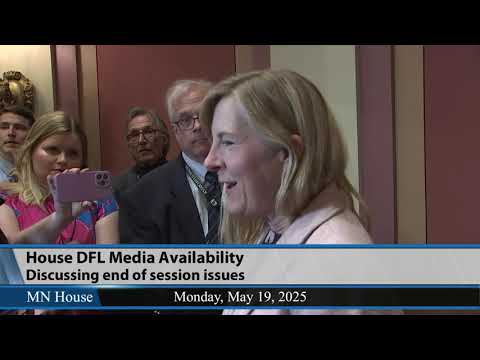
Legislative leader: budget deal largely in place but special session likely as policy disputes persist
Summary
An unnamed legislative leader told reporters a full budget agreement exists but unresolved policy disputes mean work will likely continue in a special session; June 1 is a hard deadline to avoid layoff notices, and leaders plan work groups on education and taxes.
A legislative leader (unnamed) told reporters on the final day of the regular 2025 legislative session that lawmakers have a full budget agreement but several outstanding policy disagreements mean some work will likely move to a special session.
The leader said the priority is completing what can be finished rather than creating new disputes and described June 1 as a “really more serious deadline” because failing to enact bills by then would require sending layoff notices. “If we don't have everything passed and enacted in a law by then, then we have to send layoff notices,” the leader said.
Why it matters: The leader framed the remaining work as primarily policy disagreements separate from the budget deal and said leaders will ask appointees to function like conference committees — holding public meetings and exchanging offers — to resolve issues on education and taxes before adjourning. The leader said the goal is to finish as soon as possible and that completing the work by May 31 would be ideal.
Key remaining items and positions - Paid family and medical leave: The leader said negotiators agreed to lower the top premium from 1.2% to 1.1%. The leader added that some lawmakers, notably Sen. Judy Seeberger, were pushing for deeper cuts, which could reopen that part of the agreement.
- K–12 funding and private school aid: The leader said GOP members opposed tapping nonpublic pupil aids and charter school facilities aid for the E-12 (K–12) bill and described those items as “highly unlikely” to be included, though the final decisions will be made by the members working on that bill.
- Conference/work groups and committee reports: The leader said higher education, environment and state government conference work were hoped-for reports by the end of the day but warned they might have to continue work in the special session. The leader said the parties would meet later in the day and again the next morning to finalize a special-session work plan.
- MinnesotaCare for undocumented adults and other health items: The leader said logistics for including MinnesotaCare coverage for undocumented adults had not been worked out and that the health budget conversations depended on other committee work finishing first, likely within 12–24 hours.
Process and transparency The leader acknowledged that leadership negotiations have not historically been public and said past attempts to work with cameras in the room reduced productivity. “When the cameras were in the room, not much got done,” the leader said, adding that the ability to show bottom lines and caucus positions in private is part of why those talks remain closed.
Timing and worst-case scenario The leader said they hope a one-day special session is possible but cautioned it could stretch to three days if members refuse procedural steps such as suspending rules. The leader also reiterated that any special session requires the governor’s agreement and must be called by the governor in order for legislators to meet again after adjournment.
What comes next Leaders planned further meetings to finalize a special-session agenda. The leader said if there is “nothing to do” later in the evening they likely will adjourn and await the governor’s call for a special session, if necessary.