Get Full Government Meeting Transcripts, Videos, & Alerts Forever!
Get email alerts on the Legislative Audits topic
No spam. Unsubscribe anytime.
Legislative auditors say most uncorrected findings are recent; LUMA data delay slows statewide audits
Summary
April Renfro of the Legislative Services Office told the Joint Finance and Appropriations Committee that 70% of uncorrected audit findings are from the current reporting period, that some older findings remain open, and that late financial data from the state's LUMA accounting system delayed this year's statewide audits.
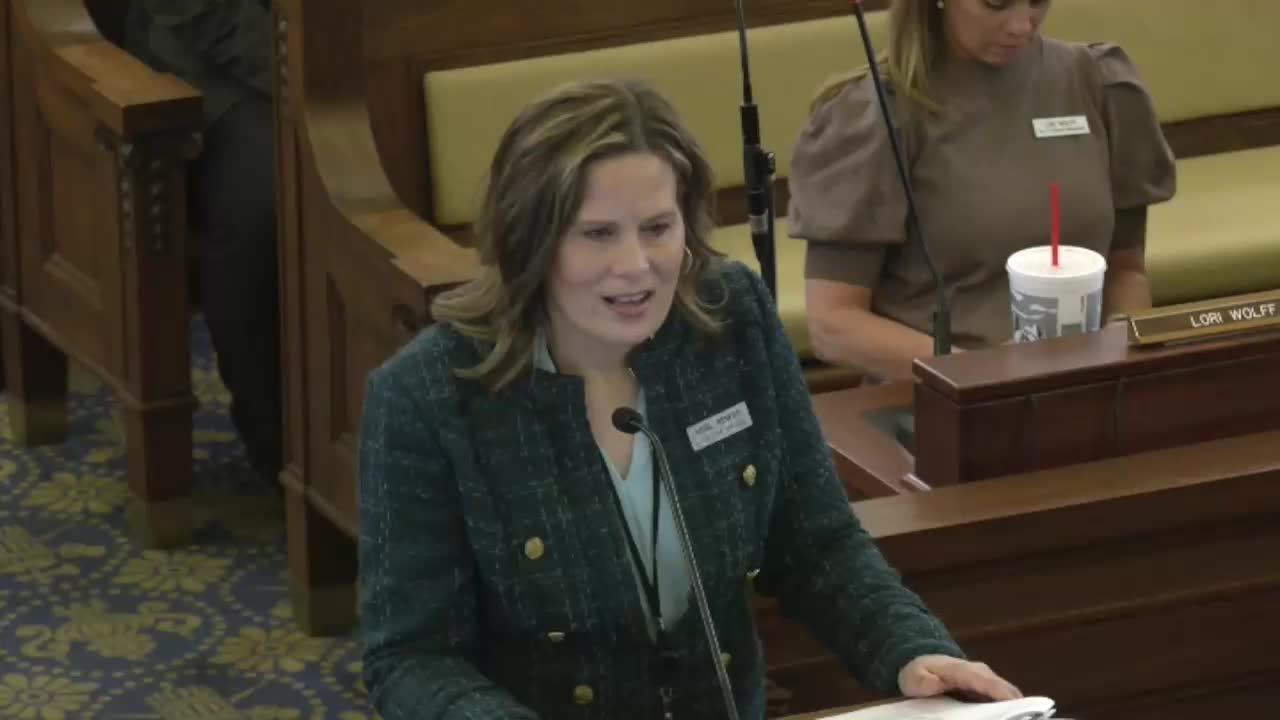
April Renfro, legislative auditor with the Legislative Services Office, told the Joint Finance and Appropriations Committee on Jan. 7 that the office is continuing to issue accountability and financial-audit findings to state agencies and is reporting annually on those that remain uncorrected.
"Seventy percent of our uncorrected findings are from the current reporting period," Renfro said, adding that the office’s annual report on uncorrected findings will be distributed to committee members the same day.
The audit office, she said, performs a range of work that includes the annual audit of the Statewide Annual Comprehensive Financial Report (ACFR), the single-audit of federal awards, and periodic accountability reports of state agencies. The office has roughly 30 financial and IT auditors and one administrative assistant, and it plans about 28 reports a year that typically cover 11 to 15 agencies for the ACFR work, Renfro said.
Why some findings remain open
Renfro described several reasons findings can remain open for more than one follow-up cycle: limited opportunities to test (some reports are produced once or twice a year), complex corrective actions that require legislation or redistributed procedures, and corrective steps that agencies take but that do not effectively resolve the deficiency. She said the audit office uses 90-day follow-ups and up to two annual follow-ups for accountability reports and will mark findings as "corrected," "partially corrected," or "uncorrected" based on whether the corrective actions both were implemented and worked.
She gave a nonpunitive example that is common across agencies: travel expenditures. Her team found, in an older accountability report for the Department of Fish and Game, missing or incomplete travel vouchers and missing documentation such as receipts and mileage support. After a 90-day follow-up some policies had been adopted but not all; at the one-year follow-up the matter had reverted to "uncorrected," in part because of the office’s transition to the LUMA accounting system.
Audit findings about foster-care documentation
Renfro highlighted several findings in the Department of Health and Welfare's fiscal 2023 accountability report that auditors marked as significant for qualitative reasons. In a sample of 19 qualified residential treatment program (QRTP) placements auditors found: 10 cases lacked a completed placement assessment; about 5% of cases did not include all required details; 21% lacked a located court order; one case (about 5%) had a placement date that was not within 60 days of the start of placement; 84% did not retain a court notice documenting placement date and recommended level of care; and 42% of sampled cases lacked the required 30-day minimum case consultations. Renfro said those gaps reflected inconsistent internal controls and document retention and could materially affect children in the state's care.
Timing and LUMA-related delays
Renfro told members the audit office's work is regulated by statutes that set due dates: the ACFR is generally compiled for the fiscal year and the state controller is expected to deliver draft financial statements around Nov. 1 so auditors can complete the ACFR work by Dec. 31; the single audit is generally due March 31. This year, Renfro said, the controllers' office delivered the draft statements much later than expected. "We did not receive them until December 30, so we are just now working through the audit of those financial statements," she said, and the office has provided the state controller an estimated completion target of March for the ACFR work. Renfro said that lateness makes it unlikely the office will meet the March 31 single-audit deadline and that she intends to notify the federal cognizant agency.
Consequences and follow-up
Committee members pressed on consequences when agencies do not correct findings. Renfro and committee co-chairs said the legislature can use budget controls — including withholding funding — to encourage corrective action. Renfro said disagreements between an agency and auditors are rare; when they occur in federal programs the disagreement may be resolved by consultation with federal grantors and, in a few historical cases, a finding was rescinded after the federal sponsor sided with the agency.
The audit office will release its uncorrected findings report to the committee and the public; Renfro said the number of older open findings has dropped from about five years’ worth to four years’ worth in the current report, a sign of progress.
Ending
Renfro finished by standing for questions; committee members urged colleagues to review agency-specific audit links on the legislative budget site and to factor open findings into budget work groups as they consider appropriations.