Half Moon Bay planning commission reviews draft objective design standards for multifamily and mixed‑use housing
Loading...
Summary
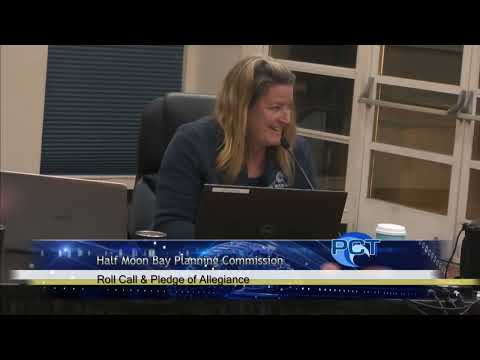
At its Oct. 14 meeting, the Half Moon Bay Planning Commission received a staff update on draft objective design standards that would apply to multifamily and mixed‑use housing in parts of the city and establish review procedures for qualifying ministerial projects under recent state law.
At its Oct. 14 meeting, the Half Moon Bay Planning Commission received a staff update on draft objective design standards that would apply to multifamily and mixed‑use housing in parts of the city and establish review procedures for qualifying ministerial projects under recent state law.
City planner Ocoee said the standards are intended to supply “a set of definable standards that can be used to regulate development” and pointed to SB 423 — which extended provisions of SB 35 into the coastal zone on Jan. 1, 2025 — as a key driver. Under current rules cited by staff, qualifying projects must meet an affordability threshold (10% in Half Moon Bay) and other eligibility criteria to use a streamlined ministerial approval path; objective design standards may still be applied to those ministerial approvals.
Commissioners and staff discussed three linked tasks: drafting the standards themselves (likely codified by reference in Chapter 14.37), identifying necessary zoning/code edits (Title 18 and the local coastal development chapter 18.20) and creating a multifamily/mixed‑use overlay to which the standards would apply. Ocoee said the overlay shown in the staff packet would cover most mixed‑use and multifamily zones outside of the Coastal Commission’s appeals jurisdiction but that the map could be revised.
A key question among commissioners was which parcels to include. Chair Steven Reddick confirmed for the record that Hatch School property falls inside the draft overlay, while the Podesta parcel immediately below the high school was excluded from the current draft map. Staff explained Podesta’s exclusion reflected underlying conditions tied to existing planned‑unit‑development (PUD) designations and mapped prime agricultural soils; staff said a PUD review or specific plan for Podesta would still trigger discretionary review and could include its own design rules. Commissioners pressed staff to return with a clearer, written analysis of the pros and cons of including Podesta in the overlay.
Design issues drew substantial discussion. Commissioner Rems questioned whether the draft graphics and prototype 3‑D models favored flat, boxy roofs, asking “are the design standards set? Are they fixed?” Ocoee replied they are not final and staff can accept direction to modify them. Several commissioners urged standards that discourage unbroken flat roofs on single‑story buildings and encourage traditional local forms: variants of Mission, California craftsman and coastal Victorian styles were repeatedly raised.
Commissioners and public commenters also asked for more objective, measurable wording in several places: whether awnings and trellises can be counted as mass‑breaking elements on small lots; how cumulative percentages (for example, the 75% coverage language for large‑lot features) should be read; whether window trim and other small details are sufficiently robust to prevent boxy façades; and how garage placement and driveway depth should be handled in long, narrow lots common in the city. Several commissioners noted potential conflicts with building and fire codes — particularly recent fire hardening rules (Zone 0) that may limit projections such as awnings or trellises — and asked staff to reconcile design language with those constraints.
Public commenters and commissioners also raised sustainability and maintenance questions that are not typically part of architectural guidance but affect outcomes: reuse of salvaged materials, mural treatments to break up large walls, and screening or detailing for ground‑mounted solar to prevent birds nesting beneath panels. James Benjamin, a resident who spoke during public comment, urged the commission to require geologic and hydrologic study for work in alluvial areas and to ensure erosion risks are considered in design and siting decisions.
Next steps described by staff included completing an administrative draft of code amendments in November, circulating drafts to the Coastal Commission for preliminary comment in January, revising for public hearings in April and then seeking Coastal Commission certification and local adoption. Staff said they plan to return to the Architectural Advisory Committee (AAC) for additional review and would continue working on graphics, checklists for qualifying affordable projects, and code references for enforcement and process clarity.
The commission did not take a formal vote on the draft standards at the Oct. 14 meeting; commissioners asked staff to return with refined language, clearer maps and written recommendations on the Podesta parcel and other points of contention.
The full draft design standards and the overlay map remain in staff reports; staff said they will circulate amended drafts and timing updates to the commission as those items are completed.
Ending — The planning commission scheduled follow‑up review and asked staff to report back with written analysis on Podesta, clarified objective language on massing and roof forms, edits aligning standards with fire and building codes, and a refined timeline for Coastal Commission review and certification.