Get Full Government Meeting Transcripts, Videos, & Alerts Forever!
Get email alerts on the Cluster Development topic
No spam. Unsubscribe anytime.
Staff recommends eliminating 'cluster' subdivision option after finding common open space is rarely useable
Summary
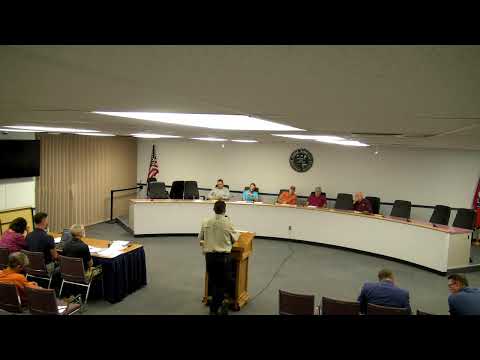
Planning staff reported that the county’s cluster subdivision option is not producing the intended usable common open space and asked the commission whether to amend or eliminate the option.
At a planning commission workshop item, county planning staff reviewed how the current “cluster” subdivision option has performed in practice and offered three paths forward: require clearer, demonstrable clustering that preserves usable common open space (potentially restricted to urban growth boundaries), amend the zoning text to fix an unintended omission, or eliminate the option and revert sites to conventional lot patterns.
Why it matters: The county’s cluster rule is intended to concentrate housing units and preserve shared natural open spaces. Staff said recent projects have produced smaller lots and peripheral, largely unusable “open space” (stormwater detention, steep topography or rockfaces) rather than community amenities. That outcome can leave homeowners’ associations with maintenance obligations for unusable land and fails to deliver the intended planning benefits.
What staff presented: A planning staff speaker summarized three options: - Keep the cluster option but require applicants to submit a genuine cluster concept plan that demonstrates units clustered around usable open space; otherwise the commission could deny applications that do not meet the rule’s intent. - Limit the cluster option to parcels inside an Urban Growth Boundary (UGB) so that cluster developments occur in less rural areas with municipal services. - Eliminate the cluster option entirely, reverting to standard rural lot sizes and letting developers choose PUDs where amenities are intended.
Commission reaction and direction requested: Commissioners raised concerns about maintenance of common areas by HOAs and whether the county should preserve the possibility of higher‑density designs in appropriate locations. One commissioner said common spaces have often been left undeveloped and are not maintained; another noted the county’s zoning amendment process inadvertently removed a protective provision that previously limited clusters near the Tennessee and Little Tennessee rivers. Staff asked for explicit direction from the commission on whether to prepare a zoning resolution amendment to eliminate the cluster option; several commissioners expressed support for drafting that resolution to be considered at the next meeting.
Clarifying details from the record: Staff said the typical outcome has been the same number of units delivered but with denser lot arrangement and common areas that function primarily as stormwater detention or steep, unusable slopes rather than community amenities. Commissioners requested that any proposed amendment clarify where clusters may and may not be used (staff noted the earlier protective language about primary refuges along the Tennessee and Little Tennessee rivers was unintentionally omitted during a prior amendment).
Next steps: Staff will draft a resolution removing or amending the cluster section of the zoning code as directed and present the proposed ordinance language at the commission’s next meeting for a vote.