Get Full Government Meeting Transcripts, Videos, & Alerts Forever!
Get email alerts on the Transportation Commission topic
No spam. Unsubscribe anytime.
Councilors debate creating a Transportation Commission; advocates urge dedicated staff support
Summary
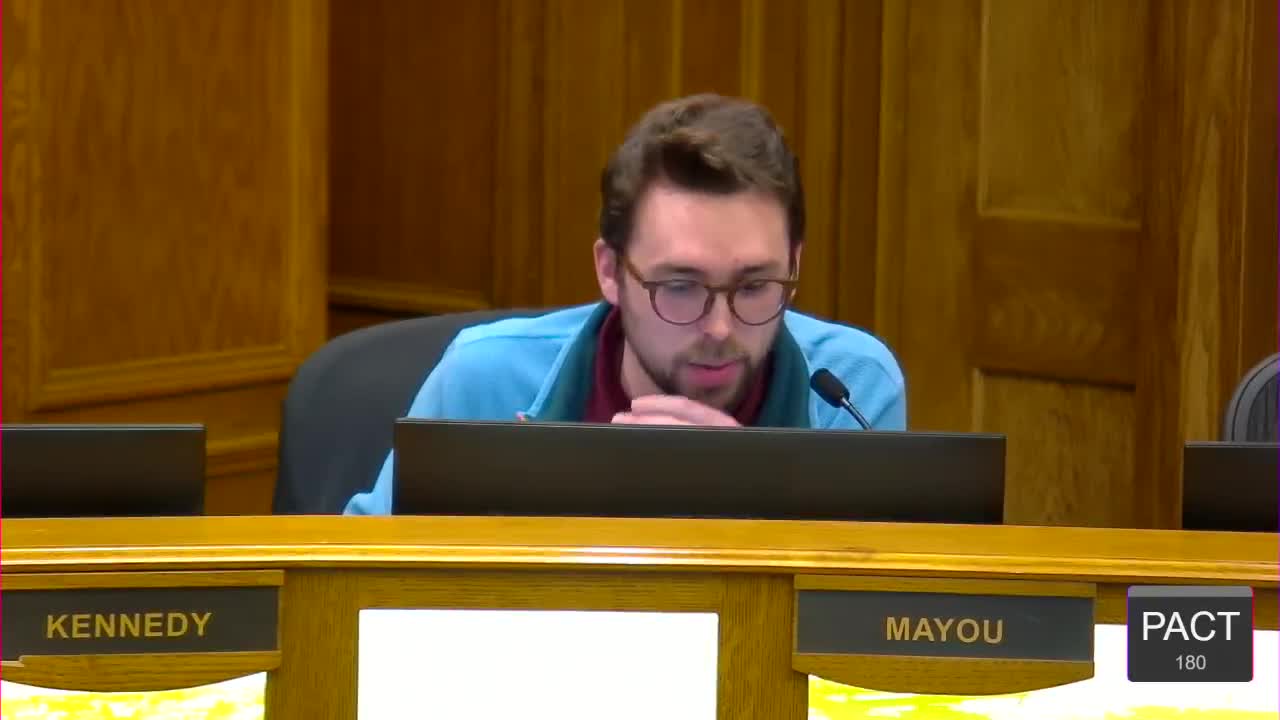
Councilor Mayo proposed an ordinance to establish a Duluth Transportation Commission to advise the council and administration on transportation policy, and councilors and staff debated staffing, scope and community engagement.
Councilor Mayo introduced an ordinance to establish a Duluth Transportation Commission to provide a forum for transportation project review and policy recommendations, and the council engaged in an extended discussion about structure, staffing and how existing community groups would fit into the new body.
Mayo said the commission would provide a home for transportation policy work — for example, ‘flow streets,’ complete‑streets policy work and corridor planning — and noted community requests for a dedicated transportation advisory body. Councilors and staff identified likely ex‑officio participants such as Duluth Transit Authority staff, planning and public works staff, sustainability staff and transportation advocates. John Dukic (senior policy advisor) and City Administrator Staling said the ordinance draft does not designate a dedicated staff member; staff noted many existing boards and commissions require staff support and that planning and public works are already stretched. Dukic said the commission is intended to streamline public input and provide policy recommendations rather than duplicate services.
Community advocates from Vibrant Streets Duluth (We Walk Duluth) urged the council to ensure the commission has dedicated staff capacity. Alice Tibbets, a co‑founder of We Walk Duluth / Vibrant Streets, said she has served on transportation committees elsewhere and that staff support improves outcomes and efficiency despite requiring more work. Councilors discussed whether the flow‑streets working group would be a subcommittee under the commission or whether the working group should be created separately; council members said that structure remains under discussion.
The ordinance sets a schedule of roughly 10 meetings per year, and staff indicated they could aim for recommendations and an operational plan after the commission is established, with some outputs expected in the months following its formation. Council did not take a final vote on the ordinance in the recorded exchange; councilors asked staff to arrange attendance by key departments at the next meeting.