Get Full Government Meeting Transcripts, Videos, & Alerts Forever!
Get email alerts on the Land Use Rezoning topic
No spam. Unsubscribe anytime.
Osceola commissioners approve rezoning for 19.45-acre parcel despite residents' objections
Summary
The Osceola Board of County Commissioners voted unanimously June 16 to approve consent items 22–32, which included Ordinance 2025-31 (ZMA 25-0003) rezoning roughly 19.45 acres near St. Cloud to allow low-density residential development, after residents raised concerns about traffic, neighborhood compatibility and public notice.
On June 16 the Osceola Board of County Commissioners approved consent items 22–32, which included Ordinance 2025-31 (ZMA 25-0003), a rezoning request affecting about 19.45 acres near the St. Cloud area known in testimony as Canoe Creek/Old Canoe Creek and Rambler Avenue.
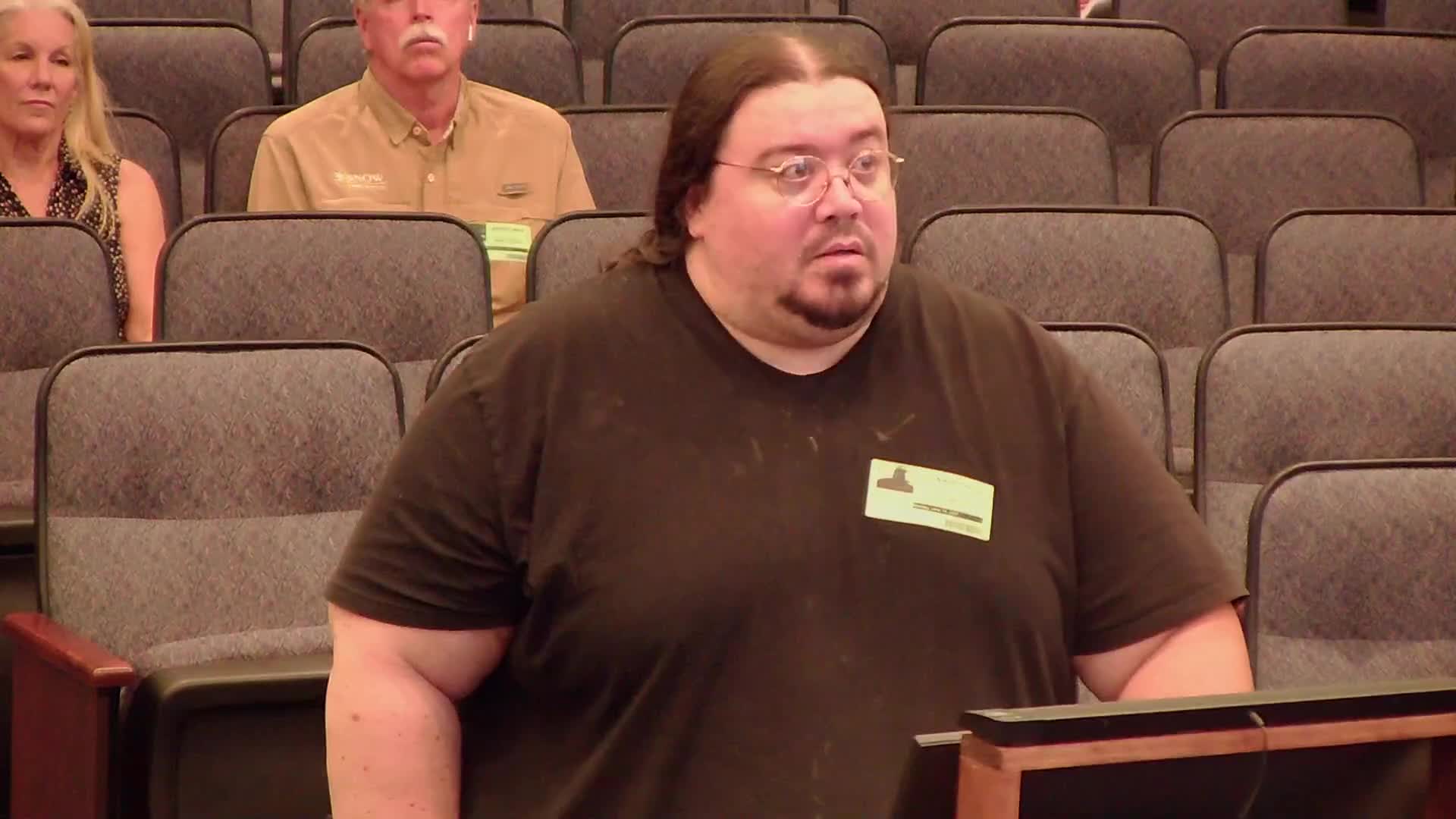
Residents who spoke during the consent public hearing urged the board to deny or delay the rezoning. "This is the first step towards another development in Saint Cloud, and we must consider this consequences carefully," said Jose Nieves, a resident of 4365 Rambler Avenue, who described current traffic delays and said planned roadway fixes would not arrive before new housing increases travel demand. "Our roads are currently overwhelmed," he said.
The matter was part of a package motion to approve items 22–32. After public comment, a commissioner moved to approve the consent items, a second was given and the board voted, with the chair announcing, "All in favor. Aye. Any opposed? That carries unanimously." The board did not record individual roll-call votes in the meeting transcript.
Resident Alexia Scarborough, speaking on behalf of Richard Ginsburg of 4505 Packard Avenue, told commissioners the proposal conflicts with the existing estate-lot character of the area and that density and lot-size standards would change significantly if approved. "Our area is defined by 2.5 to 5 acre estate lots. This proposal allows up to 8 homes per acre with lot widths as narrow as 45 feet," Scarborough said, and added that notification and public-engagement efforts felt insufficient: "You are being asked to vote without data and we are being asked to live with the consequences. This may not violate code but it absolutely violates the public trust."
County staff handled the quasi-judicial hearing procedures; the applicant did not speak during the public-comment portion. The transcript shows the board returned to business, made a motion to approve the consent items containing the rezoning and carried the motion unanimously.
Clarifying details provided by speakers included the parcel size (about 19.45 acres), an asserted potential density of up to eight homes per acre and concerns that traffic mitigation projects cited by speakers would not be completed before substantial new development. Speakers also said 250 notice mailers were sent for an April 9 meeting and that only two written objections were recorded in staff materials; speakers argued that other petitions and public input had been overlooked or minimized in a staff report.
The rezoning was considered as part of the board's consent public hearing and approved as part of the consent motion. The transcript does not record the applicant's presentation or a separate roll-call vote for Ordinance 2025-31; the board's approval was given as part of the bundled consent items.
The ordinance identifier given in testimony was Ordinance 2025-31 (ZMA 25-0003 / CMA25-0003). The record in the meeting transcript does not specify conditions attached to the approval or a detailed traffic-impact analysis at the rezoning stage; speakers urged the board to require additional study and community meetings before density increases proceed.
The board's approval means the county will proceed with the rezoning as approved in the consent bundle. The applicant and county planning staff did not provide additional timelines or final plat approvals during the hearing; follow-up materials or later agenda items would be the next opportunity for the public to review site-specific plans or conditions.
Provenance: public comments opposing the rezoning appear in the record beginning with Jose Nieves' remarks and conclude with the board's consent vote that carried the motion.