Get Full Government Meeting Transcripts, Videos, & Alerts Forever!
Get email alerts on the Transit And Micromobility topic
No spam. Unsubscribe anytime.
Charlottesville updates transit planning, scooter rules and e-bike voucher program
Summary
Staff outlined plans for regional transit funding work with CARTA, new dockless-scooter permit conditions, expansion of an e-bike voucher program and Safe Routes to School activities.
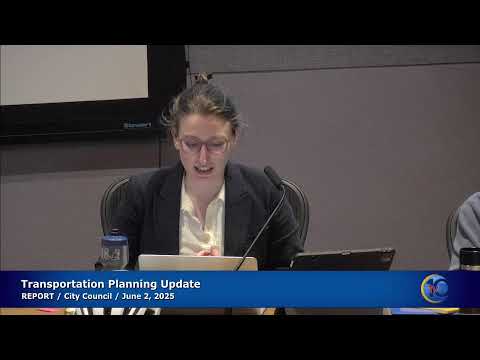
City transportation staff on June 2 described next steps for regional transit planning, updated rules for dockless scooters, an expanding e-bike voucher program and school-focused safety efforts.
Transit and funding: Chambers said the Charlottesville-Albemarle Regional Transit Authority (CARTA) and regional partners submitted a grant application and staff expect an award in July; he said staff are "aiming to do that in January 2026" to seek legislative support for dedicated transit funding. Chambers said staff are developing FY27 investment scenarios (frequency, nights, Sunday service), including operator and capital needs, and will coordinate with Albemarle County and regional finance staff.
Scooters and micromobility: staff said they plan to update the city's dockless mobility permit to require operators to provide staffing plans, parking-management plans, public-engagement plans and data-reporting so the city can enforce parking and collection standards. Staff extended the current permit through the end of the month while the city attorney and staff finalize language; Chambers said stronger reporting and operational requirements aim to keep the service while holding operators accountable.
E-bike vouchers and school programs: the city’s e-bike voucher program gives $1,000 vouchers via a lottery; Chambers said the program has been issuing 25 winners per quarter and that roughly 1,000 people applied each round. He added the city will also buy about 60 more bikes over six months for expanded school and after-school programming and is coordinating with the office of sustainability, social equity and social services to place bikes directly with people in need.
Safe Routes to School and other programs: staff said they continue to implement classroom bicycle instruction, school-zone quick-builds and speed-camera deployments at three school zones (Summit, Buford and Johnson). Chambers also described a bike-counting strategy and long-term bike parking planning to better measure and support cycling in the city.
Ending: staff said they will return as grant and legislative timelines firm up and will provide refined FY27 transit scenarios and permit language for micromobility.