Get Full Government Meeting Transcripts, Videos, & Alerts Forever!
Get email alerts on the Safer Streets topic
No spam. Unsubscribe anytime.
Charlottesville identifies 34 quick-build safety projects after fatality at First and Elliot
Summary
City transportation staff presented a phased 'safer streets' strategy and a first package of roughly 34 low-cost quick-build projects to deploy this year; engineers flagged site-distance and ADA constraints at a contested Elliot Avenue crossing.
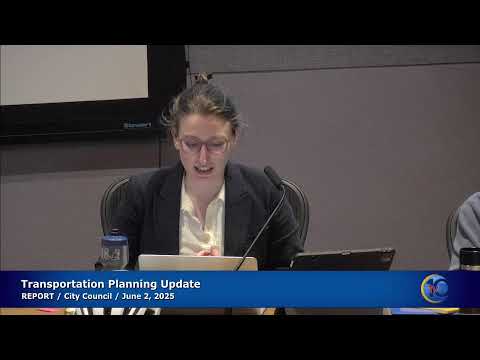
City transportation staff on June 2 outlined a multi-phase "safer streets" strategy and a first tranche of urgent, low-cost projects the city can deploy quickly to reduce pedestrian and bicycle risk following a fatality last fall.
Ben Chambers, the city's transportation planning manager, told Charlottesville City Council staff identified roughly 34 projects they believe could be completed within the current calendar year for about $500,000. "As we were working through this 7 months of identifying what projects we thought would be useful, for this purpose, we came up with about 34 projects that we could do for a half million dollars," Chambers said.
The proposed quick-build measures include new crosswalks, flex posts, reflectors, rectangular rapid-flashing beacons (RRFBs), bump-outs, chicanes, modified slip lanes, bike boxes, defined parking and driving lanes, speed tables and speed cushions in neighborhood streets. Chambers said staff plan to use a mix of local capital funds, Safe Routes to School money and other transportation grants to double the number of quick-build projects beyond the initial 34.
Engineers urged caution at one specific Elliot Avenue crossing requested by residents. Brendan Duncan, city engineer, reviewed the intersection near Second Street SE and said, "The intersection is characterized by excessive speed on Elliott as well as poor sight lines and the lack of ADA infrastructure." He and Chambers said installing a marked crosswalk or beacon at that location would require additional work—adding ADA ramps, improving sight lines and possibly removing parking—and could cost significantly more than a single beacon.
Chambers said RRFB pairs cost about $25,000 and that some locations may require additional beacon equipment placed in advance on the downhill approach to provide drivers time to stop. Engineers also noted grade constraints that limit the use of raised speed tables on steep sections: design guidance discourages speed humps on hills above roughly 6 percent grade; staff said the hill at issue approaches 10 percent.
Context and next steps: staff described the urgent project list as part of a longer five-year safer-streets program. The immediate quick-build work is intended to produce data and community feedback to inform future corridor-level projects, speed-limit evaluations and potential larger capital work. Chambers said the city is also implementing leading pedestrian intervals at signals where software permits, a measure that gives pedestrians a head start before turning vehicles receive a green phase.
Ending: staff said the project list is posted on the city's transportation planning web page and that some items will be funded from surplus capital funds discussed later in the council meeting.