Get Full Government Meeting Transcripts, Videos, & Alerts Forever!
Connecticut correctional ombuds reports backlog, staffing shortfall and new statutory powers after legislative session
Summary
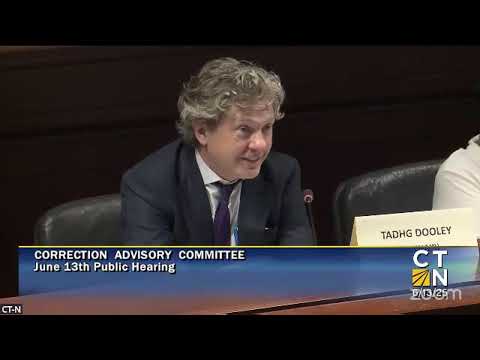
Attorney Ward, interim correctional ombuds, told the Advisory Committee on June 19, 2025, that the office processed 196 complaints received from incarcerated people since late September 2024 but faces a large unreviewed mail backlog, limited staff and an absence of case‑management software.
Attorney Ward, interim correctional ombuds, told the Advisory Committee at a semiannual public hearing on June 19, 2025, that the office has “formally processed a 196 complaints submitted by incarcerated individuals” since his interim appointment and is facing a substantial backlog of unreviewed mail complaints and limited staffing.
The report to the committee and members of the public summarized operations from Sept. 30, 2024, through May 19, 2025, and identified three immediate constraints: insufficient staff (Ward was the sole full‑time employee for most of the period), restricted access to nonpersonnel operating funds, and the absence of a case‑management system. Ward said the office had 189 mailed complaints that remained unreviewed and a separate backlog of roughly 100 pieces pending intake review.
Why it matters: the ombuds office is tasked by statute to receive and investigate complaints from people in Department of Correction (DOC) custody and to make recommendations on systemwide problems. Its ability to respond quickly affects incarcerated people and their families statewide.
Ward told the committee the office engaged in more than 30 stakeholder meetings during the reporting period with DOC leadership and divisions (health services, security, food services and reentry), the governor’s office, the Office of Policy and Management, the Office of the Child Advocate, and advocacy organizations including Disabilities Rights CT and the Yale Medical‑Legal Partnership. He said the office conducted site visits to all correctional institutions in Connecticut and made 13 site visits specifically called out in the written report.
On access to records, Ward said the office initially encountered a policy at DOC that required a signed release for each inquiry — security and medical records alike — but that discussions with other states’ ombuds offices and legal review led to a change. "Roughly 2 weeks ago, we were able to come to an understanding, that that the statutory authority and Connecticut general…
Already have an account? Log in
Subscribe to keep reading
Unlock the rest of this article — and every article on Citizen Portal.
- Unlimited articles
- AI-powered breakdowns of topics, speakers, decisions, and budgets
- Instant alerts when your location has a new meeting
- Follow topics and more locations
- 1,000 AI Insights / month, plus AI Chat