Get Full Government Meeting Transcripts, Videos, & Alerts Forever!
Get email alerts on the Commercial Real Estate Contracts topic
No spam. Unsubscribe anytime.
Utah Court of Appeals hears JM Manufacturing dispute over unpaid rent, attorney fees and $53.5 million purchase price
Summary
The Utah Court of Appeals heard argument in JM Manufacturing Co. (d/b/a JM Eagle) v. PWE over whether JM Eagle owed rent, attorney fees and interest after exercising a lease option to buy four properties and staying in possession while closing was delayed.
The Utah Court of Appeals heard argument on an appeal and cross‑appeal in JM Manufacturing Co. (doing business as JM Eagle) v. PWE on whether JM Eagle owed rent and related attorney fees after it exercised a lease option to buy four commercial properties and remained in possession while closing occurred more than a year later.
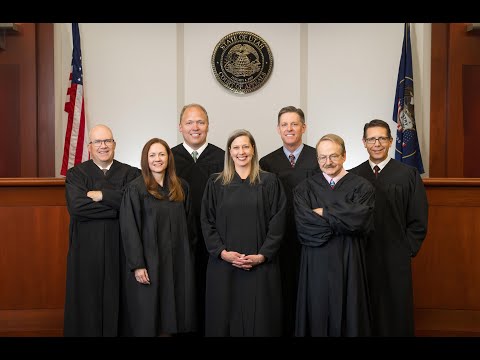
At oral argument before a three‑judge panel chaired by Judge Ryan Tenney, JM Eagle attorney Adam Buck said the district court’s summary‑judgment ruling should be reversed because the court failed to address disputed facts and contract‑interpretation issues and cited no legal authority. “The district court failed to address any of those disputes, failed to address any of the issues of contract interpretation, and in fact failed to cite a single legal authority in the opinion,” Buck told the panel.
PWE’s counsel, Julie Blanch, argued the lease’s terms—taken together—require the tenant to continue paying rent through the closing and that PWE is entitled both to attorney fees treated as “additional rent” under the lease and to interest/damages for the loss of use of the agreed purchase price. “Rent shall continue to be due and payable. It is clear from that that rent was supposed to be continuing through the regular termination date of 02/28/2022,” Blanch told the court. In rebuttal, PWE reiterated it sought damages measured by the lease’s default interest rate on the $53,500,000 purchase price, not statutory prejudgment interest: “What we were asking for was the loss of use of $53,500,000 for over a year at the default interest rate in the lease,” Blanch said.
Why it matters: the dispute turns on how to read multiple lease provisions together and on whether the contract converted a tenant who had exercised an option into a buyer in possession or instead preserved the tenant’s rent obligations until closing. The outcome affects who bears roughly $53.5 million in purchase‑price risk, how much the purchaser might owe for delayed closing, and whether sizable litigation fees can be recovered as additional rent.
Arguments and issues raised
JM Eagle (appellant). Buck argued the district court erred by granting summary judgment without resolving disputed contract interpretation issues involving several lease clauses, including paragraph 20 (procedures upon purchase), paragraph 29 (fair market value determination), paragraph 38 (purchase option timing), and the attorney‑fee language in paragraph 7. Buck urged application of the buyer‑in‑possession doctrine—under which a purchaser who takes possession before closing can be treated as the buyer in possession—but said parties can “contract around” that doctrine. He told the panel the lease’s more specific provisions (paragraph 38) control over general language (paragraph 20) and that the record lacks a written extension of the lease term past the stated expiration date of Feb. 28, 2022. Buck also argued that rent called “unpaid” below had been capitalized into the appraised fair‑market value and thus is not separately owing, and that the district court had not analyzed ambiguities or reconcile conflicting clauses before entering judgment.
PWE (appellee/cross‑appellant). Blanch countered that when the relevant lease clauses are read in harmony the tenant’s obligation to pay rent continued through the closing. She pointed to multiple lease provisions—paragraphs 20, 38 and the additional‑rent clause (paragraph 7)—and urged that the phrase “rent shall continue to be due and payable” supports PWE’s position that rent remained owing while the parties resolved fair‑market‑value disputes and delayed closing. PWE also argued that the lease’s additional‑rent language specifically includes “all costs and expenses” (including attorney fees) and that paragraph 7(f) encompasses attorney fees for “the prosecution, defense or settlement of any litigation involving or arising from any of the lease premises.” Finally, PWE said that, in the alternative to rent, it is entitled to default‑rate interest on the $53.5 million purchase price for the period JM remained in possession.
Contract interpretation and evidentiary posture. The panel repeatedly questioned both sides about whether the lease language is genuinely ambiguous—if so, a trial would be required to resolve factual gaps—or whether the clauses can be harmonized as a matter of law. Buck emphasized that the district judge had earlier described the lease as ambiguous and then entered summary judgment without resolving those ambiguities. Blanch argued the clauses do not conflict and that a common‑sense reading supports PWE’s positions.
Attorney fees and procedure. The parties disputed whether the lease’s broad additional‑rent language entitles PWE to all litigation fees as a matter of contract, or whether more specific fee provisions (for defaults) limit recoverable fees. PWE urged the court that remand is appropriate only if the panel finds the district court failed to make necessary findings; PWE also argued JM did not timely request an evidentiary hearing on fees. JM countered that the district court’s fee award lacked the findings of fact some cases require for appellate review and that PWE had not provided a proper, timely computation of alternative damages (default interest) tied to fluctuating prime rates.
Key facts and timeline cited at argument
- Purchase price (as disputed): $53,500,000. - Lease expiration/initial term end date cited: Feb. 28, 2022. - Notice of option exercise by JM: April 2021 (approximate, as stated during argument). - District court scheduling / final closing date mentioned by counsel: Nov. 13, 2023 (date the court later set for closing in the summary‑judgment ruling, per argument summary). - District court order cited from June 27, 2022: counsel said the court concluded no purchase price had been established at that time. - Lease provisions repeatedly discussed: paragraphs 5, 20, 23, 29, 38 and 7 (additional rent / attorney fees). - Appraisal method in dispute: “as encumbered” fair‑market‑value calculation that capitalized 20 years of rent (present value of projected rental income stream) versus fee‑simple valuation. - Default interest rate referenced during argument: “5% above prime” (as an example counsel used for calculation of default‑rate interest).
What the court will decide (next steps)
The panel did not rule from the bench. At the hearing’s close, judges said they would issue a written opinion. The court’s decision will resolve whether the district court correctly entered summary judgment without addressing the asserted factual disputes and contract interpretations, whether PWE may recover attorney fees as additional rent or under default provisions, and whether PWE is entitled to default‑rate interest or other damages tied to the $53.5 million purchase price.
Quotes (selected)
Adam Buck, counsel for JM Manufacturing: “The district court failed to address any of those disputes, failed to address any of the issues of contract interpretation, and in fact failed to cite a single legal authority in the opinion.”
Julie Blanch, counsel for PWE: “Rent shall continue to be due and payable. It is clear from that that rent was supposed to be continuing through the regular termination date of 02/28/2022.”
Julie Blanch, rebuttal: “What we were asking for was the loss of use of $53,500,000 for over a year at the default interest rate in the lease.”
Ending
The Court of Appeals took no immediate action from the bench and said it would issue a written decision. The outcome will determine whether the district court’s handling of competing contract interpretations and its award of fees and interest stand or whether one or more issues must be retried or reconsidered on remand.