Get Full Government Meeting Transcripts, Videos, & Alerts Forever!
Get email alerts on the Artificial Reef topic
No spam. Unsubscribe anytime.
Jacksonville subcommittee outlines plan to use $120,000 state grant to restart artificial-reef program
Summary
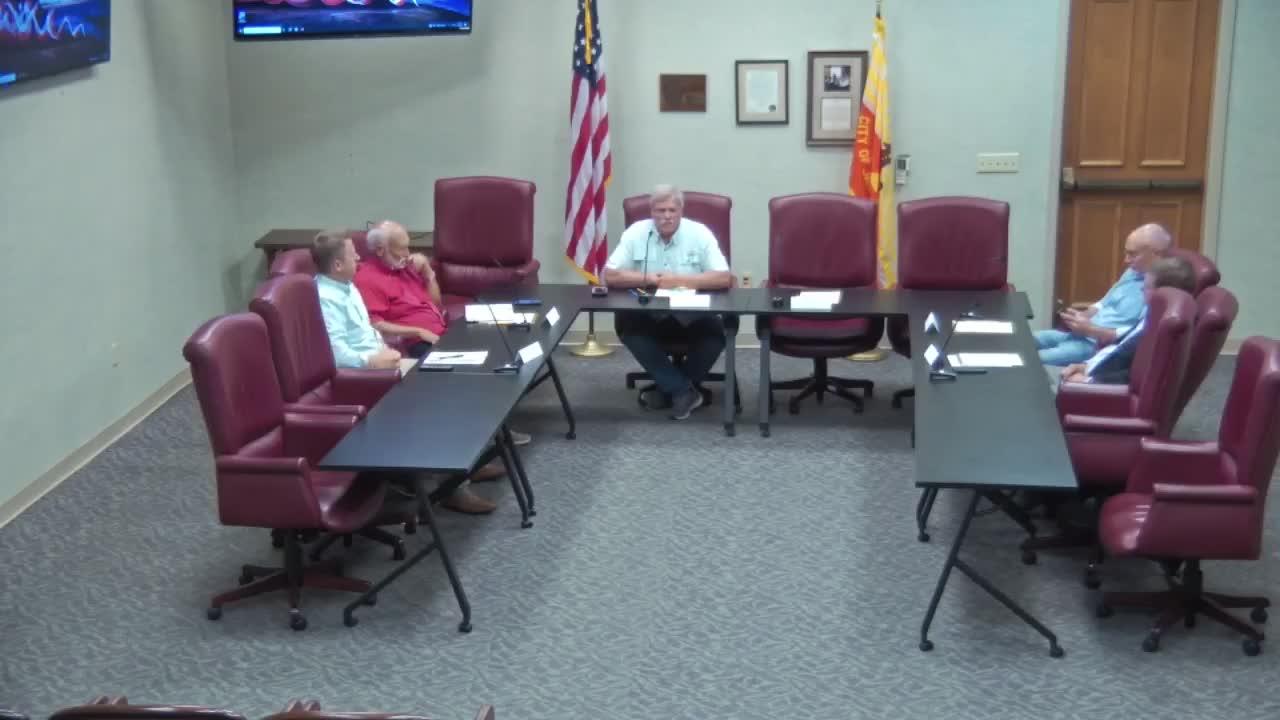
The Shoaling and Artificial Reef Subcommittee of Jacksonville discussed steps to deploy an artificial reef after the city received roughly $120,000 in state grant funds and identified staffing, procurement and permitting hurdles the project must clear.
The Shoaling and Artificial Reef Subcommittee of Jacksonville discussed steps to deploy an artificial reef after the city received roughly $120,000 in state grant funds and identified staffing, procurement and permitting hurdles the project must clear.
Subcommittee leaders said the grant, provided through the state fish and wildlife program, will fund a near-term deployment and that greater staffing or a contracted coordinator is needed to turn a long list of existing permits into completed reef sites. “We received the funding for this artificial reef … approximately $120,000,” the subcommittee chair said at the meeting.
The discussion focused on three practical needs: choosing a vetted site, securing appropriate materials and arranging logistics to move and place those materials offshore. Reef consultant Joe Kissel (appears in the transcript also as Kistel) told the committee Jacksonville has about 21 active reef permits but has deployed material at only two of those permitted sites in roughly the past 13 to 15 years. “We have about 21 and we’ve had 21 active for quite some time and that sounds great but out of 21 we’ve only deployed at 2 of those in the past 13 to 15 years,” Kissel said.
Kissel described how permits designate large rectangular areas offshore but that each deployment requires detailed site selection inside those areas, precise GPS surveys, pre-deployment design work and ongoing post-deployment monitoring. He warned that material availability is fluid: items such as concrete or vessels offered today may not be available by the time a grant-funded deployment can be executed. “This material’s big. It’s taking up valuable space at wherever it’s coming from,” he said.
City staff and the committee discussed using the city’s existing design-build marine construction contract with Hal Jones Construction to provide a one-stop contractor that could arrange barges, tow vessels and perform engineering and site work, while contracting to bring Kissel’s expertise into the project. City staff cautioned that sole-source procurement would require justification to procurement, and that separate contracts may still be needed for materials, survey work and logistics.
For the current grant application the group narrowed choices to sites where previous, detailed surveys already existed to improve the chance of approval. Kissel said that was the reason the group focused on Harm’s Ledge — a permitted site roughly 28 statute miles due east of the jetties — where previous survey work reduced the need for immediate additional studies. “For the sake of this one site … 90% of the reason was because we had extensive survey work already done,” Kissel said.
Committee members discussed access and public benefit. Some members said very offshore sites (about 28 miles) are less accessible to many local boaters, while others noted there are closer permitted sites (one speaker estimated the nearest permitted reef about 9–12 miles off the beach) and the possibility of future reefs inside three nautical miles that would be more accessible to more users. The committee also discussed coordination with nearby counties and shrimping interests to avoid gear conflicts.
No formal vote was recorded at the meeting. The subcommittee intends to move the grant into the city–state contracting phase and seek a spring deployment timeline for the grant-funded project, subject to final contracting and bid procedures. City staff said the grant award next steps include a city–state contract and typical city procurement processes. The subcommittee scheduled a follow-up meeting for the first full week of August to continue planning.
Public comment at the meeting included an offer from a local resident, John Nooney, to support the program financially; Nooney offered to contribute funds toward reef development. Club representatives and longtime volunteers including Ed Cowell and members of the Jacksonville Offshore Sports Fishing Club said they will help reactivate the city’s reef committee and assist with permit review and material sourcing.
Members emphasized the need for a sustained, year‑round program rather than intermittent grant‑driven projects. Kissel and other speakers said counties that run continuous reef programs maintain inventories, conduct ongoing surveys and can act quickly when material becomes available; Jacksonville’s current challenge is lack of a funded, continuous coordinator to maintain that readiness. “What we need is somebody that has that expertise, and they’re not a dime a dozen,” the chair said.
The subcommittee identified several near‑term implementation considerations: confirm the city–state grant contract terms, determine whether Hal Jones Construction can be used under the existing design‑build contract for marine construction, identify whether the city will pursue sole‑source procurement for a coordinator, and determine which permitted sites have the most complete pre‑deployment survey data. The committee also noted a broader goal to coordinate reef planning across Duval, Nassau and St. Johns counties to maximize regional benefit.
The subcommittee will reconvene in early August to continue permit review and planning.