Get Full Government Meeting Transcripts, Videos, & Alerts Forever!
Get email alerts on the Accessory Building Variance topic
No spam. Unsubscribe anytime.
Board grants variance for detached accessory building at 5223 S. Wheeling Ave.
Summary
The Board of Adjustment approved a variance allowing an increase in allowable floor area for a detached accessory building at 5223 South Wheeling Avenue, citing the lot’s unusual size in the RS-3 district and the applicant’s stated accessibility needs.
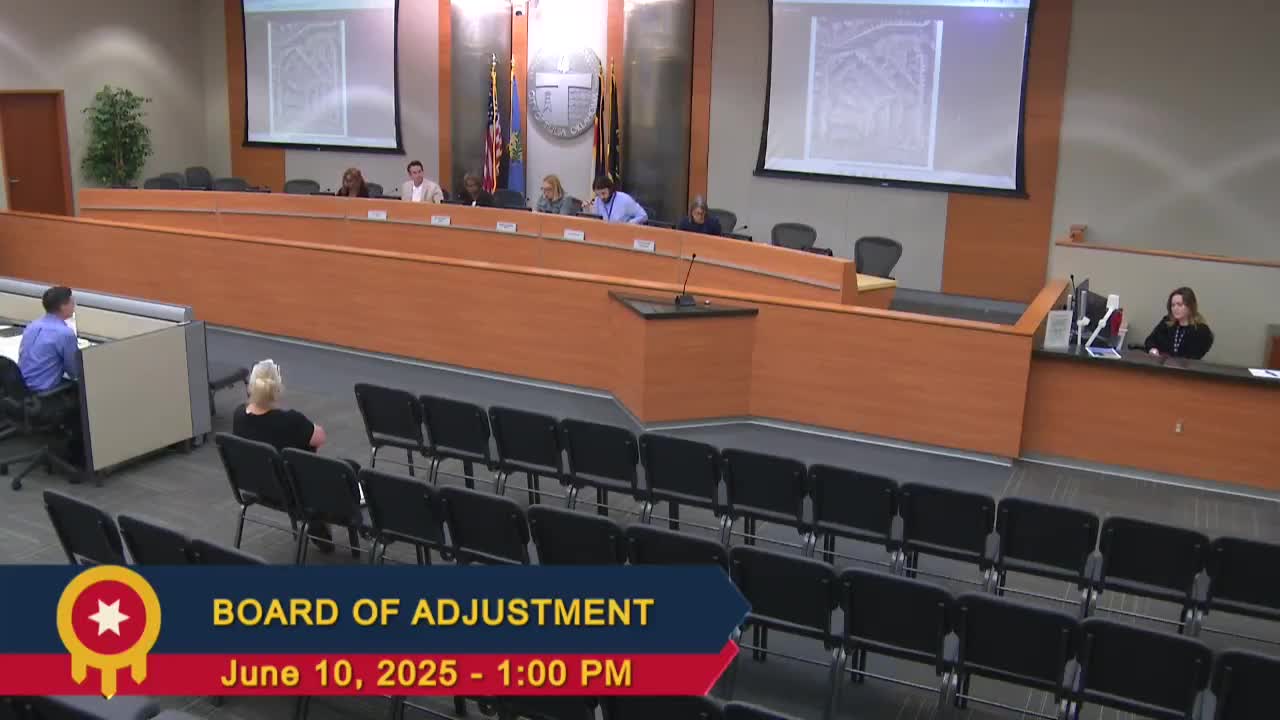
The City of Tulsa Board of Adjustment approved a variance June 10 allowing a detached accessory building at 5223 South Wheeling Avenue to increase allowable floor area from 609 square feet to 740 square feet in the RS-3 district (BOA case 23900).
Applicant Madison King was not present; staff submitted the application materials and a hardship statement for the board. The packet showed the property is roughly a half-acre (about 21,000 square feet), substantially larger than the minimum lot size anticipated in RS-3 zoning. Staff and board members said the lot’s size and configuration supported granting modest additional floor area for an accessory structure without altering neighborhood character.
The application materials state the applicant plans to keep an existing accessory building and construct a new detached building that would add about 129 square feet above the allowed area. The applicant’s hardship statement referenced family circumstances and a need to relocate a home office to the new structure; the board discussed accessibility and the practicality of attaching new square footage to the existing dwelling given the home’s age and configuration.
Board members reviewed schematic elevations included in the packet and noted no objection letters had been filed. After discussing the lot’s size and the accessory structure’s proposed design, a motion to approve the variance carried unanimously. The board’s written motion (read into the record) tied findings to the lot’s unique size and shape, the minimal nature of the relief, and that the variance would not alter the essential character of the neighborhood.