Get Full Government Meeting Transcripts, Videos, & Alerts Forever!
Get email alerts on the Mens Health topic
No spam. Unsubscribe anytime.
Advocates push for new Office of Men's Health to tackle disparities affecting Black men
Summary
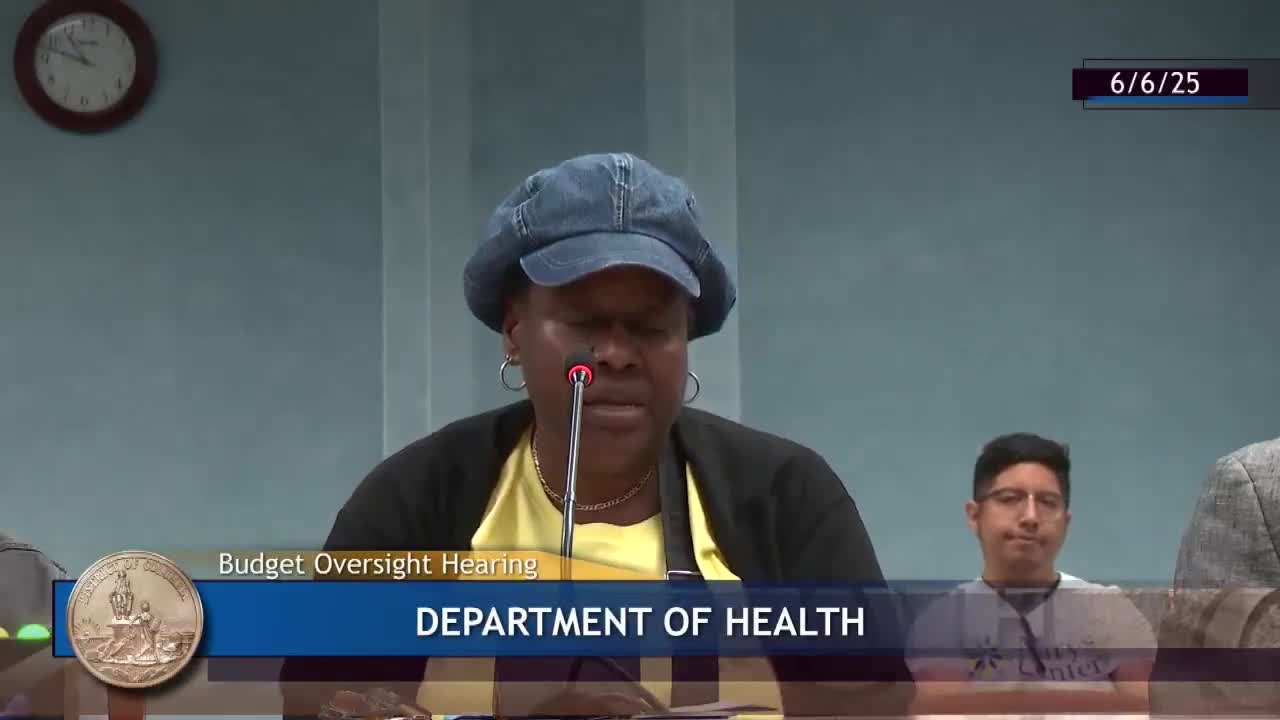
Advocates and community leaders told the Committee on Health that Black men in DC face stark health disparities and urged the creation of an Office of Men's Health or a funded grant program, with a proposal figure of roughly $2.25 million over two years to launch targeted interventions.
Several advocates and community leaders urged the Committee on Health to create a dedicated city effort focused on men's health disparities, particularly those affecting Black men.
Ambrose Lane Jr. of the Health Alliance Network urged a sense-of-the-council resolution and proposed creating an Office of Men's Health within DC Health with a two-year allocation of $2.25 million to support research, outreach and programming. He said Black men in DC face elevated rates of diabetes, prostate and colorectal cancer, opioid deaths and homelessness.
Dr. O. K. Enya, chair of a men's health and wellness committee, framed the request as both a moral imperative and a business case, noting that poor health among Black men reduces economic productivity and increases health spending. "A dedicated office of men's health will streamline, not expand government," Enya said, adding that the office could partner with existing efforts like the Office of Health Equity and local opioid response strategies.
Chris Thomas and Frank Malone spoke for grassroots and faith-based initiatives, citing suicides and substance-use deaths and urging the committee to prioritize culturally competent outreach and accessible services that meet men where they are.
Ending: The Committee heard multiple proposals for either a formal Office of Men's Health or funded grant programs and indicated staff would continue conversations with advocates and agency partners to scope next steps.