Get Full Government Meeting Transcripts, Videos, & Alerts Forever!
Get email alerts on the Public Safety Constables topic
No spam. Unsubscribe anytime.
Rockwall County constables say spike in evictions has doubled workload; ask court for clerks, shared deputies and technology funding
Summary
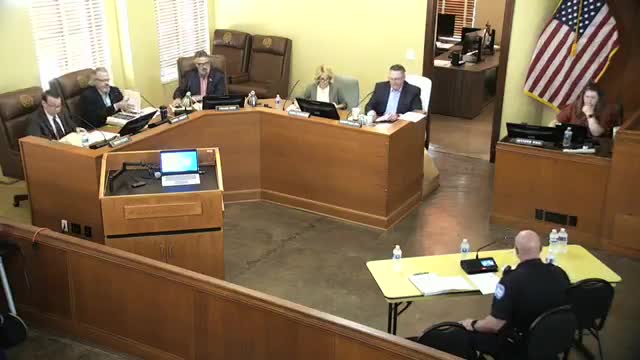
Constables described sharp increases in evictions and related work at the Rockwall County budget workshop June 13, 2025, and asked the commissioners court for a part-time clerk (shared among precincts), options for a shared deputy, equipment and funding for a license-plate lookup subscription and civil-serve technology.
Constable Trey Chaney told the Rockwall County Commissioners Court on June 13 that his precinct’s civil workload has climbed sharply since precinct lines were redrawn and is straining his office.
"If you look on 1 of the documents towards the back, you can see in '21 I did 54 evictions. Last year I did 175. This morning I'm sitting on 86, so that probably puts me at about 100 by the July 1 and then that makes it 200 by the end of the year," Chaney said, adding that the increase multiplies court work, "you increase writ of possessions, which take 2 to 4 hours at a time, and you increase trips."
The constables sought three kinds of budget relief: (1) staff to handle paperwork and payments, (2) an option for a shared deputy to cover field and court duties, and (3) modest technology subscriptions to reduce time spent with dispatch and manual checks.
Why it matters
An increase in evictions translates to longer court dockets, more service trips, more time on writs of possession and more safety exposure for constables and deputies. The constables said that paperwork and repeat visits are the main drivers of their workload and that some new state rules will further compress processing time.
What constables told the court
Chaney described thousands of door knocks and routine multi‑hour writs: "You'll notice on the very first page, 825 doors knocked last year. The majority of those are telling people you gotta move." He said many evictions are concentrated in apartment complexes and rental houses acquired by investment firms and out‑of‑county owners represented by out‑of‑area attorneys.
Chaney asked the court to fund either a centrally assigned full‑time clerk or a half‑time clerk shared across precincts to receive and process paperwork, take payments, prepare writs and relieve constables of repetitive administrative tasks. "That person would stamp them, that person would open the envelope, they would take the check, they would do the receipt, they would be responsible for taking it to the treasurer, and they would be responsible for the report at the end of the month," Chaney said.
He also described operational options for a shared deputy: several commissioners raised the idea of hiring one deputy and allocating its time across precincts, with each constable contributing part of a full‑time equivalent.
Technology requests and costs
Precinct 1 and Precinct 2 constables asked the court to consider low‑cost technology to speed field checks and improve officer safety. Constable John Benedetto (Precinct 1) and Chaney described two items:
- A license‑plate and person‑lookup subscription (COP SYNC or similar). Benedetto requested an initial subscription cost of about $2,400 the first year and $1,200 thereafter for his precinct; Chaney and others said similar subscriptions could be requested for other precincts. Benedetto said the tool helps identify who is on site without routing each check through dispatch.
- Civil‑serve and record integration with Odyssey/Tyler systems ("civil serve") so out‑of‑county papers and eviction communications are tracked in a single place. Chaney said the lack of a single queue forces multiple trips and manual logging and argued a clerk plus modest technology would let the county produce usable statistics rather than rely on folders.
Legal and schedule changes
Chaney told the court a new state law that will take effect Sept. 1 shortens the period for filing from 14 days to 5 days, which he said could increase pressure on constable offices to process paperwork faster. The transcript referenced the law generically; the court did not cite a specific bill number during the discussion.
Pay and staffing concerns
Constables pressed the court about pay disparities with civil deputies and other county employees, arguing that the constable offices perform many of the same duties (court processes, writs, building security assignments and field service) but with smaller budgets and fewer clerical resources. Chaney said he makes about $86,000 and contrasted that with civil deputy pay figures raised in the meeting.
Discussion, next steps and cost clarifications
Commissioners asked about options for a shared deputy and shared clerk and about precise costs and office space for a clerk. Chaney suggested the small payment office near the courthouse could be used for a public‑facing clerk. Commissioners asked the auditor and HR to provide legal and budget guidance about pooling positions and cost‑sharing across precincts.
Ending
Commissioners said they would study the constables’ written materials and discuss options including a shared clerk and shared deputy pay models, and consider whether limited technology purchases (license‑plate lookup subscriptions, civil‑serve integrations) could be funded or partially reimbursed by other revenue. No formal vote or appropriation was taken at the workshop.