Get Full Government Meeting Transcripts, Videos, & Alerts Forever!
Get email alerts on the Urban Heat Mitigation Art topic
No spam. Unsubscribe anytime.
Youth propose reflective murals, workshops to cool Houston neighborhoods
Summary
A youth team proposed community workshops and reflective murals to reduce surface temperatures in Alief, Gulfton and Sharpstown, citing heat-map data and proposing anti-graffiti coatings and partnerships with local groups and the mayor's youth council.
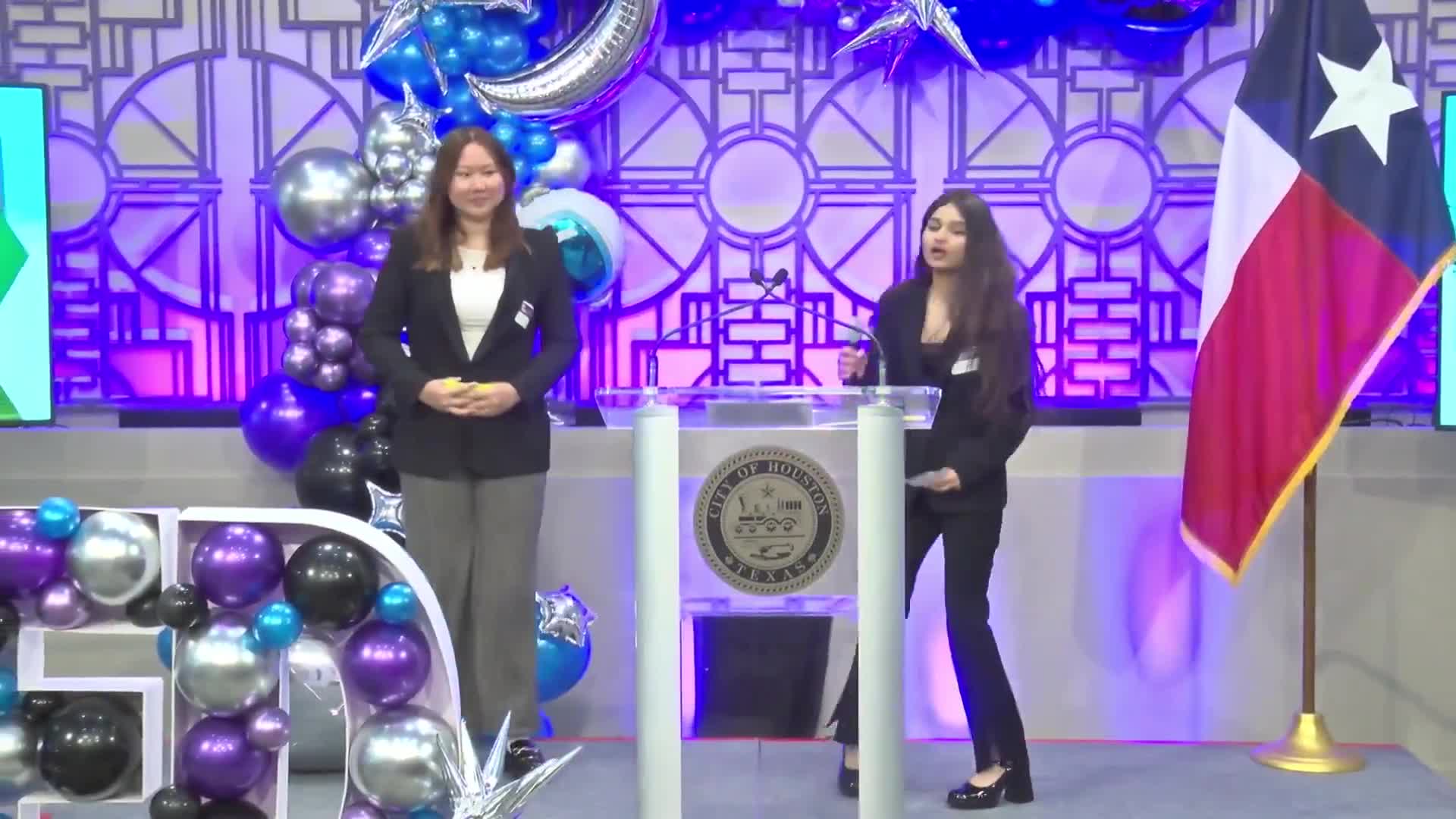
A student group presenting "Hot Zones Cool Solutions" told an audience at City Hall that reflective murals and community workshops can reduce localized surface temperatures and build community resilience in Houston neighborhoods with low tree canopy.
Presenters Ymon Syed and Helene Wang said the Southwest area of Houston can be as much as eight degrees Fahrenheit hotter than surrounding suburbs and that recent statewide reporting cited about 300 heat-related deaths in Texas last year. They proposed a program of educational workshops on heat response and mural painting using reflective coatings that the team said can lower surface temperatures by as much as 29 degrees in demonstrative examples.
The team proposed starting in Alief, then expanding to Gulfton and Sharpstown, with a four-quarter timeline: finalize artists and locations (quarter 1); obtain permits and contact property owners (quarter 2); recruit volunteers and promote workshops (quarter 3); and launch the first mural and workshop (quarter 4). They identified local partners including the mayor's youth council, National Wildlife Federation and community groups; they also named local muralist Thomas Tran as a potential artist collaborator.
During audience Q&A presenters were asked how the approach would work on glass façades or how murals would withstand hurricanes and flooding. Presenters said they would prioritize non-glass concrete walls, use anti-graffiti and weather-resistant coatings, and include outreach to parks and recreation and property owners to secure permits. On measuring outcomes they proposed tracking emergency heat-related calls and community-supplied data gathered at neighborhood meetings.
Presenters framed the project as combining public art, heat mitigation and civic engagement: workshops would teach heat-safety response and channel community art into durable murals designed to increase shade and reflectivity. Judges placed the team third in the Ed Talk competition.