Get Full Government Meeting Transcripts, Videos, & Alerts Forever!
Get email alerts on the Foster Youth Support topic
No spam. Unsubscribe anytime.
Mapping Hope wins Ed Talk; youth present digital roadmap for foster youth aging out of care
Summary
A youth team won City of Houston's Ed Talk competition with "Mapping Hope," a GPS-enabled digital platform aimed at connecting youth aging out of foster care to shelters, benefits and mentors; the team proposed a pilot app budget of about $10,000 and a full launch estimated at $40,000–$50,000.
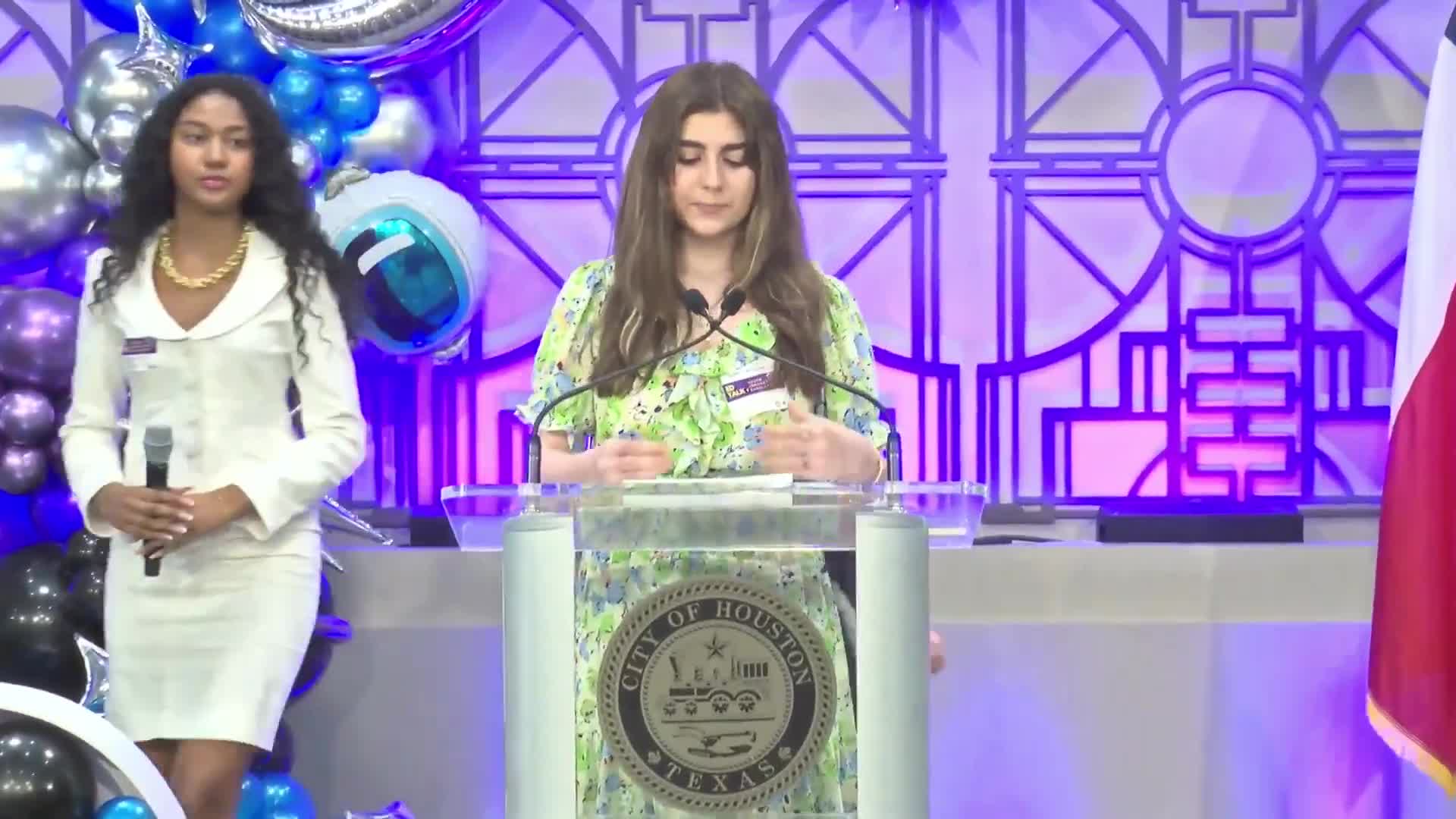
Mapping Hope, a youth-led project to build a GPS-enabled digital roadmap for foster youth leaving care, won first place at the City of Houston Ed Talk competition at City Hall.
The team — led in presentations by Daniella Matassa and joined by Ayesha and Christine — said the platform will centralize shelter locations, benefits enrollment (Medicaid, SNAP), workforce opportunities, mental-health resources and mentorship connections. The youth presented national and Texas statistics they said motivated the project: roughly 1,000 young people age out of foster care in Texas annually, with roughly one in four experiencing homelessness within four years, and fewer than 5% earning a college degree, according to figures the presenters cited.
The team described Mapping Hope as a dynamic, trauma-informed digital platform with a user profile flow, GPS-enabled resource mapping and a mentor network. They proposed a phased rollout: a phase-0 mentor recruitment and training period, a pilot website and trial with 30–50 foster youth starting September 2025, an enhanced phase in spring 2026 (adding an SOS button, secure digital wallet and multi-language support), and a wider city launch in late 2026–early 2027.
Budget estimates from the students put a pilot app at around $10,000 and a full launch at $40,000–$50,000. For privacy and development they said they would collaborate with computer engineering programs at Rice University, the University of Houston and Houston Community College; for mentoring and casework ties they flagged Operation Achieve Independence, Angel Reach and local workforce partners. They proposed fund sources including a City of Houston Youth Innovation Grant, Houston Endowment grants and university partnerships.
During audience questions the team emphasized user privacy, secure data practices and plans to work directly with caseworkers to avoid exposing personal information. They said they were not coding experts and would rely on university collaborators for engineering and security.
The judges awarded Mapping Hope first place, citing the project's feasibility and direct service to a vulnerable population. The students provided a live prototype and QR code to let attendees view a mockup of the platform.