Get Full Government Meeting Transcripts, Videos, & Alerts Forever!
Get email alerts on the Urban Heat Mitigation topic
No spam. Unsubscribe anytime.
Houston youth propose solar "urban coolers" at hot bus stops in pilot plan
Summary
City of Houston Youth Ambassadors presented a pilot plan for solar-powered "urban coolers" at high-risk bus stops to reduce heat exposure, proposing a $13,500 three-to-five-stop pilot and partnerships with Metro and local nonprofits.
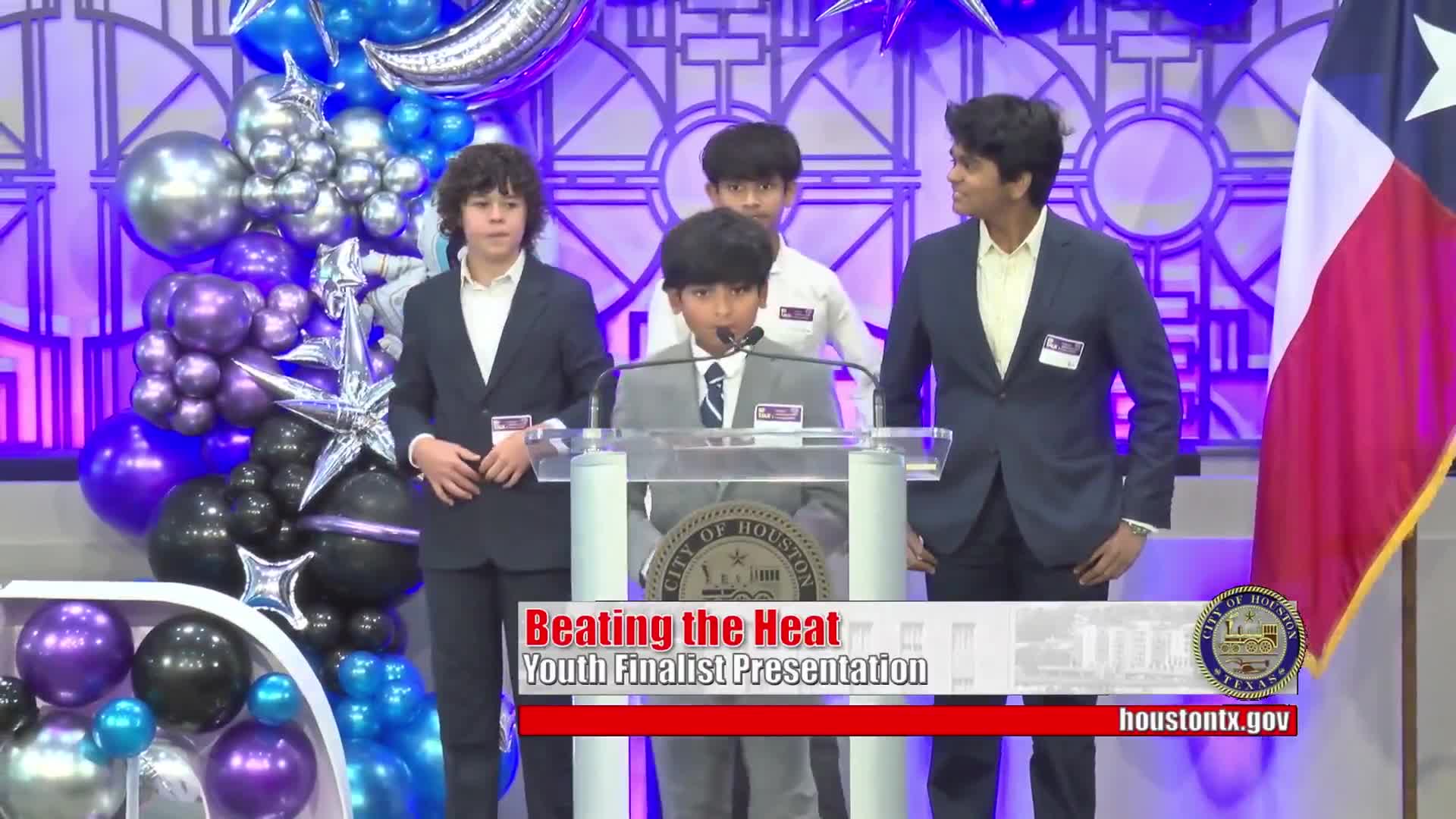
At an Ed Talk event held in the Lehi Room at City Hall, a team of City of Houston youth ambassadors proposed installing solar-powered "urban coolers" at high-risk Metro bus stops to reduce heat exposure for riders.
The students — identified in presentations as Swami, Veer, Sash and Alois — said Houston summers now produce record heat and dangerous UV exposure and that transit riders face frequent, prolonged waits in direct sun. “Every year, there's nearly 76,000,000 Metro boardings in Houston, and that's 76,000,000 opportunities for Houstonians to get exposed to dangerous conditions,” a presenter said.
The proposal calls for modular, solar-powered kiosks placed at three to five pilot stops in neighborhoods the team named Cashmere Gardens and the Fifth Ward. Each unit would include shaded seating made from recycled materials, solar fans and lighting, and a filtered water station, the students said. They described the units as “climate-ready public health tools,” sited using heat maps and Metro ridership statistics to prioritize locations.
The group estimated a pilot cost of about $13,500 and said they would seek grants and private funds rather than relying on the city's general fund. For operations and upkeep they proposed monthly inspections coordinated with Public Works and local nonprofits. To reduce vandalism they recommended durable materials (stainless steel, carbon-fiber structural elements) and community stewardship; to capture user feedback they proposed QR codes on each unit.
Presenters named Houston Metro as a key implementation partner and cited potential outreach partners including “Airlines Houston” and Texas Housers for community advocacy. During audience Q&A the team said the kiosks are modular and would not require installing new Metro stops and that the pilot would be expanded if community feedback and performance supported it.
The students identified equity as a primary rationale, saying the project primarily benefits low-income commuters, older adults and youth who walk to transit and have limited access to air conditioning. They drew comparisons to existing projects in other cities — La Sombrita in Los Angeles and misting stations in Philadelphia — and said their local design combines shade, hydration and powered ventilation.
Judges and attendees asked about maintenance, vandalism and site selection. Presenters repeated that partnerships, robust materials, community ownership and a feedback system would be used to address those challenges. They did not provide a binding commitment from any city department or Metro; presenters said those agreements would be pursued during implementation.
The presentation concluded with mock-ups and a call for pilot funding, and presenters offered to share technical specifications and materials lists with interested partners after the event.