Get Full Government Meeting Transcripts, Videos, & Alerts Forever!
Get email alerts on the Human Rights Complaints topic
No spam. Unsubscribe anytime.
Tulsa human-rights staff say housing and ADA issues lead complaint trends; office pushes outreach and intake fixes
Summary
City Human Rights staff presented a simplified complaint report showing housing and ADA concerns as the most common inquiries, described intake steps that currently require a signed paper form, and outlined outreach and technical fixes the office plans to pursue.
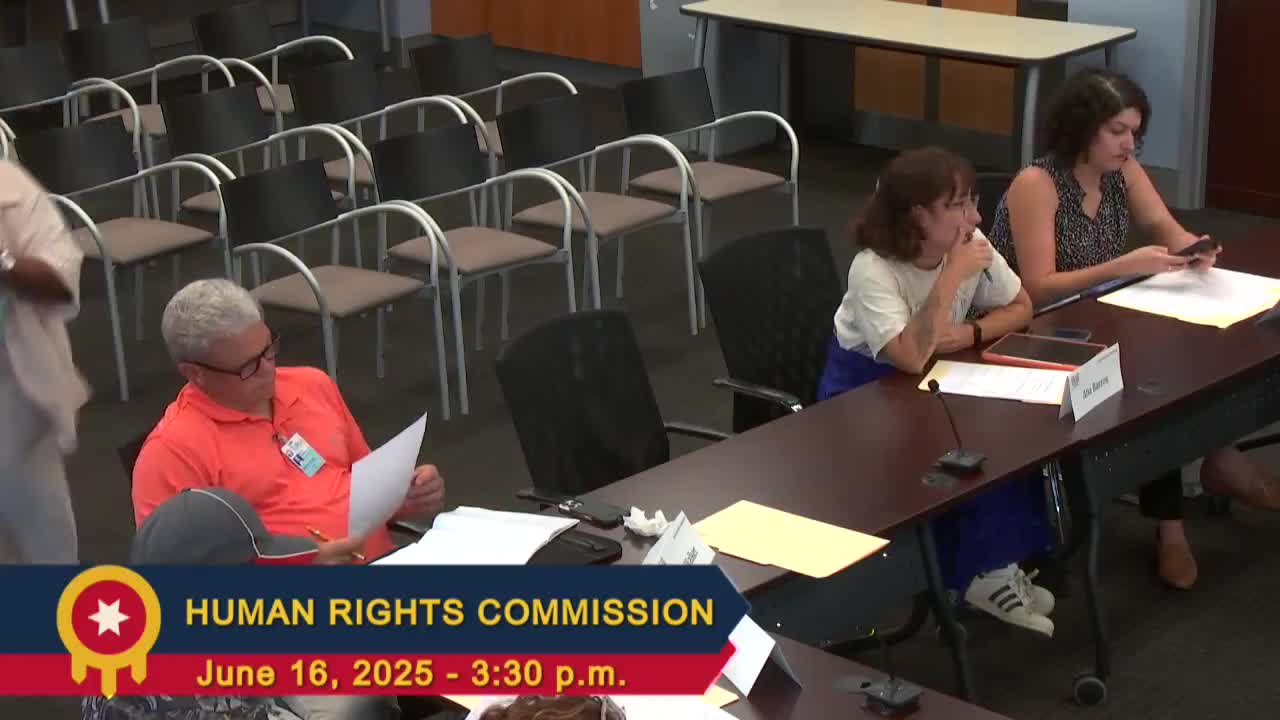
LaKendra, a Human Rights Office staff member, told the Tulsa Human Rights Commission that housing and Americans with Disabilities Act (ADA) complaints are the most frequent inquiries the office receives so far in 2025. “Housing is our biggest concern. I'm getting more ADA in housing,” LaKendra said during the commission meeting.
The report presented a condensed, two‑page snapshot of complaints for 2025 with a key explaining the office’s codes, case outcomes and a running tally of complaints. LaKendra said the totals appear low relative to need and that she suspects many people do not know where to file. “I don't know what we need to do…what we need to do to get the word out more as to what we do,” she said.
Why it matters: the Human Rights Office is the city’s local intake point for certain complaints that may implicate the federal Fair Housing Act or ADA protections. The office’s handling affects referral, investigation timelines and whether complaints receive city‑level follow up.
How complaints are entering the system: LaKendra described three intake paths. Complainants can (1) download and print a paper form from the city website and deliver it or mail it to the city clerk’s office for a wet (hand) signature, (2) call 311 for an intake and follow‑up, or (3) submit a short online intake through 311 that prompts Human Rights staff to contact the person. The office’s legal counsel has advised that, for now, the city requires a hard‑copy signature for formal filing—though LaKendra said the city is exploring an electronic signature option with legal, IT and budget review.
She warned that some complaints—especially housing disputes that have become legal landlord‑tenant fights—are beyond the office’s capacity and are routinely referred to legal aid. For ADA and public‑accommodation concerns (parks, businesses, curbs, curb ramps, street‑crossing devices), LaKendra said her office will often begin outreach immediately and coordinate with engineering, right‑of‑way and streets crews. She cautioned these fixes can take months because they require multiple departments and funding alignment.
On web and communications issues, LaKendra noted recent changes to departmental names and web structure have caused search errors when people Google the office. She said communications and IT are working on links and the office will keep following up.
Outreach and partnerships: commissioners and staff discussed past community engagement tactics (water‑bill inserts, in‑person tabling at events, TPS events, parades) and named partners who already help amplify fair‑housing and ADA messaging: the Fair Housing Committee, Tulsa Responds, the Financial Empowerment Center, MOSAIC (the Tulsa chamber diversity initiative), and local legal aid. LaKendra said a recent water‑bill insert about fair housing produced more inquiries.
Next steps and directions: LaKendra and commissioners agreed on several actions: staff will contact the Center for Individuals with Physical Challenges to explore partnerships and trend data; reconnect with MOSAIC and the chamber; follow up with communications to fix the website intake links; pursue a budget and IT plan to allow electronic signatures; and consider a renewed outreach push (inserts, trusted messenger distribution) to raise public awareness about what the office accepts.
A specific neighborhood concern raised during the discussion involved missing sidewalks and hazardous walking conditions near 50th Place/129th Street (border area between Tulsa and Broken Arrow). LaKendra said the Human Rights Office would be a “good point person to start with” and that she would connect residents with Streets and the appropriate city councilor for follow‑up, but clarified that sidewalks and related public‑works fixes are handled outside her office.
Commissioners urged clearer website labeling for separate complaint forms (contract, housing, public accommodations, ADA grievance) and requested that staff share the intake slides and instructions used in the meeting. LaKendra said she would distribute the materials and continue monthly updates to track trends.
Ending: The Human Rights Office emphasized education — helping residents know where and how to file — as the key to increasing formal filings for legitimate grievances while continuing to triage cases that need legal referral.