Get Full Government Meeting Transcripts, Videos, & Alerts Forever!
Get email alerts on the Affordable Housing topic
No spam. Unsubscribe anytime.
Committee delays vote on Canal Village 3 PILOT after residents raise quality and tree-canopy concerns
Summary
The Metropolitan and Economic Development Committee postponed a decision on a 15-year payment-in-lieu-of-taxes (PILOT) request for Canal Village 3 after residents and nonprofit leaders highlighted unresolved problems from earlier phases and asked for stronger enforcement and tree-canopy protections.
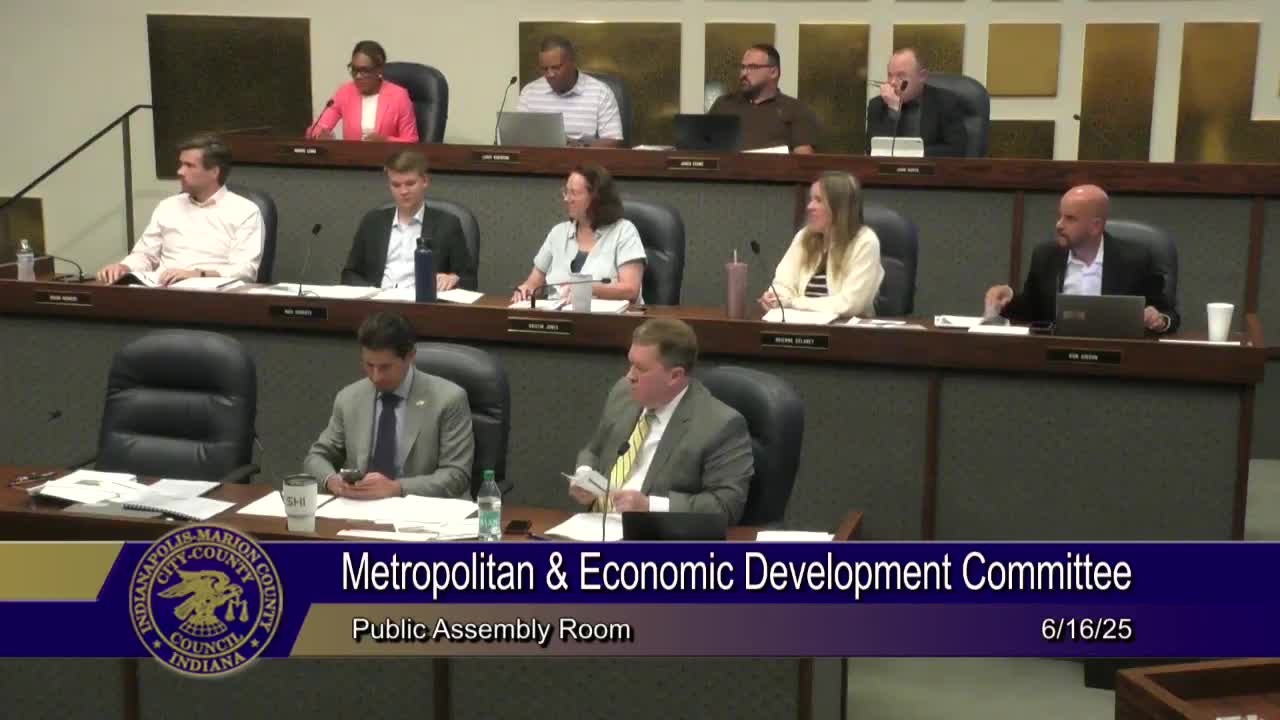
The Metropolitan and Economic Development Committee postponed action on a request for a payment-in-lieu-of-taxes (PILOT) agreement for Canal Village 3 after hours of public comment and councilor questions about building quality, enforcement and tree canopy.
The PILOT request (proposal 184) would have granted a 15-year tax-exemption schedule for Canal Village 3, a BWI Development project aimed at producing three- and four-bedroom affordable homes targeted to single parents and families. Gary Hobbs, president and CEO of BWI, told the committee the first-year PILOT payment would be $6,608 with a 3% annual escalator and a projected total tax contribution of roughly $122,000 over the term; the financing package relies in part on low-income housing tax credits under Section 42 of the Internal Revenue Code. Hobbs said the project includes large-family units (he described 29 four-bedroom units in the overall project mix), a lease-option path to homeownership and a commitment to reserve 20% of units for people with intellectual or developmental disabilities.
The developer and city staff framed the project as responding to local need. "We had 150 people on a wait list looking for more affordable housing for three- and four-bedroom units," Hobbs said. Councilor Derek Cahill commended the developer’s supportive-services package, calling it "the gold standard." Cahill specifically praised on-site education, workforce readiness and childcare supports that Hobbs said would accompany the housing.
Residents and neighborhood leaders urged caution. Ma'ouna Wadud, president of the Northwest Landing Neighborhood Association, said the neighborhood was "not against developing our neighborhood" but that Canal Village 1 left lingering maintenance and design problems. Hadiya Wadudamet, also speaking for Northwest Landing, told the committee that promises made during Canal Village 1 were still unfulfilled and that neighborhood trust had been eroded. Laurie Purdue, co-director of the Community Canopy Alliance, said the neighborhood has less than 14% tree canopy and pressed the committee to protect heritage trees and green space, noting heat-island and health impacts.
Dr. Brandon Cosby, chief executive officer of Flanner House, said Flanner House had negotiated accountability measures into the Canal Village 3 financing: "The last million dollars they need to close the financing deal is locked in a trust that we control that will not be released until there is verifiable evidence that he has honored the commitments and the promises that were made to the residents of the Near Northwest area," Cosby said.
Jenny Fultz, deputy director for the Department of Metropolitan Development (DMD), told councilors the city had added conditions to the pilot agreement and planned ongoing oversight. "All of the commitments that Mr. Hobbs has presented tonight will live within our pilot agreement and that will be evaluated on an annual basis to ensure that he's holding up his end of the bargain," Fultz said. She said DMD could impose penalties or revoke the PILOT if terms were not met.
After extended public comment and discussion, Councilor Charles Evans moved to postpone consideration of proposal 184 to the committee's July 14 meeting; the motion was seconded and carried on a voice vote.
The committee asked DMD and the developer to return with a written list of enforceable commitments, a timeline for outstanding fixes on Canal Village 1, tree-preservation measures, and specific clawback language spelling out how and when the city could revoke the PILOT if conditions are not met.