Get Full Government Meeting Transcripts, Videos, & Alerts Forever!
Get email alerts on the School Discipline topic
No spam. Unsubscribe anytime.
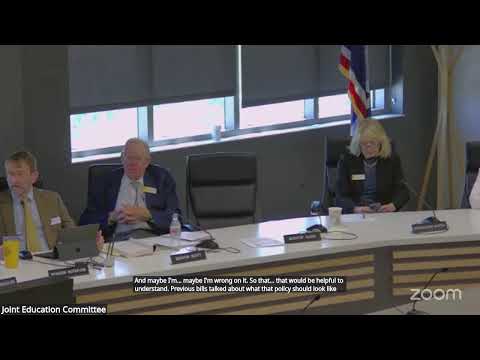
Committee opens broad school-discipline discussion; members debate teacher protections, parental notification and cell-phone rules
Summary
Lawmakers debated a conceptual draft that would change immunity provisions, set rules for classroom removals and require schools to adopt cell-phone policies. The committee instructed LSO to draft language for a school-discipline bill and asked for a small working group to refine the proposal before the next meeting.
Committee members debated a multi-part conceptual school-discipline proposal that would replace portions of current law, clarify disciplinary processes, formalize parental notification timelines, and require school districts to adopt cell-phone and other electronic-device policies.
The initial concept aimed to replace an existing statutory immunity provision related to corporal punishment with a broader immunity for “reasonable disciplinary action” approved by a local school board and to create a formal classroom-removal procedure that would require principals and teachers to coordinate follow-up and consent before a student returns to class. Senator Brennan also proposed that districts be required to adopt parental-notification timelines and to expand professional-development opportunities for teachers who remove a high percentage of students.
Debate was vigorous. Senator Rothfuss and other members opposed broad statutory immunity that they said could shield abusive conduct; after discussion the committee removed corporal-punishment immunity language from the concept. Members also discussed whether some measures (for example an explicit prohibition on denying graduation over small indebtedness) should be included; the committee removed that provision.
The meeting included a substantial discussion about cell phones in class. Senator Brennan argued for a requirement that districts adopt written policies so teachers have an enforceable classroom standard; opponents urged local control and warned against a one-size-fits-all top-down mandate. Representative Lolly proposed forming a small work group to refine language. The committee adopted a motion asking staff to draft a school-discipline bill incorporating the committee’s direction and to circulate drafts to stakeholders in advance of the next meeting.
Ending: The committee instructed LSO to draft a school-discipline bill consistent with the committee’s direction (removed corporal-punishment immunity, added parental-notification timing, preserved district flexibility on sanctions) and asked co-chairs to coordinate an informal working group to refine the draft before the next meeting.