Get Full Government Meeting Transcripts, Videos, & Alerts Forever!
Get email alerts on the Conservation Application Checklist topic
No spam. Unsubscribe anytime.
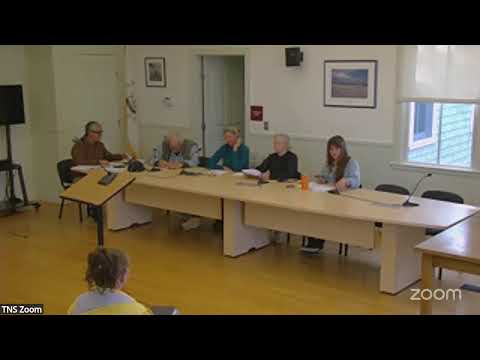
New Shoreham conservation commission revises draft application checklist, adds questions on setbacks, water and lighting
Summary
The New Shoreham Conservation Commission reviewed and suggested edits to a draft checklist for evaluating development applications, emphasizing preexisting foundations, DEM/CRMC approvals, native planting guidance, irrigation and outdoor lighting.
The New Shoreham Conservation Commission reviewed a draft checklist intended to guide its advisory reviews of development and site applications, and agreed to add and clarify items on setbacks, preexisting foundations, stormwater control, irrigation and outdoor lighting.
Members said the checklist is meant as a flexible tool to prompt consideration of site-specific issues rather than a rigid requirements form. Taryn McGregor, a conservation commission member who called the meeting to order, presented the draft and summarized suggested edits from commission members and outside contributors.
The commission discussed adding a specific line to note preexisting foundations, saying some island lots contain older foundations that affect permitted rebuilding and setback calculations. John (last name not specified), a commission member, described examples of foundations that predate current setback rules and said applicants sometimes must pursue variances or special-use approvals through the town building department.
The draft already asks whether a proposal would increase wetland or coastal-feature degradation and whether required state approvals are in place. Commissioners emphasized checking whether setbacks meet Department of Environmental Management (DEM) and Coastal Resources Management Council (CRMC) requirements — members noted 75 feet is the baseline for many DEM setback rules but that freshwater-wetland buffers can be larger and exceptions are common on Block Island.
Site-plan items the commission agreed to keep or clarify include existing building footprints, grading, parking surface materials (permeable versus impermeable), fencing, landscaping, lighting, and erosion-control measures during construction. The commission also discussed asking applicants whether irrigation is proposed and whether the property is on town water, citing summer stress on the island’s water supply and existing town water restrictions that are posted seasonally.
Commissioners discussed asking for basic information about expected water use (for larger or commercial projects) and expected electrical demand — for example, whether heating and major appliances will be electric — as prompts to encourage applicant awareness rather than as enforceable requirements.
On landscaping, members proposed flagging use of native-plant lists (such as a University of Rhode Island native-plant list) in recommendations and discouraging invasive plants and nonessential fertilization, while acknowledging the commission lacks direct regulatory authority to require specific plantings. Commissioners suggested posting a recommended plant list on the commission’s webpage.
Outdoor lighting was another checklist item. Commissioners noted a new lighting ordinance is pending and agreed to add a check that proposed lighting comply with dark-sky criteria and the forthcoming town ordinance.
Process questions the commission addressed included whether applicants should be expected to obtain DEM/CRMC permits before seeking the town advisory and how to collect permission to visit sites. Commissioners agreed the checklist is primarily an internal review tool fed by applications submitted to zoning/planning or to DEM/CRMC, and they asked staff to include an explicit spot to record whether commission members have permission to walk a property prior to a meeting. Staff and members noted that DEM and CRMC applications are submitted to those agencies and will not always flow automatically to town staff, so the commission may need to request those application materials when appropriate.
The commission agreed to make the edits discussed and revisit the checklist at a future meeting, aiming for formal approval after the changes are incorporated.
Votes at a glance: The commission approved the minutes of its May 13 meeting by voice vote; the meeting adjournment motion passed by voice vote. The transcript records these outcomes but does not include a roll-call tally.