Get Full Government Meeting Transcripts, Videos, & Alerts Forever!
Get email alerts on the Vision Zero topic
No spam. Unsubscribe anytime.
Councilor proposes reconvening Vision Zero task force, seeks higher profile and quarterly reporting
Summary
Councilor Tiffany Koyama Lane presented a resolution to reconvene a Vision Zero task force, asking for greater cross‑bureau coordination, more frequent deliverables and consideration of relocating the Vision Zero lead to the Deputy City Administrator’s office to raise the program profile and accountability.
Councilor Tiffany Koyama Lane told the Community and Public Safety Committee on May 27 that she will bring a resolution to full council to reconvene a Vision Zero task force and increase the program’s visibility and accountability.
For the record, Tiffany Koyama Lane said Portland adopted Vision Zero in 2015 and that traffic deaths have risen in the last decade: "As we approach this 10 year anniversary next month, we're seeing a horrifying and unacceptable 57 percent increase in traffic deaths on our streets in the past decade," she said. She cited 58 traffic fatalities in 2024 and said Portland’s high‑crash network represents 8% of streets but accounts for 62% of traffic fatalities.
Koyama Lane said the proposed task force would build a shared understanding of Vision Zero goals across city bureaus, engage community advisory groups and produce an action plan with measurable deliverables. She said she intends to file a budget amendment to transfer the Vision Zero lead into the Deputy City Administrator’s (DCA) office to give the program greater profile and cross‑service‑area authority.
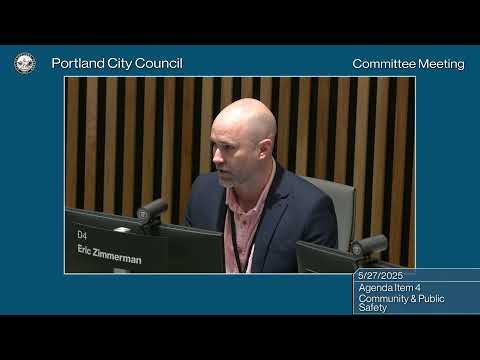
Councilors asked about data disaggregation, target treatments and enforcement tools. Councilor Zimmerman asked for more detailed public‑health style breakdowns of crash victims and circumstances; Koyama Lane said she supports disaggregating data by race, ethnicity and location and said she is asking for more frequent reporting and better metrics. Councilor Novick and others highlighted speed as a leading cause and discussed automated enforcement; Novick noted the city currently operates roughly 30 speed and red‑light cameras and said court capacity limits the number the city can deploy.
Koyama Lane described examples of Vision Zero actions—reducing speed limits, adding lighting and cameras, low‑cost safety treatments near shelters and pilot projects involving community volunteers—and said the task force should coordinate with PBOT, Multnomah County, ODOT and TriMet.
Ending note: Koyama Lane said the resolution and a one‑page summary of the Vision Zero action plan are available and that she is prepared to collaborate with council colleagues and bureaus on amendments and funding during the council budget process.