Get Full Government Meeting Transcripts, Videos, & Alerts Forever!
Get email alerts on the Zoning topic
No spam. Unsubscribe anytime.
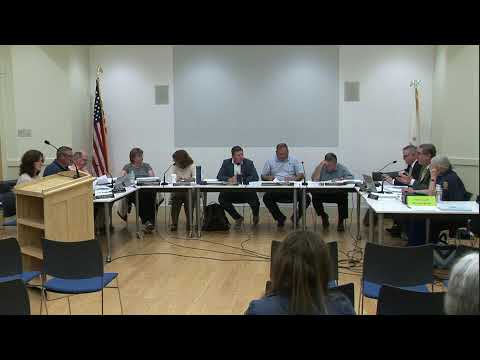
Tiverton council advances zoning package after hours of debate over planned development park, ‘car vault’ and debris-processing proposal
Summary
The Tiverton Town Council voted on June 9 to proceed with a package of zoning ordinance amendments that reorganize the Planned Development Park use table, add a defined “car vault” use and set a public-review path for a proposed construction and demolition debris processing operation in the industrial park.
The Tiverton Town Council voted on June 9 to proceed with a package of zoning ordinance amendments that reorganize the Planned Development Park (PDP) use table, add a definition for a “car vault” use, and set out a process for handling a proposed construction and demolition (C&D) debris processing facility in the industrial park.
Residents and councilors pressed the council at length over environmental risks, noise and drink service tied to the proposed car vault and to a planned business sale in the industrial park. Karen Ephraim of North Christopher Avenue told the council she opposes allowing a C&D processing facility anywhere near Stafford Pond, saying it creates a risk of asbestos, lead and PFAS contamination and noting that Stafford Pond feeds other local ponds and brooks.
The amendments largely reformat where PDP uses appear in the code so the PDP can be read from the unified use table, but they also add new, highlighted lines the Planning Board had flagged and the council discussed. The Planning Board recommended, by a 4–3 advisory vote, that a C&D processing operation be treated as a special-use review rather than a by-right industrial use. The Planning Board’s advisory language adds objective criteria for special-use approval — for example, limits on outdoor storage, stormwater controls, traffic mitigation and buffers from wetlands and drinking-water resources — and the applicant indicated willingness to accept many of those conditions at the Planning Board hearing.
Councilors debated a number of related edits during the hearing: whether family day-care homes should appear as permitted uses in the PDP, whether churches and nonprofit public uses should be allowed in the district, whether electric-generating facilities and water towers should be allowed, and whether drive-through service should be permitted for uses in the PDP. Several councilors proposed and won amendments on the council floor (including striking family day-care homes from the PDP use column and converting certain items from permitted to conditional uses); at one point the council voted to rescind some of the PDP-specific changes and re-advertise them for clarity. After that process concluded the council took a final vote to adopt the proposed zoning amendments as presented; the adoption was approved with recorded opposition and an abstention noted in the minutes and is subject to the town solicitor’s legal review for any identified drafting issues.
As part of the item the council also voted to set a separate public hearing to consider a new, specific definition and special-use standards for construction and demolition debris processing facilities (the council instructed staff to advertise that hearing). The council additionally directed the town administrator to pursue legal review and, where necessary, return with revised language and any recommendations on re-advertisement.
The council paused final disposition of the industrial-park property sale tied to the prospective buyer’s plan and moved into executive session to discuss purchase-and-sale details and the disposition of town-owned lots in the industrial park.
Why it matters: the PDP table and these use definitions determine what kinds of industry or commercial activities are allowable in the industrial portion of town and whether a potentially polluting processing operation would face a public, site-specific special-use hearing or be allowed by right. Residents raised drinking-water, wetlands and traffic impacts; the Planning Board and council added objective controls to the public record and required further legal vetting before final implementation.
What’s next: the town will advertise the special-use public hearing for C&D processing facility standards; the solicitor will return with any legal edits; and the council will consider final purchase-and-sale decisions in executive session before any closing.