Get Full Government Meeting Transcripts, Videos, & Alerts Forever!
Get email alerts on the Budget Tax Package topic
No spam. Unsubscribe anytime.
Philadelphia City Council adopts FY2026 operating and capital budgets; approves package of tax, fee and budget measures
Summary
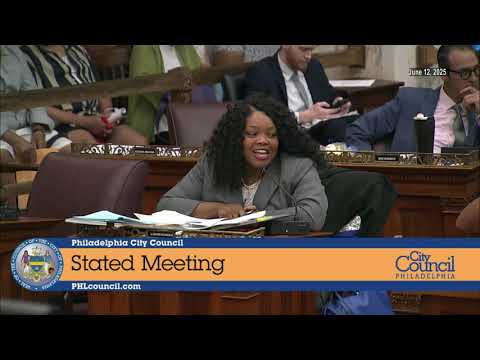
Philadelphia City Council on June 12 adopted the fiscal year 2026 operating and capital budgets, a six‑year capital program and a package of tax and fee ordinances after hours of debate and substantial public comment about housing, displacement and tax cuts.
Philadelphia City Council on June 12 adopted the city’s fiscal year 2026 operating budget and capital budget and approved a multi-year capital program and several tax and fee changes after extended public comment focused on housing and displacement.
Council adopted the FY2026 operating budget (bill 250196) by roll call, 15–1. The capital budget (bill 250197) and the six‑year capital program (bill 250198) also passed, each by 15–1. Council passed ordinances revising city tax policy, including changes to wage/net-profits tax (bill 250195), business income and receipts tax changes (bill 250199), revisions to the realty transfer tax (bill 250211, 12–4), and other tax code items. A package of parking, fee and other technical ordinances also passed, including adjustments to parking meter fees (bill 250200). Several votes recorded single-digit dissents on specific measures; most major budget bills passed with a 15–1 margin.
The votes followed a five-hour public comment period in which dozens of residents, nonprofit leaders and neighborhood activists urged the council to prioritize affordable housing, tenant protections and funding for libraries and social services. Several speakers — including organizers with Power Interfaith, housing advocates, and residents of Strawberry Mansion and other neighborhoods — urged council to reject or amend proposed tax cuts that they said would reduce revenue for services they rely on. One public commenter referenced a widely cited figure and opposing view, saying the proposed package “represents a $700,000,000 cut” to local revenue; other commenters warned cuts could force deeper cuts to SEPTA, libraries and social services.
Councilmembers who opposed parts of the package said their “no” votes reflected concerns about the timing or design of particular tax changes. Councilmember Kendra Brooks, who voted against the budget, said in remarks on the council floor: “I cannot support this budget,” citing concerns that tax cuts would disproportionately benefit large corporations at the expense of social services. Councilmember Curtis Jones Jr. urged colleagues to weigh the full package and said, “the imperfect shouldn’t be the enemy of the good,” endorsing passage of the budgets as a whole. Councilmember Mike Driscoll, who said he introduced oversight language tied to the mayor’s housing initiative, framed that work as accountability: “Oversight isn’t about slowing down progress; it’s about building public trust,” he said.
Council also approved a series of consent-calendar ordinances and administrative items, including multiple property acquisitions and redevelopment contracts, and appointments to advisory commissions. Following votes, the body recessed for its summer break and scheduled the next regular meeting for September.
Why it matters: The FY2026 operating and capital budgets set spending priorities and tax policy for the next fiscal year and establish the framework for a multi-year capital program. Passing the budgets positions the city to proceed with the mayor’s housing and infrastructure initiatives but also increases pressure on council and the administration to detail how revenue changes will affect services and neighborhoods.
What’s next: The council and mayor’s offices will move to implement capital projects and programmatic funding authorized by the FY2026 appropriations. Councilmembers signaled they will continue to press for oversight and follow‑up reports on large initiatives and for fall hearings on specific programs mentioned by advocates during public comment.