Get Full Government Meeting Transcripts, Videos, & Alerts Forever!
Get email alerts on the Compensation topic
No spam. Unsubscribe anytime.
County consultant urges pay-scale maintenance in 2026 to avoid losing ground on employee pay
Summary
The Arnold Group presented options for completing the second phase of Dickinson County’s pay-scale implementation and recommended a 2026 pay‑scale maintenance tied to Midwest CPI. County staff said the county can proceed without increasing the overall 2026 personnel budget as currently projected.
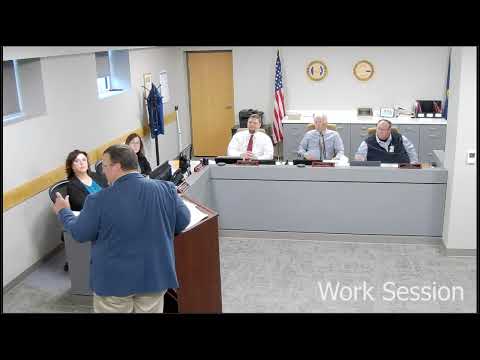
Philip Hayes, a consultant with the Arnold Group, told the Dickinson County Board of Commissioners that the county completed major pay‑scale changes in 2025 and now faces a choice about 2026 maintenance adjustments.
“Last year, we did a 3% — we adopted the pay scales, the recommended scales, implemented a 3% COLA for all employees and addressed the pay scale minimum gaps for a handful of employees,” Hayes said. He recommended completing “chapter 2” of the implementation with a pay‑scale maintenance adjustment in 2026 tied to a rolling Midwest CPI average (about 2.78% in Hayes’s example) to avoid losing competitiveness.
Marcus Rothschild, assistant county administrator and finance director, provided preliminary personnel cost figures and told commissioners the department‑level adjustments and some position eliminations means the county’s personnel budget projection for 2026 is currently lower than the 2025 budgeted number. “In 2025, our overall compensation for personnel, including insurance and salaries, was around ... $14,886,000 that was budgeted,” Rothschild said, adding that preliminary 2026 figures are roughly $14,000,003 (preliminary). Rothschild also flagged the timing issue that 2026 will include a 27th payroll that typically costs the county about $400,000 and is already included in current planning.
Hayes walked commissioners through scenarios for 2026–2028 showing that completing pay‑scale maintenance in 2026 produces a one‑time larger budgetary impact but allows more modest, controllable increases in subsequent years. “If we lean into the policy that was adopted, we would be looking at about a $390,000 annual impact for the pay‑scale maintenance,” he said, and projected the combined step and COLA costs at roughly $478,000 in his model.
Rothschild said staff had already begun entering the finalized personnel numbers into the county budget and that, after reworking early conservative estimates used when the 2025 budget was drafted, the 2026 personnel line appears tighter and more accurate. He told commissioners the staffing changes and refined benefit estimates contributed to a projected reduction between the two years.
Commissioners discussed the balance between completing the pay‑scale work in 2026 and the county’s other fiscal pressures. No formal vote was taken; commissioners directed staff to continue refining the numbers and to include pay‑scale maintenance planning in the 2026 budget materials sent to the public and placed before the commission at upcoming hearings.
Rothschild and Hayes both said the recommended approach would preserve recruitment and retention gains made in 2025 and make future annual adjustments easier to manage.
Ending: County staff said they will publish updated personnel and budget figures in the coming weeks once assessed valuation numbers and final department inputs are available, and the commission will consider formal adoption of pay‑scale maintenance actions as part of the 2026 budget hearings.