Get Full Government Meeting Transcripts, Videos, & Alerts Forever!
Get email alerts on the Healthcare Access Freestanding Er topic
No spam. Unsubscribe anytime.
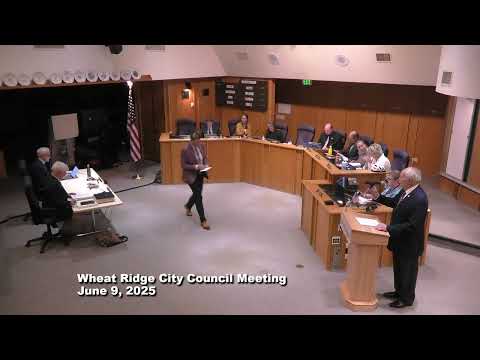
Wheat Ridge council lifts decade-old moratorium to allow limited freestanding emergency departments
Summary
The Wheat Ridge City Council voted 7-1 on Monday to amend city code to permit freestanding emergency departments under limited conditions, reversing a moratorium adopted about a decade ago.
The Wheat Ridge City Council voted 7-1 on Monday to amend Chapter 26 of the Wheat Ridge Code of Laws to permit freestanding emergency departments under limited conditions, overturning a moratorium put in place about a decade ago.
Council Bill 08-2025 will allow a freestanding emergency department as a conditional use in the mixed-use commercial zone on properties of at least 5 acres that are co-located with other medical uses. The vote came after more than an hour of public comment in which hospital and emergency-care clinicians warned about patient-transfer delays and higher costs, and proponents including HCA HealthONE/Rose Medical Center and Denver Health paramedics argued the facilities improve access and relieve strain on existing hospitals.
Why it matters: The change makes specific properties eligible for standalone emergency services that are not attached to a full hospital, subject to a conditional-use review. Proponents told council the amendment is intended to expand local access and create a medical campus on the northwest corner of 30th Avenue and Wadsworth Boulevard. Opponents said that in a built-up, well-served area like Wheat Ridge the facilities risk delaying definitive care for high-acuity conditions and imposing higher out-of-pocket costs on patients.
Medical staff from Lutheran Hospital and clinicians who practice in Wheat Ridge spoke against lifting the moratorium. "We oppose the lifting of the moratorium on freestandings here in Wheat Ridge," said Dr. Homi Kapadia, who identified himself as an emergency physician with 21 years of practice in Wheat Ridge. He and other speakers described limitations in treating heart attacks, strokes and severe trauma at freestanding sites and warned of patient confusion that leads to transfers and treatment delays.
Several clinicians described clinical consequences. "A heart attack patient showing up to a freestanding ED will never beat a 30 minute deadline," retired interventional cardiologist Douglas Martel told council, referring to the timeline for getting a patient to definitive cardiac intervention. Nurse practitioner Jessica Telesco noted stroke protocols and the time-sensitive nature of stroke care: "For every one hour of delay in hospital care, that equated to 11 months of healthy life lost," she said, summarizing data presented at a professional conference.
Proponents, including officials from HCA HealthONE/Rose Medical Center, said freestanding emergency departments are staffed 24/7 with board-certified emergency physicians and that their operations can deliver fast, local care for many urgent conditions while allowing paramedics and hospitals to focus on the highest-acuity patients. "My intent is really to add value to your community from a health and access perspective," said Casey Goober, CEO of Rose, describing the applicant's proposal for a medical campus at 30th and Wadsworth.
Denver Health Paramedics Chief Gary Briskiewicz told council that the system responds to high volumes and that closer ED capacity can reduce travel times and keep EMS units available. He said a sample review of transports to freestanding EDs showed none required lights-and-siren response, arguing many ambulance trips are nonemergent and could be well-served by the proposed facility.
Staff presentation and limits: City staff said state law changed in 2019 and that the draft ordinance seeks to allow freestanding emergency departments only in limited circumstances to avoid proliferation. Under the adopted amendment, the use will be conditional in mixed-use commercial zones, limited to parcels of at least 5 acres and co-located with other medical services — in staff's words, "a mini medical campus."
Council deliberations: Council members voiced competing priorities. Supporters emphasized patient choice, increased local access and the potential to attract clinics and investment; opponents emphasized the city's older population and possible patient confusion leading to transfers. Council attorneys made a record concerning potential conflicts of interest after Councilmember Leah Dozeman disclosed employment with Intermountain Health; the city attorney advised the council on legislative-voting rules and asked that any objection to her participation be made by motion and a unanimous vote of the other members — a motion that was not made.
Outcome and next steps: The ordinance passed on its reading and, per council direction, will be incorporated into the municipal code. The code change does not itself approve a site plan; any freestanding emergency department proposed for a specific property would still require the conditional-use review and site-level approvals described in the code.
Context: Speakers for and against the ordinance included hospital clinicians from Lutheran Hospital and representatives from HCA HealthONE/Rose Medical Center and Denver Health Paramedics. The council recorded a roll-call result of seven ayes and one nay. The council also discussed projected redevelopment costs for the site, which staff said the applicant estimated at about $65 million, and that significant initial use taxes would result from a large buildout, though long-term sales-tax projections were not specified.
The council's action changes local land-use rules but does not modify state statutes or ambulance protocols. Any future facility would still be evaluated for site layout, access and traffic impacts, ambulance routing and hours of operation during the conditional-use review process.