Get Full Government Meeting Transcripts, Videos, & Alerts Forever!
Get email alerts on the Roofing Policy topic
No spam. Unsubscribe anytime.
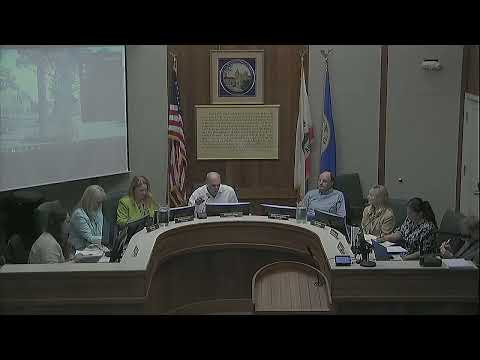
Carmel planning commission directs staff to refine roofing policy to allow some metal and synthetic roofs with conditions
Summary
After months of discussion, the commission approved a recommendation to the City Council to update the city's roofing policy to allow certain metal and synthetic roofing materials at staff level subject to objective standards including matte finish, earth-tone colors, and additional environmental analysis for synthetic products.
After an extended public and commission discussion on June 11, the Carmel City Planning Commission voted to direct staff to refine and forward a roofing policy update to the City Council that would allow some metal and synthetic roofs under specified conditions.
Staff framed the item as a response to a rise in standing-seam metal and synthetic roofing applications driven by fire-safety concerns, aesthetic trends and insurance considerations. "Currently the design guidelines written say that metal, plastic, and glass roofs are inappropriate in all neighborhoods," the planner said, and presented a draft policy that would allow like-for-like reroofs by staff and permit certain deviations for new materials with standards.
Public commenters and industry representatives, including local architect Adam Jeselnik, urged clearer, objective standards to reduce subjectivity in approvals. Commissioners and several members of the public raised environmental and safety concerns for synthetic products, citing recyclability, toxicity and microplastic risks as issues staff should study further. A member of the public said the Fire Marshal had warned that post-fire residues from plastics could create hazardous conditions on a site.
The commission voted to approve a motion directing staff to include findings tying allowable deviations to the design objectives, to add an environmental assessment matrix (recyclability, lifespan/warranty, toxicity/environmental safety), to list specific materials that require Planning Commission referral (for example corrugated PVC and corrugated plastic), and to call out acceptable metal roofing types (zinc and painted galvanized aluminum) with matte finishes and a prohibition on "high contrast" roof/siding combinations. The motion passed unanimously on roll call.
What commissioners asked staff to do next: staff will add language tying the policy to the design-objective findings, prepare a follow-up technical matrix analyzing synthetic products for recyclability, lifespan and environmental safety, add the "roofing no-no" list (PVC-on-the-story, corrugated plastic) as automatic Planning Commission referrals, and add objective standards such as matte finish and limits on high-contrast color schemes. Staff said it will return with the additional analysis and suggested language for a Council recommendation.
Why it matters: The change responds to a surge in homeowner demand for alternative Class A roofing assemblies that claim better fire performance and/or lower maintenance. The commission's direction seeks to balance fire-safety, sustainability and the city's long-standing design aesthetic by moving subjective decisions toward measurable standards.
No final ordinance was adopted at the meeting; the commission voted to send the refined policy and findings as a recommendation to the City Council with staff follow-up on environmental and technical metrics.