Get Full Government Meeting Transcripts, Videos, & Alerts Forever!
Get email alerts on the Capital Improvements topic
No spam. Unsubscribe anytime.
Carmel planning commission finds FY24–26 capital improvements program consistent with general plan
Summary
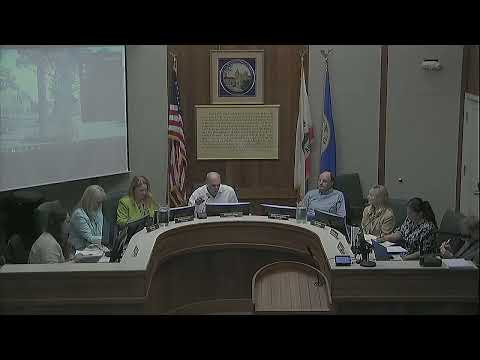
The Carmel City Planning Commission voted unanimously June 11 to determine that the city's adopted Capital Improvement Program carryovers for FY2024'FY2026 are consistent with the city general plan, and to forward that recommendation to the City Council.
The Carmel City Planning Commission on June 11 voted unanimously to find the city's carryover items from the adopted Capital Improvements Program (CIP) for fiscal years 2024'2026 consistent with the Carmel general plan and to forward that determination to the City Council. The commission approved a draft resolution after staff presented a project matrix and described anticipated California Environmental Quality Act (CEQA) review for individual projects.
Staff planner Evan (last name not specified in the record) told the commission the CIP is part of the budget adopted by the council and largely covers infrastructure projects; he said a matrix shows anticipated CEQA actions for individual projects. "Capital improvement plan is part of the budget that was adopted by the city council," he said. Commissioners asked clarifying questions on priority ordering and individual projects such as the Fourth Street outfall (stormwater design and construction) and Piccadilly restroom design.
The commission voted 5'0to'00 on a motion to approve a resolution finding the CIP consistent with the general plan. Roll call recorded Commissioner Alborn, Commissioner Allen, Commissioner Kara Petco, Commissioner Locke and Chair LePage voting yes. The motion was moved from the dais and carried without a public controversy.
Why it matters: The planning commission's consistency determination is an advisory finding to the City Council that supports the city's ability to implement planned infrastructure work and informs subsequent CEQA analyses for individual projects in the program.
The staff report noted the matrix is not a priority list; Public Works will set project priorities following council adoption, with life-safety items highest on the list. Several commissioners also flagged items they said they hoped to see move forward, including shoreline stairs repairs, fire station upgrades and ADA improvements. The commission's finding does not itself authorize construction; CEQA and any required permits for each CIP project will follow their own review paths.