Get Full Government Meeting Transcripts, Videos, & Alerts Forever!
Get email alerts on the Wastewater Sewer Project topic
No spam. Unsubscribe anytime.
Paradise staff report progress on sewer alternatives after multi‑agency tours; two public meetings set
Summary
Town staff described out‑of‑area tours, federal funding requests and next public workshops as the sewer alternatives analysis moves toward a recommended Phase 1.
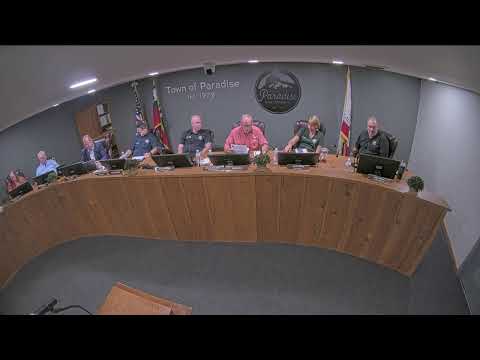
Town staff updated the Paradise Town Council on May activities and next steps in the town’s sewer project alternatives analysis, describing recent field tours, state and federal outreach and two special public meetings this summer to review recommendations.
The town’s project lead said the team met with U.S. Army Corps of Engineers staff, U.S. Environmental Protection Agency staff, congressional staff and both of the town’s federal senators during a recent trip to Washington, D.C. “We did submit a $2,000,000 request through Congressman LaMalfa’s office to draw down a $50,000,000 authorization within the U.S. Army Corps of Engineers 219 environmental infrastructure program,” the presenter said, adding that he had “heard positive news from the Congressman.”
The presenter described facility tours of multiple treatment systems to inform the alternatives analysis, including visits to Butte College, a Lake California oxidation‑ditch plant with a Sacramento River dispersal permit, the City of Mount Shasta’s activated aeration basins and constructed wetlands, North Auburn Sewer Maintenance District collection systems and a membrane bioreactor (MBR) at Lake of the Pines. He said staff also met with Central Valley Water Quality Control Board staff to discuss likely effluent discharge requirements for surface‑water discharge and land application.
Why it matters: the tours and interagency meetings will shape which collection, treatment and disposal options are technically feasible and what regulatory permits and discharge conditions will apply. The presenter said staff will use those learnings to recommend a selected alternative that is “permeable, scalable, and maximizes the parcel served,” and that the town expects Phase 1 will be followed by expansion projects as additional funding becomes available.
Next steps and public outreach: the town scheduled two special meetings for community review—a July 24 session to review the ad hoc committee recommendation and an August 14 special council meeting for a project recommendation. Staff said the meetings will likely be held at off‑site venues to accommodate larger attendance and that a “major public outreach campaign” will follow venue confirmation. The presenter also announced upcoming focus workshops on collection system alternatives and planned tours of a rare 100% STEP (septic tank effluent pump) collection/treatment community and additional MBR and bio‑trickling filter systems.
Council response: Council members thanked staff for the trip reports and tours. No formal vote was required; staff said they would return with an ad hoc committee recommendation in July.
Ending: Staff said they will continue detailed technical and regulatory work, coordinate additional tours, and use community feedback from the July and August special meetings to shape a Phase 1 recommendation for council consideration.